Air Heat Resistance Testing Service – Accredited Thermal Stability Assessment for Materials, Components, and Finished Products
For Belgian manufacturers, importers, and quality engineers in the automotive, aerospace, electrical, construction, and consumer goods industries, the ability of materials to withstand prolonged exposure to elevated air temperatures without losing mechanical, electrical, or aesthetic properties is a fundamental requirement for product safety, reliability, and service life. Our ISO/IEC 17025 accredited laboratory offers a comprehensive air heat resistance testing service that quantifies the degradation of polymers, elastomers, coatings, electrical insulation, composites, and other heat‑sensitive materials under controlled circulating hot air conditions. With decades of experience in thermal aging and materials characterisation, we support your product development, supplier qualification, and regulatory compliance needs. Our BELAC‑accredited reports are recognised by the Belgian Federal Public Service (FOD Economie), notified bodies, and all relevant European authorities under directives including the Low Voltage Directive (2014/35/EU), the Machinery Directive (2006/42/EC), the Construction Products Regulation (EU 305/2011), and REACH (EC 1907/2006).
Materials and Products We Regularly Test
We accept a wide range of materials, components, and finished products that are exposed to elevated service, storage, or processing temperatures. Our circulating hot air ovens accommodate specimens of various sizes and shapes, from small coupons and injection‑moulded parts to complete sub‑assemblies. Common samples include:
- Thermoplastics and thermosetting polymers – PE, PP, PVC, PET, PA, PC, ABS, POM, epoxy, and phenolic resins.
- Elastomers and rubber compounds – natural rubber, EPDM, NBR, silicone, fluorosilicone, Viton, and polyurethane.
- Insulating materials and electrical components – wire enamels, cable sheathing, tapes, sleeving, transformers, and motor windings.
- Seals, gaskets, and O‑rings – used in engines, compressors, valves, and HVAC systems.
- Plastic piping and fittings – for hot‑water heating, chemical transfer, and compressed air systems.
- Protective coatings and paints – for automotive, industrial, and outdoor applications.
- Composite materials – glass‑ and carbon‑fibre reinforced plastics.
- Textiles and non‑wovens – for protective clothing, upholstery, and insulation.
Hot Air Aging – Measuring Degradation Over Time
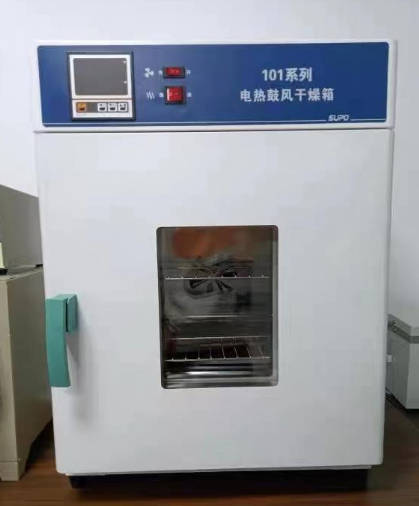
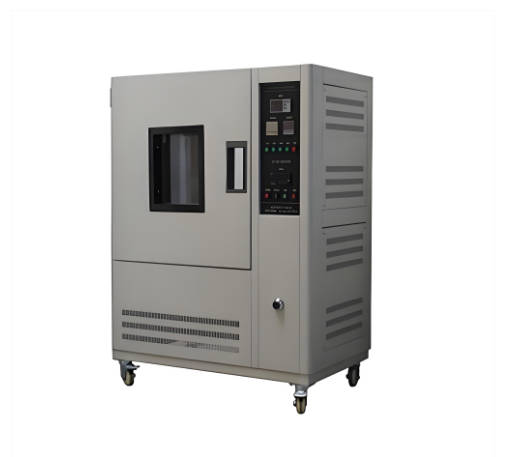
The core of our air heat resistance testing service is long‑term hot air aging, which simulates the cumulative effect of sustained elevated temperatures on material properties. We follow the most recognised international and European standards, with Belgian NBN implementations, to provide data that can be directly used for design life estimation and material selection:
- Hot air aging according to ISO 188, ASTM D3045, and NBN EN ISO 188 (for rubber and elastomers) – We place specimens in a circulating hot air oven at a specified temperature (typically 70°C, 100°C, 125°C, or 150°C) for defined durations (ranging from 24 hours to 1,000 hours or more). After exposure, we measure changes in tensile strength, elongation at break, hardness, compression set, mass, and dimensions. The results are compared with unexposed controls, and the percentage retention of each property is reported. This method is widely used for qualifying rubber seals and gaskets.
- Thermal aging of plastics and electrical insulation according to IEC 60216, ASTM D3012, and EN 60216 – We perform aging at multiple temperatures (e.g., 100°C, 120°C, 140°C, 160°C) and measure the time to reach a defined end‑point (e.g., 50% retention of tensile strength). Using the Arrhenius relationship, we extrapolate the thermal endurance index (TEI) and the relative thermal index (RTI), which are essential for classifying the maximum continuous operating temperature of insulating materials. This is a key requirement for UL and VDE certification.
- Hot air aging of plastics – ISO 2578, ASTM D794, and DIN 53397 – We evaluate the change in mechanical properties (flexural strength, impact strength, modulus) after exposure to hot air, with particular attention to the effect of aging on the material's brittleness and dimensional stability.
- Oven aging of coatings and painted surfaces – according to ASTM D573, ISO 11341, and NBN EN ISO 11341 – We age coated panels in hot air and assess colour change (ΔE*), gloss loss, blistering, and adhesion (cross‑cut test) to predict the service life of automotive and industrial paints.
- Weight loss and volatile content measurement – for the determination of thermal stability and additive migration – We record the mass of the specimen before and after hot air exposure to quantify the loss of volatile plasticisers, stabilisers, or other additives. This is a critical parameter for materials used in high‑temperature applications.
Short‑Term Heat Resistance – Compression, Deflection, and Softening
In addition to long‑term aging, we characterise the immediate response of materials to elevated temperatures through short‑term tests that simulate processing or brief excursions above the maximum service temperature:
- Heat deflection temperature (HDT) under load – ISO 75, ASTM D648, and EN ISO 75 – We place a test bar on two supports and apply a bending load (0.45 MPa or 1.82 MPa) while heating the specimen at a controlled rate. The temperature at which the bar deflects by a defined amount (0.25 mm) is recorded as the HDT. This parameter indicates the upper service temperature limit for rigid plastics under mechanical load.
- Vicat softening temperature – ISO 306, ASTM D1525, and EN ISO 306 – We apply a specified load (10 N or 50 N) to a flat‑ended needle placed on the specimen surface and heat the assembly at a constant rate. The temperature at which the needle penetrates to a depth of 1 mm is the Vicat softening temperature, a key indicator for polymers with high amorphous content.
- Compression set under heat – ISO 815, ASTM D395, and NBN EN ISO 815 – We compress a rubber specimen to a defined strain (e.g., 25% or 50%) at a specified elevated temperature (e.g., 70°C or 100°C) for a fixed time (typically 24 or 72 hours). After cooling and release, we measure the permanent deformation. This test is critical for sealing applications, where a high compression set leads to leakage.
- Hot‑set test for crosslinked polymers – IEC 60811‑2‑1, ISO 1817, and EN 60811 – For crosslinked polyethylene (XLPE) and similar materials, we apply a constant tensile load at elevated temperature (e.g., 200°C) and measure the elongation and permanent set. This test verifies the degree of crosslinking and ensures that the material will not flow or deform at high temperatures.
Thermal Stability Analysis – Thermogravimetric and Thermal Mechanical Analysis
For precise characterisation of degradation temperatures and mechanisms, we use complementary instrumental techniques that provide detailed insight into material behaviour during heating:
- Thermogravimetric analysis (TGA) – ISO 11358, ASTM E2550, and DIN 51006 – We heat a small specimen (typically 10‑20 mg) in a controlled atmosphere (air, nitrogen, or oxygen) at a programmed rate (e.g., 10°C/min) while continuously recording the mass loss. The onset temperature of decomposition, the temperature of maximum decomposition (DTA peak), and the residual mass at high temperature are reported. This test identifies the temperature at which the material begins to degrade significantly.
- Differential scanning calorimetry (DSC) – ISO 11357, ASTM D3418, and EN ISO 11357 – We measure the heat flow into or out of the specimen during a programmed heating and cooling cycle. The glass transition temperature (Tg), melting point (Tm), crystallinity, and oxidation induction time (OIT) are determined. OIT, measured at a constant elevated temperature (e.g., 200°C) under oxygen, is a direct indicator of the thermal stability of polymers and the effectiveness of antioxidant systems.
- Thermomechanical analysis (TMA) – ISO 11359‑2, ASTM E831, and EN ISO 11359 – We measure the dimensional change of a specimen under a small load as a function of temperature. The coefficient of thermal expansion (CTE), the glass transition temperature (Tg), and the onset of softening are determined.
- Dynamic mechanical analysis (DMA) – ISO 6721, ASTM D4065, and EN ISO 6721 – We apply a sinusoidal strain to the specimen at various frequencies and temperatures to determine the storage modulus (E'), loss modulus (E''), and damping factor (tan δ). The glass transition temperature (Tg) is determined from the peak of the tan δ curve, and the material's viscoelastic behaviour is characterised over a temperature range.
Post‑Aging Evaluation and Failure Analysis
After hot air exposure, we perform a comprehensive evaluation to quantify the degradation and, if necessary, to identify the root cause of failure. This supports material improvement and troubleshooting:
- Visual and microscopic inspection – ASTM D714 (blistering), ISO 4628‑1 (general appearance), and NBN EN ISO 4628 – We examine the aged specimens for surface cracking, embrittlement, blistering, colour change, or other visible signs of degradation. High‑resolution images are included in the test report.
- Mechanical property re‑testing – we repeat tensile, hardness, impact, and flexural tests on the aged specimens and compare the results with the initial values – We calculate the percentage retention of each property and determine whether the material remains within the specified limits.
- Electrical property re‑testing – for insulating materials, we measure dielectric strength, insulation resistance, and surface resistivity after aging – A reduction in dielectric strength or insulation resistance indicates thermal degradation of the polymer matrix.
- FTIR spectroscopy – to detect chemical changes (oxidation, chain scission, crosslinking, migration of additives) – We analyse the chemical structure of the aged material using ATR‑FTIR and compare the spectrum with that of the unaged material. This reveals the molecular‑level changes responsible for the property loss.
- Microsectioning and optical microscopy – to evaluate the depth of oxidation or deterioration – For thick sections or coatings, we prepare cross‑sections and examine them under a microscope to assess the penetration of oxidation and the integrity of the interface.
Environmental Conditioning and Accelerated Testing Protocols
To simulate real‑world conditions, we combine heat exposure with other environmental factors such as humidity, UV radiation, and mechanical stress, and we also use accelerated test methods to reduce development time:
- Humid heat cycling – IEC 60068‑2‑30, ISO 6270‑2, and EN 60068‑2‑30 – We alternate between high‑humidity (98% RH) and high‑temperature (40‑55°C) conditions, followed by condensation phases, to assess the resistance of materials to combined heat and moisture – a critical factor for outdoor and tropical applications.
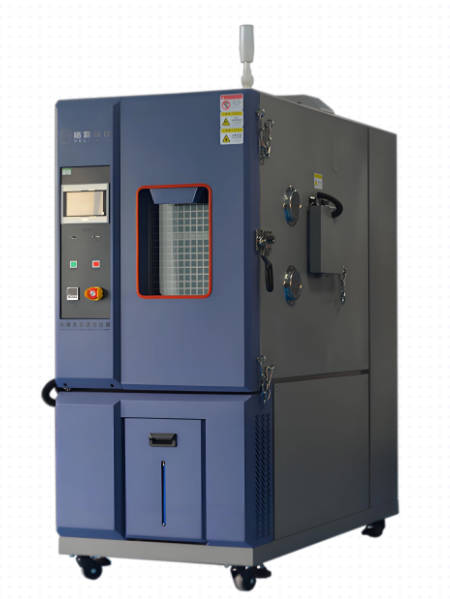
- Thermal cycling – IEC 60068‑2‑14, ASTM E1235, and EN 60068‑2‑14 – We apply repeated cycles between a low temperature (e.g., -40°C) and a high temperature (e.g., +100°C) with rapid transitions. This test evaluates the ability of materials and assemblies to withstand thermal fatigue and differential expansion.
- Chemical and heat combined exposure – we expose specimens to air, oil, fuel, or cleaning agents while simultaneously subjecting them to elevated temperatures – This simulates the harsh environments found in automotive engine compartments, chemical plants, and industrial processing.
- Accelerated shelf‑life testing – using the Q10 method and Arrhenius models to predict real‑time performance – Based on the aging data at multiple temperatures, we provide an estimate of the material's service life at the intended operating temperature, using validated accelerated aging models.
Calibration, Accuracy, and Quality Assurance
All tests are performed within our ISO/IEC 17025:2017 accredited quality system, with full traceability of temperature, time, force, and measurement equipment:
- Calibration of ovens, thermocouples, and temperature controllers – according to ASTM E220, ISO 17025, and EN 60068‑3‑5 – We perform regular 3‑D temperature uniformity mapping of our ovens and calibrate each thermocouple against a certified reference thermometer, achieving temperature uncertainty better than ±1°C.
- Calibration of testing machines (tensile, compression, and hardness) – according to ISO 7500‑1, ASTM E74, and EN ISO 7500‑1 – All mechanical testing equipment is calibrated annually with traceable weights and extensometers, with measurement uncertainty < 0.5% for force and < 0.1% for displacement.
- Verification with reference materials – we test known reference specimens (e.g., NIST‑traceable polymers) at the start of each test series to confirm system stability – This ensures that the aging and testing conditions remain consistent over time.
- Interlaboratory comparison (ILC) – we participate in proficiency testing schemes for thermal aging and mechanical testing – Our results are consistently validated against those of other accredited laboratories worldwide.
- Measurement uncertainty analysis – we report expanded uncertainty (k=2) for all quantitative results – This allows you to assess the confidence level of the reported values.
Compliance with Belgian and European Legislation
Our air heat resistance testing services support conformity assessments under a wide range of European directives and Belgian regulations, providing the essential data for product certification and safety documentation:
- Low Voltage Directive (LVD 2014/35/EU) – For electrical equipment that must withstand high service temperatures, we provide thermal aging data on insulation materials, enclosures, and wiring, enabling you to demonstrate compliance with the essential safety requirements.
- Machinery Directive (2006/42/EC) – For components that are exposed to heat, such as seals in hydraulic cylinders or gaskets in combustion engines, we provide thermal endurance data that supports the risk assessment and safety analysis.
- Construction Products Regulation (CPR, EU 305/2011) – For building materials (roofing membranes, pipe insulation, window profiles) that must maintain their performance under temperature fluctuations, we generate the necessary thermal stability data for the Declaration of Performance (DoP).
- REACH Regulation (EC 1907/2006) – For substances and mixtures that may release degradation products at elevated temperatures, our TGA and FTIR analyses can assist in the evaluation of decomposition products and their potential hazards.
- Belgian workplace safety (ARAB) and AREI regulations – Our reports are used to verify that materials used in workplaces and electrical installations remain safe at their maximum expected operating temperatures.
Reporting and Accreditation
All testing is performed under our BELAC‑accredited system, recognised by the FOD Economie and Belgian notified bodies. Each report includes:
- A detailed description of the test methods, conditions, and standards used.
- Tabulated results for each property before and after aging, with percentage retention.
- Graphical presentation of aging trends (e.g., strength vs. time, temperature curves).
- Statistical summary (mean, standard deviation, number of specimens).
- Calibration certificates and measurement uncertainty statements.
- Photographic documentation of visual changes.
- A professional conclusion on the heat resistance of the material and its fitness for purpose.
Our reports provide you with the confidence to certify your products, approve deliveries, and comply with all applicable regulations.
Why Choose Our Air Heat Resistance Testing Service?
We understand that heat resistance is often a life‑limiting factor for polymeric materials, and that accurately predicting service life is essential for warranty, safety, and liability. Our team provides rapid scheduling, flexible test programmes (from short screening tests to multi‑year accelerated aging studies), and clear, actionable interpretation of results – we do not simply deliver numbers; we explain what the degradation patterns mean for your application, provide recommendations for material substitution or design improvement, and help you estimate the remaining safe service life. With state‑of‑the‑art circulating air ovens, precision test equipment, and a highly experienced team, our air heat resistance testing service delivers the accuracy, repeatability, and regulatory acceptance you need to succeed in the demanding Belgian and European markets. Contact us to discuss your materials, operating temperatures, and performance targets – we will design a tailored test programme that ensures your products stand up to the heat.