Testing Service for the Ultimate Compressive Strength of Reinforced Plates – Accredited Evaluation of Load‑Bearing Capacity for Structural Panels, Shipbuilding Sections, and Composite Laminates
For Belgian structural engineers, shipbuilders, aerospace manufacturers, and quality managers in the construction, offshore, and transport sectors, the ultimate compressive strength of reinforced plates is a fundamental parameter for the safe design and reliable operation of load‑bearing structures. Reinforced plates – whether stiffened metal panels, composite laminates, or hybrid sandwich constructions – are used extensively in ship hulls, aircraft fuselages, bridge decks, and building floors, where they must withstand high compressive loads without buckling, crushing, or delaminating. Our ISO/IEC 17025 accredited laboratory offers a specialised testing service for the ultimate compressive strength of reinforced plates that precisely quantifies the maximum compressive load, the buckling behaviour, and the failure mode of flat and stiffened plates under controlled loading conditions. Using high‑capacity hydraulic test frames, precision displacement sensors, strain gauges, and digital image correlation (DIC) systems, we provide the critical data you need for design validation, material qualification, and regulatory compliance. With our BELAC accreditation, our test reports are recognised by the Belgian Federal Public Service (FOD Economie), notified bodies, and authorities under the Construction Products Regulation (EU 305/2011), the Pressure Equipment Directive (2014/68/EU), the Marine Equipment Directive (2014/90/EU), and the relevant harmonised standards (ASTM E9, ISO 8515, EN 1993‑1‑1, EN 1999‑1‑1, DNV‑GL‑OS‑C101, etc.).
Reinforced Plate Types and Products We Regularly Test
We accept a wide range of reinforced plate configurations, from small laboratory‑scale coupons to large structural panels that simulate actual service conditions. Our test frames are adaptable to different plate thicknesses, reinforcement patterns, and material combinations. Common samples include:
- Stiffened steel and aluminium plates – with flat bar, angle, or T‑section stiffeners for shipbuilding, bridge construction, and offshore platforms.
- Composite laminates – with unidirectional, woven, or multi‑axial fibre reinforcements in epoxy, polyester, or phenolic matrices.
- Sandwich panels – with foam, honeycomb, or balsa cores and composite or metallic faces.
- Corrugated plates and profiled sheets – for cladding, roofing, and structural decking.
- Hybrid and multi‑material plates – such as steel‑concrete composite, fibre‑metal laminates, and clad plates.
- Repair and retrofitted panels – for evaluating the effectiveness of reinforcement patches and strengthening systems.
- Full‑scale and sub‑scale structural sections – representing actual beams, columns, and plate panels from operational structures.
Core Test Methods – Determination of Ultimate Compressive Strength
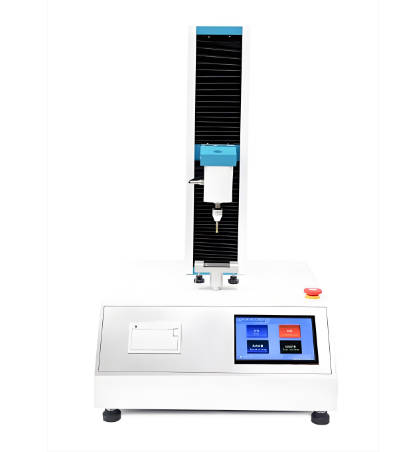
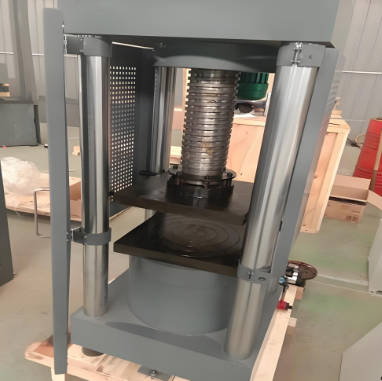
Our testing service for the ultimate compressive strength of reinforced plates follows internationally recognised standards and procedures to ensure accurate, repeatable, and comparable results. We use a constant‑rate‑of‑extension (CRE) or servo‑hydraulic compression testing machine, equipped with a calibrated load cell, displacement transducers, and strain measurement systems. The test involves placing the reinforced plate specimen between two parallel compression platens (or in a specialised fixture) and applying a compressive force at a controlled rate until the specimen fails by buckling, crushing, or delamination:
- Axial compression test for flat and stiffened plates – according to ASTM E9 (compression testing of metallic materials), ISO 8515 (composites – compression test), and EN 1993‑1‑3 (steel plates) – We position the plate between the platens, ensuring that the load is applied uniformly across the width of the specimen. For stiffened plates, we ensure that the stiffeners are oriented parallel to the loading direction (or as defined by your design) to properly simulate the load‑sharing behaviour. We apply the compressive load at a controlled rate (typically 0.5‑2 mm/min) until failure. We measure the maximum load (F_max) and the corresponding deformation, and we calculate the ultimate compressive strength (σ_ult = F_max / A₀, where A₀ is the cross‑sectional area of the plate and stiffeners).
- Buckling test – for determining the critical buckling load and the post‑buckling behaviour – We use a combination of displacement transducers (LVDTs) and strain gauges to monitor the out‑of‑plane deformation and the strain distribution during the test. We record the load at which the plate begins to buckle (the buckling load) and the load at which it collapses (the ultimate load). The buckling mode (e.g., global, local, or torsional) is identified, and the results are compared with theoretical predictions.
- Strain gauge and DIC measurements – we apply strain gauges (uniaxial and rosette) at critical locations on the plate surface and on the stiffeners to measure the local strains and to detect the onset of yielding or buckling – We also use digital image correlation (DIC) to provide full‑field strain mapping, which allows us to visualise the strain distribution and to identify the initiation and propagation of localised deformation.
- Loading history and post‑failure analysis – we record the complete load‑displacement curve and the load‑strain curves, and we photograph the failed specimen to document the failure mode (crushing, buckling, delamination, or fracture of the reinforcement) – The post‑failure analysis is essential for understanding the structural behaviour and for validating finite‑element models.
- Edge and local support conditions – we adjust the platen support or the fixture design to simulate different boundary conditions (e.g., simply supported, fixed, or semi‑rigid edges) as required by your design – This allows us to test the plate under conditions that are representative of its actual use.
Specialised Test Protocols for Different Plate Types and Applications
We apply specific test protocols for different reinforced plate types, taking into account their unique geometry, material, and failure mechanisms. The following are examples of our specialised approaches:
- Stiffened steel and aluminium plates – we test both plain (unstiffened) and stiffened panels to determine the contribution of the stiffeners to the compressive strength – We compare the strength of the stiffened plate with that of the unstiffened plate to quantify the stiffening effect and to validate the design calculations.
- Composite laminates – we test specimens with different fibre orientations (e.g., 0°/90°, ±45°) and lay‑up sequences to evaluate the effect of the laminate architecture on the compressive strength – We also test specimens with representative defects (e.g., delaminations, voids) to assess their impact on the load‑bearing capacity.
- Sandwich panels – we test the panels under axial compression and we also perform edgewise compression tests to evaluate the resistance of the faces and the core – We measure the core shear deformation and the face wrinkling to identify the failure mechanism.
- Corrugated plates – we test the plates under axial compression perpendicular and parallel to the corrugations to determine the directional strength – The results are used to optimise the corrugation profile for maximum strength and stiffness.
- Hybrid and multi‑material plates – we test plates made of different materials (e.g., steel and aluminium) in a single assembly, to evaluate the load‑sharing between the materials and the overall strength of the composite structure – This is particularly important for reducing weight while maintaining strength.
Environmental and Pre‑Conditioned Testing
Reinforced plates are often used in challenging environments – high humidity, salt spray, elevated temperatures, and freeze‑thaw cycles – which can affect their compressive strength. We offer testing under controlled environmental conditions to provide a realistic assessment of the plate's performance in service:
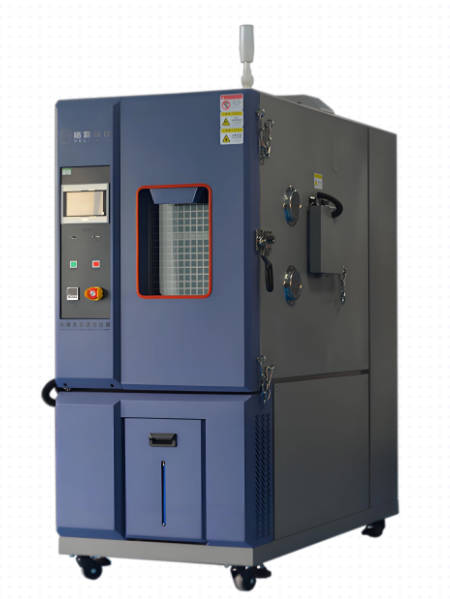
- Temperature‑conditioned compression test – we perform the test at elevated (up to 100°C) or low (down to -40°C) temperatures using an environmental chamber or heated/cooled platens – This is essential for plates used in hot climates, cryogenic applications, or cold‑storage environments.
- Humidity‑conditioned test – we condition the plates at high humidity (e.g., 95% RH) and then test them to assess the effect of moisture on the matrix material and on the adhesive bonds in composite plates – This is particularly relevant for composites and sandwich panels.
- Post‑corrosion test – we pre‑expose metallic plates to salt spray (ASTM B117, ISO 9227) for a defined period, and then we test them to evaluate the loss of strength due to corrosion – This is essential for offshore, marine, and coastal infrastructure.
- Impact‑damaged plate test – we pre‑induce a controlled impact (e.g., dropping a mass from a specific height) to simulate accidental damage, and then test the damaged plate to assess its residual compressive strength – This is critical for assessing the damage tolerance of structures.
- Accelerated aging test – we age the plates in a climate chamber (temperature, humidity, UV, and salt spray combined) and then test them to predict the long‑term service performance – This is often used for warranty and certification purposes.
Instrumentation and Data Acquisition – High‑Fidelity Measurement of Load, Strain, and Deformation
We use a comprehensive suite of sensors and data acquisition systems to capture the full behaviour of the reinforced plate under compressive loading:
- High‑capacity hydraulic testing frames – with capacities up to 5,000 kN (or higher on request) to accommodate large plate specimens and high loads – The frames are equipped with precision load cells (class 0.5) and displacement transducers (LVDTs) for accurate force and deformation measurement.
- Displacement transducers (LVDTs) – we place multiple LVDTs on the plate surface (at the mid‑height, at the edge, and at the stiffeners) to measure the axial deformation and the out‑of‑plane deflection – The number and placement of the LVDTs are optimised to capture the buckling behaviour.
- Strain gauges – we bond uniaxial and rosette strain gauges on the plate and on the stiffeners to measure the axial strain, the transverse strain, and the shear strain – The strain gauges are connected to a high‑speed data acquisition system with a sampling rate of up to 1,000 Hz.
- Digital image correlation (DIC) – we use a high‑resolution, high‑speed camera system (up to 10 MP, 100 fps) to capture the deformation field over the entire plate surface during the test – The DIC data provides full‑field strain maps, allowing us to identify localised strain concentrations, the initiation of buckling, and the propagation of failure.
- Thermal imaging – we use an infrared camera to monitor the temperature of the plate during the test – A temperature increase can indicate localised yielding, friction, or the onset of failure.
Calibration, Accuracy, and Quality Assurance
All ultimate compressive strength tests are performed under our ISO/IEC 17025:2017 accredited quality system, with full traceability of force, displacement, strain, temperature, and time measurements:
- Calibration of the testing machine – load cell, displacement transducers, and speed – according to ISO 7500‑1, ASTM E74, and EN ISO 7500‑1 – We calibrate the load cell annually using certified reference weights (class 0.5), achieving a force measurement uncertainty < 0.5% of the reading. The displacement is verified using a calibrated extensometer, and the speed is verified using a calibrated tachometer.
- Calibration of strain gauges and DIC systems – we use certified calibration standards (e.g., a certified strain calibration frame) and a certified calibration grid for the DIC system – The strain measurement uncertainty is < 1%.
- Calibration of temperature and humidity sensors – according to ASTM E220, ISO 17025 – We calibrate the sensors against certified reference instruments, with an uncertainty of ±0.2°C for temperature and ±2% RH for humidity.
- Verification with reference materials – we test certified reference specimens (e.g., standard steel or composite plates with known compressive strength) at regular intervals to confirm the stability and reproducibility of the test system – The results are tracked on control charts.
- Interlaboratory comparison (ILC) – we participate in proficiency testing schemes for compression testing of metallic and composite materials – Our results are regularly compared with those of other accredited laboratories.
Compliance with Belgian and European Regulations
Our ultimate compressive strength testing services support your conformity assessment under the relevant European directives and Belgian regulations for construction products, pressure equipment, and marine equipment:
- Construction Products Regulation (CPR, EU 305/2011) – for steel and aluminium structural panels, composite profiles, and building elements – The ultimate compressive strength is a key performance parameter for the Declaration of Performance (DoP) of many construction products, and our tests are performed according to the harmonised standards (EN 1993‑1‑1, EN 1999‑1‑1, etc.).
- Pressure Equipment Directive (PED 2014/68/EU) – for pressure‑retaining components that are subject to compressive loads – The design verification of pressure vessels and piping may require compression testing of the material or the components.
- Marine Equipment Directive (2014/90/EU) – for shipbuilding materials and components – The compression strength of stiffened plates is often required for the approval of hull structures and for classification society rules (e.g., DNV‑GL, Bureau Veritas).
- Belgian national regulations – including the ARAB (General Regulation on Occupational Safety) for structural components in workplaces and infrastructure – Our reports are used to verify the structural integrity of load‑bearing plates in Belgian industrial installations.
Reporting and Accreditation
All ultimate compressive strength tests are performed under our ISO/IEC 17025:2017 accredited quality system, with full traceability of all measurement parameters. Our BELAC‑accredited reports are recognised by the FOD Economie, Belgian notified bodies, and European authorities. Each report includes:
- A complete description of the test specimen (plate material, dimensions, reinforcement pattern, and any conditioning).
- The test method and conditions (standard, test speed, temperature, humidity).
- The measured ultimate load (F_max), the ultimate compressive strength (σ_ult), the buckling load, and the failure mode.
- The load‑displacement curve and the strain‑time curves.
- Full‑field strain maps (from DIC) and high‑resolution photographs of the failed specimen.
- Calibration certificates and measurement uncertainty statements.
- A professional conclusion on the compressive strength of the reinforced plate and its suitability for the intended application, with recommendations for design or material improvement if necessary.
Our reports provide the confidence you need to certify your reinforced plate designs, to approve deliveries, and to ensure the safety and reliability of your load‑bearing structures.
Why Choose Our Ultimate Compressive Strength Testing Service for Reinforced Plates?
We understand that the compressive strength of reinforced plates is a critical factor in the structural integrity of many engineering applications, and that accurate, reliable testing is essential for safe and efficient design. Our team offers rapid scheduling, flexible test programmes (from coupon‑level screening to large‑scale panel testing), and clear, practical interpretation of results – we do not just give you a strength value; we explain the buckling mechanism, the influence of the reinforcement, and the implications for your design. We work closely with your structural engineers, materials specialists, and quality teams to design a test plan that matches your specific plate configuration, load requirements, and design codes. With high‑capacity test frames, advanced instrumentation, environmental chambers, and a highly experienced team, our testing service for the ultimate compressive strength of reinforced plates delivers the accuracy, repeatability, and regulatory acceptance you need to ensure that your structures are safe and reliable. Contact us to discuss your plates, your loading conditions, and your certification goals – we will develop a tailored test programme that provides the definitive assessment of your plate's compressive performance.