Advanced Low‑Temperature Testing Service – Dynamic Mechanical Analysis, Creep, Fatigue, and Combined Environmental Exposure for Cold‑Sensitive Materials
For Belgian engineering teams, material scientists, and quality managers in the automotive, aerospace, cryogenic, and offshore industries, the standard cold‑soak and thermal‑cycling tests often provide only a partial picture of low‑temperature behaviour. To truly understand the performance of materials in cold environments, advanced characterisation techniques – such as dynamic mechanical analysis (DMA) at sub‑zero temperatures, low‑temperature creep and fatigue testing, and combined temperature‑vibration‑humidity exposure – are essential. Building on our core low‑temperature testing capabilities, our ISO/IEC 17025 accredited laboratory offers a specialised advanced low‑temperature testing service that provides in‑depth insight into viscoelastic properties, dimensional stability, long‑term creep resistance, and fatigue endurance of polymers, composites, elastomers, and metals under realistic cold‑service conditions. Using state‑of‑the‑art environmental test chambers, dynamic mechanical analysers, servo‑hydraulic fatigue machines, and multi‑channel data acquisition systems, we deliver the comprehensive data you need for design validation, material selection, and failure analysis. Our BELAC‑accredited reports are recognised by the Belgian Federal Public Service (FOD Economie), notified bodies, and authorities under the Machinery Directive (2006/42/EC), the Pressure Equipment Directive (2014/68/EU), and the relevant harmonised standards (ISO 6721, ASTM D4065, ASTM D2990, ISO 1099, etc.).
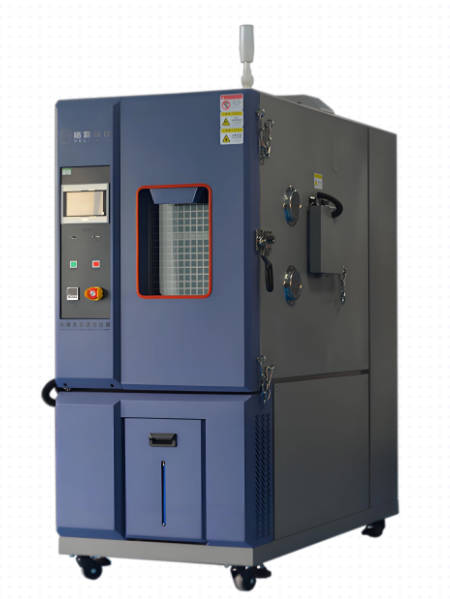
Dynamic Mechanical Analysis (DMA) at Low Temperatures – Viscoelastic Characterisation Below Zero
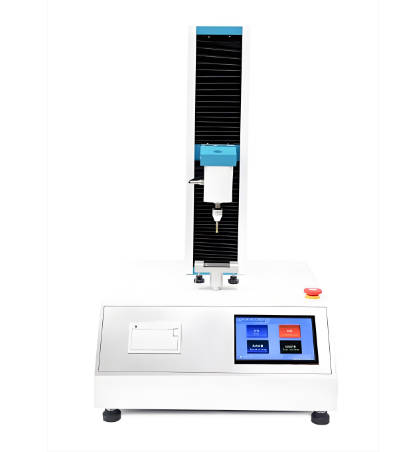
DMA provides essential information about the viscoelastic behaviour of polymers and composites at sub‑zero temperatures, including the glass transition temperature (Tg), the storage and loss moduli, and damping (tan δ). Our advanced low‑temperature testing service includes DMA over a wide temperature range, down to -150°C, using liquid‑nitrogen cooling:
- Dynamic mechanical analysis (DMA) – according to ISO 6721‑1, ASTM D4065, and NBN EN ISO 6721‑1 – We subject a standard specimen (e.g., rectangular bar) to a sinusoidal oscillatory strain at a defined frequency (0.1‑100 Hz) while controlling the temperature at a constant rate (1‑10°C/min) from -150°C to +50°C. We measure the storage modulus (E'), loss modulus (E''), and damping factor (tan δ). The glass transition temperature (Tg) is determined from the peak of the tan δ curve or from the onset of the drop in storage modulus. This is critical for predicting the material's behaviour in cold environments, including the onset of embrittlement and loss of stiffness.
- Multi‑frequency DMA – we perform the DMA test at multiple frequencies (e.g., 1, 10, 50 Hz) to construct master curves and to study the frequency dependence of the viscoelastic properties, which is essential for predicting long‑term behaviour from short‑term tests – This is particularly important for damping materials and elastomeric components used in automotive mounts and vibration isolators.
- DMA under static pre‑load – for materials that are subject to constant load in addition to dynamic loading (e.g., seals, bearing pads) – We apply a constant pre‑load (or pre‑strain) during the DMA test to evaluate the effect of static stress on the dynamic properties at low temperatures, which is critical for applications with constant compression or tension.
- Creep and recovery DMA – we apply a static load at a defined low temperature and measure the creep strain over time, followed by a recovery phase – This provides information on the material's resistance to permanent deformation at low temperatures, which is essential for cold‑storage sealing and support applications.
- DMA on finished components – we can perform DMA on machined specimens from finished parts, such as gaskets, bushings, and elastomeric mounts, to directly assess the performance of the actual production material – This eliminates any uncertainty related to specimen preparation differences.
Low‑Temperature Creep Testing – Long‑Term Dimensional Stability Under Sustained Load
For applications where materials are subjected to sustained loads at low temperatures – such as pressure‑retaining seals, structural supports, and pipe hangers – creep behaviour is a critical performance parameter. Our low‑temperature creep testing provides the time‑dependent deformation data required for service‑life predictions:
- Constant‑load creep test at low temperature – according to ASTM D2990 (plastics), ISO 899‑1, and NBN EN ISO 899‑1 – We place a specimen in a tensile or compressive creep tester inside a low‑temperature chamber (set to a defined temperature, e.g., -40°C or -60°C). We apply a constant tensile or compressive load (or stress) and monitor the strain over time (typically 100 to 10,000 hours). We determine the creep modulus, the creep rate, and the time to a defined creep strain limit. This is essential for components that are subject to constant load in cold environments, such as seals, gaskets, and plastic pipe systems.
- Stress‑relaxation testing at low temperature – we apply a constant strain at a defined low temperature and measure the decrease in stress over time – This is important for bolted joints and clamped connections, where the preload may relax due to viscoelastic creep, especially at low temperatures.
- Cyclic creep (ratcheting) – for components subject to repeated loading and unloading, such as those in cryogenic pumps or compressors – We apply a cyclic tensile or compressive load (with a defined mean stress and alternating stress) at a low temperature and measure the progressive accumulation of strain. This provides data for the assessment of ratcheting failure.
- Creep burst test at low temperature – for pressurised components and pipes, we apply a constant internal pressure at a defined low temperature and measure the time to rupture – This is particularly relevant for plastic pipes in outdoor gas and water distribution systems.
- Creep with simultaneous aging – we combine the low‑temperature creep test with continuous measurement of mechanical and physical properties, to detect any interaction between creep and aging (e.g., oxidation, molecular rearrangement) – This is important for long‑term service performance.
Low‑Temperature Fatigue Testing – Endurance Under Cyclic Loading in Cold Environments
Many structural and mechanical components are exposed to cyclic stresses at low temperatures – from thermal cycling in cryogenic storage to wind‑induced vibrations on offshore platforms and start‑stop cycles in cold climates. Our low‑temperature fatigue testing provides the S‑N data needed to design for durability under cold conditions:
- Axial and flexural fatigue at low temperature – according to ISO 1099 (metals), ASTM E466 (metals), ISO 13003 (composites), and NBN EN ISO 1099 – We place a specimen in a servo‑hydraulic fatigue test machine fitted with a low‑temperature environmental chamber. We apply a cyclic axial or flexural load (sine, square, or user‑defined waveform) at a defined stress amplitude and frequency (typically 5‑50 Hz), while the specimen is maintained at the target low temperature (e.g., -40°C, -60°C, or -80°C). We run the test until failure or up to a defined number of cycles (e.g., 10⁷) and generate the S‑N curve (stress vs. cycles). This is essential for structural materials used in cold‑climate applications.
- Low‑cycle fatigue (LCF) – for components subjected to large plastic strains at low temperatures, such as cryogenic pressure vessels and aerospace structures – We perform strain‑controlled cyclic tests at a constant strain amplitude, measuring the number of cycles to failure and the cyclic stress‑strain response. This is critical for assessing the resistance to low‑temperature brittle fracture.
- Thermal‑mechanical fatigue (TMF) – for components that experience simultaneous temperature and load cycling (e.g., exhaust systems, heat exchangers) – We combine temperature cycling with load cycling, where the temperature and the load are in‑phase or out‑of‑phase, to simulate the most severe service conditions.
- Fatigue testing of welded joints at low temperature – we test specimens with a welded joint to evaluate the effect of the weld on the fatigue life at low temperatures – This is particularly important for pressure vessels, pipelines, and offshore structures.
- Crack propagation and fracture toughness testing at low temperature – for materials that are prone to brittle fracture at low temperatures, we measure the fracture toughness (K₁c) and the crack growth rate (da/dN) at the target temperature – This provides data for fracture mechanics‑based design.
Combined Low‑Temperature and Environmental Exposure – Vibration, Humidity, and Salt Spray
In many applications, cold environments are accompanied by additional stressors – vibration, high humidity, salt spray (for offshore and coastal applications), and UV radiation (for outdoor equipment). Our test facilities allow us to combine low temperature with these factors to provide a holistic assessment:
- Low‑temperature vibration test – we place the specimen on a vibration table inside a low‑temperature chamber and run a sinusoidal or random vibration profile (e.g., according to IEC 60068‑2‑6) while the specimen is maintained at a defined low temperature – This is essential for electronic and mechanical components used in transport and aerospace applications.
- Low‑temperature with humidity – we expose the specimen to a low temperature and a controlled relative humidity (e.g., 80‑95% RH) to simulate the condensation and icing that occur in cold, humid environments – This is relevant for outdoor enclosures, medical devices, and cold‑storage equipment.
- Low‑temperature salt spray – we combine low‑temperature exposure with salt spray (ASTM B117, ISO 9227) to simulate the combined effect of cold, moisture, and salt on materials used in offshore, marine, and road‑deicing environments – This is critical for automotive under‑body components and coastal infrastructure.
- Low‑temperature with UV – we expose the specimen to UV radiation (ISO 4892) at low temperature to simulate outdoor winter conditions in sunny, cold climates – This is relevant for exterior automotive and building materials.
- Low‑temperature with cyclic pressure – for pressure‑containing components, we combine low‑temperature exposure with internal pressure cycles (e.g., hydrostatic or pneumatic) to simulate the thermal‑pressure interaction – This is important for cryogenic storage tanks and LNG systems.
Calibration, Accuracy, and Quality Assurance – Ensuring Data Integrity at Low Temperatures
All advanced low‑temperature tests are performed under our ISO/IEC 17025:2017 accredited quality system, with full traceability of temperature, load, strain, and time measurements:
- Calibration of temperature controllers and sensors – using a certified reference thermometer (PT100) with an uncertainty of ±0.1°C, over the entire low‑temperature range – We verify the temperature uniformity of the chamber and the specimen mounting fixture.
- Calibration of load cells, actuators, and extensometers – according to ISO 7500‑1, ASTM E74, and EN ISO 7500‑1, at the low‑temperature test conditions – We calibrate the load cells and extensometers in the low‑temperature chamber (with the chamber at temperature) to ensure that the calibration is valid for the test conditions.
- Verification with reference materials – we test standard reference materials (e.g., a standard aluminium alloy for DMA, or a standard steel for fatigue) at regular intervals to confirm the stability of the test system at low temperatures – The results are tracked on control charts.
- Data acquisition and signal conditioning – we use high‑quality data acquisition systems with low‑noise amplifiers and shielded cables to minimise electrical noise in the cold environment, which can affect strain and displacement measurements – We also use temperature compensation on strain gauges.
- Interlaboratory comparison (ILC) – we participate in proficiency testing schemes for low‑temperature DMA, creep, and fatigue testing – Our results are regularly compared with those of other accredited laboratories.
Compliance with Belgian and European Regulations – Supporting Critical Applications
Our advanced low‑temperature testing services are often required for the certification of components used in safety‑critical applications in Belgium and Europe:
- Pressure Equipment Directive (PED 2014/68/EU) – for pressure vessels and piping operating at cryogenic or low temperatures – The low‑temperature fatigue and fracture toughness data are required for the design validation of pressure equipment.
- Machinery Directive (2006/42/EC) – for structural components, lifting equipment, and offshore machinery – The low‑temperature creep and fatigue data support the design verification of components exposed to low temperatures.
- Offshore and marine standards (DNV‑GL, BV) – for steel and composite structures in cold seas – The low‑temperature fracture toughness and fatigue data are essential for the classification of offshore structures.
- Belgian ARAB (General Regulation on Occupational Safety) – for equipment used in cold‑storage and outdoor workplaces – Our test data is used to verify that components will not fail under the expected cold conditions, ensuring worker safety.
Reporting and Accreditation – Comprehensive Data for Engineering Decisions
All advanced low‑temperature tests are performed under our ISO/IEC 17025:2017 accredited quality system, with full traceability of all measurement parameters. Our BELAC‑accredited reports are recognised by the FOD Economie, Belgian notified bodies, and European authorities. Each report includes:
- A complete description of the test specimen and the test conditions (temperature, load, frequency, etc.).
- For DMA, the storage and loss moduli, tan δ, and the glass transition temperature (Tg) as a function of temperature.
- For creep, the creep strain vs. time curve, the creep modulus, and the time to a defined strain limit.
- For fatigue, the S‑N curve (stress vs. cycles) and the fatigue endurance limit.
- For combined tests, the results of the post‑exposure evaluation (visual, mechanical, electrical).
- Calibration certificates and measurement uncertainty statements.
- A professional conclusion on the material's performance at low temperatures and its suitability for the intended application, with recommendations for design or material improvement if necessary.
Our reports provide the confidence you need to certify your critical components, to ensure safety and reliability in cold environments, and to meet the stringent regulatory requirements of the Belgian and European market.
Why Choose Our Advanced Low‑Temperature Testing Service?
We understand that cold‑temperature failures often originate from complex interactions between viscoelasticity, creep, fatigue, and environmental factors – interactions that are not captured by simple cold‑soak tests. Our advanced testing service provides the in‑depth data you need to design truly robust products for the most demanding cold environments. We offer rapid scheduling, flexible test programmes (from single‑property tests to comprehensive combined‑stress studies), and clear, practical interpretation of results – we do not just give you data; we explain the physical mechanisms, the implications for your application, and the potential for design improvement. We work closely with your engineering, materials, and quality teams to design a test plan that matches your specific low‑temperature profile, your loading conditions, and your performance targets. With state‑of‑the‑art DMA, creep, fatigue, and environmental test equipment, and a highly experienced team, our advanced low‑temperature testing service delivers the accuracy, repeatability, and regulatory acceptance you need to ensure that your products perform reliably in the cold. Contact us to discuss your low‑temperature challenges, your test objectives, and your certification needs – we will develop a tailored test programme that provides the definitive evidence of your product's cold‑weather durability.