Performance Testing Service for Coal Powder Burners – Accredited Evaluation of Combustion Efficiency, Emissions, Flame Stability, and Thermal Output
For Belgian power plant operators, industrial boiler manufacturers, cement producers, and energy technology developers, the performance of coal powder burners is a critical factor that determines fuel utilisation, emissions compliance, operational reliability, and plant profitability. Coal powder burners must deliver consistent flame stability, high combustion efficiency, low pollutant emissions (NOx, SOx, particulates), and robust operation across varying coal types and load conditions. Our ISO/IEC 17025 accredited laboratory offers a specialised performance testing service for coal powder burners that quantifies the thermal, aerodynamic, and emissions performance of burner systems under controlled laboratory and pilot‑scale conditions. Using advanced combustion analysers, high‑speed flame imaging, particle sizing instruments, and emissions monitoring systems, we provide the critical data you need for burner design validation, optimisation, type‑testing, and regulatory compliance. With our BELAC accreditation, our test reports are recognised by the Belgian Federal Public Service (FOD Economie), notified bodies, and authorities under the Industrial Emissions Directive (2010/75/EU), the Machinery Directive (2006/42/EC), and the relevant harmonised standards (EN 12952, EN 12953, EN 303‑5, ISO 10780, etc.).
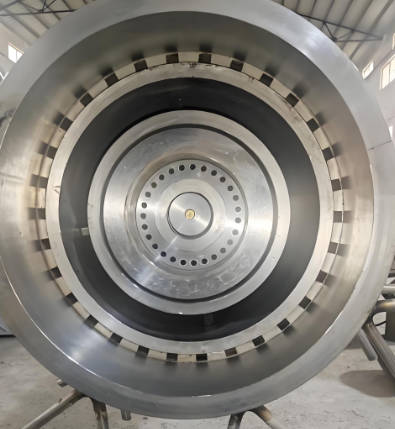
Burner Types and Components We Regularly Test
We accept a wide range of coal powder burner systems, from small industrial burners to large utility‑scale burners, as well as burner subsystems and individual components. Our test facilities are equipped with pulverised coal feeders, combustion chambers, and emissions analysis systems to simulate realistic operating conditions. Common samples include:
- Industrial coal powder burners – for package boilers, process heaters, and kilns.
- Utility‑scale low‑NOx burners – for large pulverised coal‑fired power boilers.
- Burner nozzles and atomisers – for evaluating coal/air flow characteristics and particle dispersion.
- Ignition systems and flame monitors – for assessing ignition reliability and flame detection.
- Burner windboxes and swirl generators – for aerodynamic performance characterisation.
- Coal pulveriser and classifier systems – for evaluating the coal fineness and its effect on combustion.
- Complete burner management systems (BMS) – for functional and safety testing.
- Retrofit and low‑emission burner designs – for performance validation.
Core Test Methods – Combustion Efficiency, Emissions, and Flame Characterisation
Our performance testing service for coal powder burners uses a comprehensive suite of diagnostic methods to evaluate the thermal performance, emissions, and flame characteristics of the burner system. The tests are performed under controlled conditions with defined coal types, air/fuel ratios, and firing rates:
- Combustion efficiency test – according to EN 12952‑15 (water‑tube boilers), EN 12953‑11 (shell boilers), and ASME PTC 4 (fired steam generators) – We fire the burner at defined load conditions (e.g., 25%, 50%, 75%, and 100% of rated capacity) and measure the flue gas composition (O₂, CO₂, CO, NOx, SO₂) using continuous emissions monitors (CEMS) and a flue gas analyser. We calculate the combustion efficiency using the indirect (loss) method, accounting for dry flue gas losses, moisture losses, unburnt carbon losses, and radiation losses. The efficiency is expressed as a percentage of the fuel's lower heating value (LHV) or higher heating value (HHV).
- Emissions testing – according to EN 303‑5 (solid fuel boilers), ISO 10780 (stationary source emissions), and EPA Method 5 (particulate matter) – We measure the concentration of NOx, SO₂, CO, CO₂, and particulate matter (PM) in the flue gas. NOx is measured using chemiluminescence, SO₂ using UV fluorescence, CO and CO₂ using non‑dispersive infrared (NDIR), and particulate matter using a gravimetric sampling train (EPA Method 5) or a real‑time particulate monitor (e.g., a tapered element oscillating microbalance). The emissions are expressed in mg/Nm³ at a reference O₂ concentration (e.g., 6% O₂ for dry flue gas).
- Flame stability and characterisation – using high‑speed imaging (up to 1,000 fps), flame temperature measurement (with a two‑colour pyrometer or a suction pyrometer), and flame luminosity analysis – We record the flame shape, length, and stability under different load and air/fuel ratio conditions. We measure the flame temperature profile and the radiation heat flux to the furnace walls. The stability is assessed by observing the flame's response to changes in coal feed rate or air flow.
- Coal fineness and particle size analysis – according to ASTM D197 (standard test method for coal fineness) and ISO 3310‑1 (sieve analysis) – We collect a representative sample of the pulverised coal from the burner supply line and perform a sieve analysis to determine the percentage of particles that pass through a 200‑mesh (75 µm) and 50‑mesh (300 µm) sieve. The fineness is expressed as the percentage of material passing the 200‑mesh sieve. This is critical because finer coal particles burn more completely and produce lower unburnt carbon losses.
- Aerodynamic velocity and flow distribution – using a pitot‑static tube, a hot‑wire anemometer, or a laser Doppler anemometer (LDA) to measure the air and coal/air flow velocity profiles in the burner throat – We measure the velocity distribution at different cross‑sections of the burner, which is essential for understanding the mixing of air and coal and for optimising the burner design.
- Thermal output and heat release rate – we measure the firing rate (kg/h of coal) and the heat output (MWth) by measuring the coal feed rate, the air flow rate, and the flue gas temperature and composition – We calculate the heat release rate (MW/m³) and the furnace heat loading (MW/m²), which are important for the design of the combustion chamber.
Specialised Test Protocols for Low‑NOx and Advanced Burners
For low‑NOx and advanced burner designs, we apply specialised test protocols that focus on emissions reduction and flame staging:
- Low‑NOx burner staging test – we measure the NOx emissions at different air‑staging configurations (e.g., varying the proportion of primary, secondary, and tertiary air) to identify the optimal staging conditions – We also measure the NOx reduction efficiency (the percentage reduction in NOx compared to a non‑staged burner).
- Fuel‑rich and fuel‑lean zone testing – we measure the gas composition (O₂, CO, NOx) in the near‑burner zone to characterise the combustion staging and to verify that the burner is achieving the desired fuel‑rich and fuel‑lean zones – This is done using a water‑cooled sampling probe and a gas analyser.
- Flame temperature and thermal NOx assessment – we measure the flame temperature profile at different axial positions to assess the thermal NOx formation – Lower flame temperatures generally result in lower thermal NOx formation.
- Reburning and fuel‑staging tests – for burners that incorporate reburning (injection of a secondary fuel into the furnace), we measure the NOx reduction achieved by the reburning zone – We also measure the effect of reburning on the overall combustion efficiency.
- Ash deposit and fouling assessment – we collect ash samples from the furnace and measure the ash deposition rate and the composition (using XRF) to assess the burner's tendency to produce slagging or fouling – This is important for the long‑term operational reliability of the boiler.
Emissions and Environmental Compliance Testing
Our burner performance testing includes comprehensive emissions measurements that are directly relevant to the environmental permits and regulatory requirements of coal‑fired plants in Belgium and Europe:
- NOx emissions measurement – according to EN 14792 (chemiluminescence) and EN 14792 (NOx), with a reference O₂ of 6% – We measure NOx (as NO₂ equivalent) and report the concentration in mg/Nm³ at 6% O₂. We also measure the NOx emission rate (kg/h) and the specific NOx emission (kg/MWh).
- SO₂ emissions measurement – according to EN 14791 (UV fluorescence), with a reference O₂ of 6% – We measure the SO₂ concentration and the sulphur‑related corrosion potential of the flue gas.
- Particulate matter (PM) measurement – according to EN 13284‑1 (gravimetric method) and EN 13284‑2 (dust concentration) – We measure the total dust concentration and, on request, the PM10 and PM2.5 fractions using a cascade impactor.
- CO and CO₂ measurement – using NDIR analysers, with CO expressed as a measure of combustion completeness – A high CO level indicates incomplete combustion, which is a major source of inefficiency and a potential safety hazard.
- Mercury and heavy metal emissions – according to EN 13211 (mercury) and EN 14385 (heavy metals), for plants that are required to monitor these pollutants – We use a wet‑chemistry sampling train and ICP‑MS analysis for the measurement of trace metals.
Measurement, Data Acquisition, and Instrumentation
Our burner test facility is equipped with state‑of‑the‑art instrumentation and data acquisition systems to ensure accurate and reliable measurements:
- Continuous emissions monitoring system (CEMS) – with gas analysers for O₂, CO, CO₂, NOx, SO₂, and optionally mercury and HF – The CEMS is calibrated and maintained according to EN 14181 and our ISO 17025 accreditation. The system is equipped with a sample conditioning system (cooler, filter) to ensure that the gas sample is clean and dry.
- Flue gas flow rate and temperature – we measure the flue gas volume flow rate using a pitot tube (or an averaging pitot tube) and the temperature using a thermocouple (type K) to calculate the heat loss and the combustion efficiency – The flow rate is measured at a standard cross‑section (ISO 10780).
- Flame imaging system – a high‑speed camera (up to 1,000 fps) with a narrow‑band optical filter for the visible and near‑infrared spectrum to capture the flame dynamics and to detect flame instability (e.g., oscillations, flame‑out) – The images are analysed to extract the flame length, shape, and stability index.
- Coal feed rate measurement – we use a calibrated belt‑weighing system (or a loss‑in‑weight feeder) to measure the coal feed rate with an accuracy of ±0.5% – The feed rate is continuously recorded.
- Air flow and pressure measurement – we measure the air flow rate using an orifice plate or a pitot tube, and we measure the pressure drop across the burner and the windbox – The air flow is controlled and adjusted using valves and a flow meter.
Calibration, Accuracy, and Quality Assurance
All burner performance tests are performed under our ISO/IEC 17025:2017 accredited quality system, with full traceability of flow, temperature, concentration, and mass measurements:
- Calibration of CEMS and gas analysers – using certified reference gases (span gases) with an uncertainty of ±1% of the certified value – We perform daily multi‑point calibrations (zero, low, and high span) and we verify the analysers before each test.
- Calibration of the coal feed scale and the coal flow meters – using certified reference weights (class E1) and a calibration hopper – We calibrate the belt weigher annually and verify it before each test series.
- Calibration of the air flow meters (orifice plates, pitot tubes) – using a certified reference flow meter – We calibrate the flow meters according to ISO 5167.
- Calibration of temperature sensors – using a certified reference thermometer (PT100) with an uncertainty of ±0.2°C – We calibrate all thermocouples and RTDs annually.
- Verification with reference fuels – we test a reference coal with a known composition and combustion characteristic at regular intervals to confirm the stability and reproducibility of the burner test system – The results are tracked on control charts.
- Interlaboratory comparison (ILC) – we participate in proficiency testing schemes for emissions monitoring and combustion testing – Our results are regularly compared with those of other accredited laboratories.
Compliance with Belgian and European Regulations
Our burner performance testing services support your conformity assessment under the relevant European directives and Belgian regulations for industrial emissions, machinery, and product safety:
- Industrial Emissions Directive (IED, 2010/75/EU) – for large combustion plants (LCPs) and other industrial installations – Our emissions measurements (NOx, SO₂, particulates) are performed according to the reference methods and are used to verify compliance with the emission limit values (ELVs).
- Ecodesign Directive (2009/125/EC) – for solid fuel boilers and the energy‑related products (ErP) requirements – The combustion efficiency and the emissions data are used to verify the energy efficiency and environmental performance of the burner system.
- Machinery Directive (2006/42/EC) – for the safety and reliability of the burner system and its components – Our tests verify that the burner operates safely and reliably under the specified conditions, which is required for the CE marking.
- Belgian environmental regulations (Vlaams, Brussels, Walloon regions) – for emissions limits and environmental permits – Our reports are used to demonstrate compliance with the regional environmental permits for industrial plants.
- ATEX Directive (2014/34/EU) – for equipment used in potentially explosive atmospheres (the pulverised coal handling and storage areas) – Our tests are used to assess the safety of the burner and the coal handling equipment.
Reporting and Accreditation
All burner performance tests are performed under our ISO/IEC 17025:2017 accredited quality system, with full traceability of all measurement parameters. Our BELAC‑accredited reports are recognised by the FOD Economie, Belgian notified bodies, and European authorities. Each report includes:
- A complete description of the burner system, the coal type, and the test conditions.
- The measured combustion efficiency at each load point (e.g., 25%, 50%, 75%, 100% load).
- The emissions data (NOx, SO₂, CO, CO₂, particulate matter) with the reference O₂ concentration.
- The flame stability and temperature data (with images and temperature profiles).
- The coal fineness analysis (sieve analysis).
- A comparison with the applicable emission limits and efficiency standards.
- Calibration certificates and measurement uncertainty statements.
- A professional conclusion on the performance of the burner and its suitability for the intended application, with recommendations for optimisation or improvement if necessary.
Our reports provide the confidence you need to certify your burner systems, to obtain environmental permits, and to meet the regulatory requirements of the Belgian and European market.
Why Choose Our Burner Performance Testing Service?
We understand that the performance of a coal powder burner directly impacts the efficiency, emissions, and profitability of your plant. Our testing service provides the accurate, reliable data you need to optimise your burner design, to verify compliance with emission limits, and to ensure safe and reliable operation. We offer rapid scheduling, flexible test programmes (from simple efficiency screening to comprehensive emissions and flame characterisation studies), and clear, practical interpretation of results – we do not simply give you a list of numbers; we explain the relationship between the burner design, the air/fuel settings, and the combustion performance, and we provide actionable recommendations for improvement. We work closely with your burner designers, plant operators, and environmental engineers to design a test plan that matches your specific burner type, fuel characteristics, and operational requirements. With advanced combustion and emissions measurement equipment, high‑speed imaging, and a highly experienced team, our performance testing service for coal powder burners delivers the accuracy, repeatability, and regulatory acceptance you need to ensure the performance and compliance of your burner systems. Contact us to discuss your burner type, your test objectives, and your regulatory requirements – we will develop a tailored test programme that provides the definitive assessment of your burner's performance.