Drying Stress Testing Service – Accredited Measurement of Internal Stress Development in Coatings, Adhesives, Films, and Ceramic Materials During Drying and Curing
For Belgian manufacturers, coating formulators, and quality engineers in the paint, adhesive, printing, electronics, and ceramic industries, the internal stress that develops during the drying or curing of a coating, adhesive, or film is a critical factor that determines the final product's adhesion, flexibility, cracking resistance, and dimensional stability. As a liquid coating or adhesive transforms into a solid film, volume shrinkage, solvent evaporation, polymerisation, and crosslinking generate internal stresses that can lead to cracking, delamination, curling, or loss of adhesion – defects that compromise product performance and appearance. Our ISO/IEC 17025 accredited laboratory offers a specialised drying stress testing service that precisely quantifies the internal stress evolution during film formation, using state‑of‑the‑art cantilever deflection, substrate curvature, and strain‑based methods. With controlled environmental conditions and high‑sensitivity displacement sensors, we provide the critical data you need to optimise formulations, select appropriate substrates, and prevent stress‑related failures. Our BELAC‑accredited reports are recognised by the Belgian Federal Public Service (FOD Economie), notified bodies, and authorities under the Construction Products Regulation (EU 305/2011), the REACH Regulation (EC 1907/2006), and the relevant harmonised standards (ISO 11507, ASTM D6990, etc.).
Products, Materials, and Coatings We Regularly Test
We accept a wide range of liquid and paste‑like materials that undergo drying or curing to form solid films, as well as the substrates on which they are applied. Our test fixtures are adaptable to different coating thicknesses, substrate types, and drying conditions. Common samples include:
- Liquid paints and coatings – water‑borne, solvent‑borne, and high‑solids coatings for architectural, industrial, and automotive applications.
- Adhesives and sealants – pressure‑sensitive adhesives, structural adhesives, and sealants that cure by solvent evaporation or chemical reaction.
- Printing inks and varnishes – for flexographic, gravure, and screen printing.
- Polymer films and coatings – for packaging, electronics, and optical applications.
- Ceramic slurries and glazes – for tiles, sanitary ware, and technical ceramics.
- Powder coatings and liquid‑applied powders – that melt and fuse during the curing process.
- Liquid photopolymers and UV‑curable coatings – for 3D printing, electronics, and optical fibre coatings.
- Substrate materials – metal, glass, polymer, wood, and ceramic substrates on which the coating or adhesive is applied.
Core Test Methods – Cantilever, Substrate Curvature, and Strain‑Based Stress Measurement
Our drying stress testing service employs three principal methods to measure the internal stress development in coatings, adhesives, and films during drying and curing. The selection of the method depends on the material type, the substrate, and the required sensitivity:
- Cantilever deflection method (beam bending) – according to ASTM D6990 (standard practice for measuring internal stress in coatings) and ISO 11507 (free‑film stress measurement) – We coat a thin, flexible cantilever beam (typically a metal or glass strip) with the test material on one side. As the coating dries and shrinks, the beam bends (curves) due to the internal stress. We measure the deflection of the beam using a high‑precision laser displacement sensor, a linear variable differential transformer (LVDT), or an optical lever system. From the measured curvature and the known mechanical properties of the beam (Young's modulus, thickness, Poisson's ratio), we calculate the internal stress in the coating (in MPa). The test is performed in a controlled environment (temperature, humidity) and the stress is continuously monitored as a function of time, providing the stress‑time curve during the entire drying or curing process.
- Substrate curvature method – for coatings applied to rigid, flat substrates (e.g., glass, silicon wafers, or thick metal plates) – We coat a flat, rigid substrate and measure the curvature (bow) of the substrate as the coating dries. The curvature is measured using a profilometer, an optical flat, or a laser‑based curvature measurement system. The stress is calculated from the Stoney equation: σ = (E_s · t_s² · κ) / (6 · t_f · (1 - ν_s)), where E_s is the Young's modulus of the substrate, t_s is the substrate thickness, t_f is the coating thickness, ν_s is Poisson's ratio of the substrate, and κ is the curvature. This method is particularly useful for hard, highly rigid coatings and for very thin films.
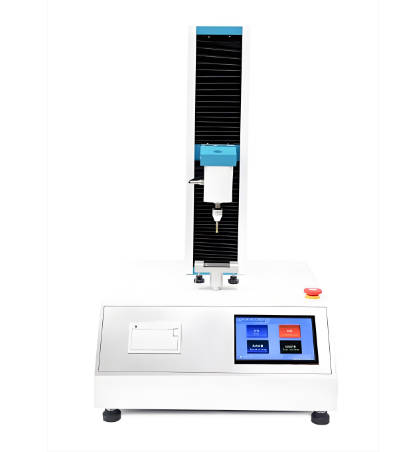
- Free‑film stress measurement – for coatings that can be peeled from the substrate as a free film (e.g., water‑borne coatings, adhesives) – We apply the coating to a release substrate (e.g., PTFE, silicone release paper) and allow it to dry to form a free film. We then cut the free film into a strip and measure its elongation or shrinkage, using a tensile testing machine or a dedicated stress relaxometer. The internal stress is calculated from the strain and the modulus of the free film.
- Real‑time stress monitoring – for dynamic measurement of stress evolution during the drying process, we connect the deflection sensor (for the cantilever method) or the curvature sensor (for the substrate method) to a data logger that records the stress at defined intervals (e.g., every second or every minute) – This provides a complete stress‑time profile, showing the initial rapid stress increase (due to solvent evaporation), the peak stress, the plateau, and the stress relaxation (due to viscoelastic creep).
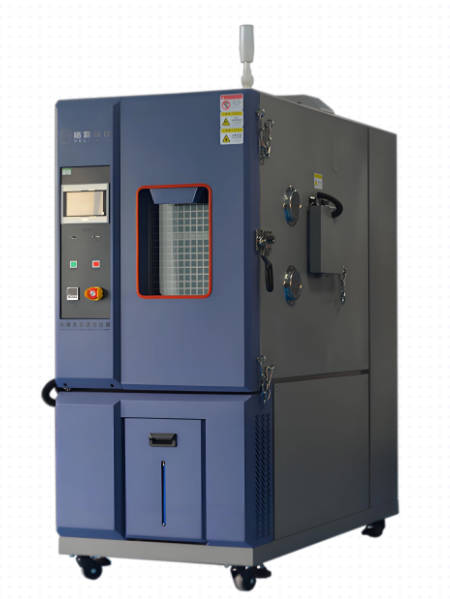
- Stress measurement under controlled environmental conditions – we perform the drying stress test in an environmental chamber that controls temperature (20°C to 100°C) and humidity (10% to 90% RH) to simulate the actual application and drying conditions – This allows us to assess the effect of temperature, humidity, and air flow on the stress development and to optimise the drying schedule.
Evaluation and Interpretation of Drying Stress – Critical Parameters and Failure Prediction
The measured drying stress data is not only a numerical value; it provides valuable insight into the film formation process and the risk of stress‑related failures. We perform a comprehensive analysis and interpretation of the stress data:
- Peak stress – the maximum stress reached during drying, which is the primary indicator of the material's propensity to crack or delaminate – We compare the peak stress with the cohesive strength (tensile strength) of the coating to predict the risk of cracking. If the peak stress exceeds the tensile strength, cracking is likely to occur.
- Stress rate (dσ/dt) – the rate of stress increase, which is influenced by the drying rate and the material's viscoelastic properties – A high stress rate indicates rapid shrinkage and a higher risk of stress concentration, which can lead to cracking.
- Stress relaxation – the decrease in stress over time after the peak, which is due to viscoelastic creep and can reduce the risk of failure – Materials that exhibit significant stress relaxation are less likely to crack, even if the peak stress is high.
- Time to peak stress – the time at which the maximum stress occurs, which is related to the drying time and the solvent evaporation rate – A shorter time to peak stress indicates a more rapid drying schedule.
- Stress gradient – for multi‑layer systems (e.g., primer and topcoat), the stress in each layer can be different, and the stress gradient can cause the coating system to curl or delaminate – We can measure the stress in each layer individually (by preparing samples with different layer thicknesses) and calculate the stress gradient.
Environmental and Process Variables – Effect of Drying Conditions on Stress
Drying stress is highly dependent on the drying conditions – temperature, humidity, air flow, and the nature of the substrate. We offer testing under a range of environmental conditions to help you optimise your drying process and to identify the conditions that produce the lowest internal stress:
- Temperature‑controlled drying – we perform the drying stress test at different temperatures (e.g., 20°C, 40°C, 60°C) to determine the optimal drying temperature that minimises the internal stress – Higher drying temperatures generally accelerate solvent evaporation and polymerisation, but they can also increase the stress.
- Humidity‑controlled drying – we vary the relative humidity (e.g., 30%, 60%, 90% RH) to assess the effect of humidity on the stress development – High humidity can slow down the evaporation of water‑borne coatings, reducing the stress, while low humidity can accelerate evaporation and increase the stress.
- Air‑flow control – we can control the air flow rate (or the air velocity) over the sample surface to simulate the effect of forced‑air drying (e.g., in a drying oven or on a production line) – A higher air flow can accelerate drying but may also increase the stress.
- Substrate effect – we can perform the test on different substrates (e.g., steel, aluminium, glass, plastic) to evaluate the effect of the substrate's thermal expansion and stiffness on the stress development – The stress in the coating is partly due to the mismatch between the thermal expansion of the coating and that of the substrate.
- Thickness effect – we can perform the test with different coating thicknesses to determine the relationship between coating thickness and internal stress – In many cases, thicker coatings develop higher internal stress and are more prone to cracking.
Calibration, Accuracy, and Quality Assurance
All drying stress tests are performed under our ISO/IEC 17025:2017 accredited quality system, with full traceability of temperature, humidity, displacement, and time measurements:
- Calibration of displacement sensors (LVDT, laser) – using a certified gauge block or a precision micrometer, with an uncertainty of < 0.5 µm – We calibrate the sensors at the test temperature to account for any thermal expansion.
- Calibration of temperature and humidity sensors – using a certified reference thermometer (PT100) and a certified hygrometer, with an uncertainty of ±0.2°C for temperature and ±2% RH for humidity – We calibrate the sensors annually and verify them before each test series.
- Calibration of the coating thickness measurement – using a calibrated thickness gauge (e.g., a magnetic or eddy‑current gauge) with an uncertainty of < 1% of the reading – We measure the coating thickness at multiple points and use the average value for the stress calculation.
- Verification with reference materials – we test reference materials (e.g., a standard coating with a known drying stress) at regular intervals to confirm the stability and reproducibility of the test system – The results are tracked on control charts.
- Interlaboratory comparison (ILC) – we participate in proficiency testing schemes for coating stress measurement and environmental testing – Our results are regularly compared with those of other accredited laboratories.
Compliance with Belgian and European Regulations
Our drying stress testing services support your conformity assessment under the relevant European directives and Belgian regulations for construction products, REACH, and product quality:
- Construction Products Regulation (CPR, EU 305/2011) – for coatings and adhesives used in building applications – The drying stress data is relevant for assessing the durability and adhesion of the coating to the substrate, which is part of the performance declaration.
- REACH Regulation (EC 1907/2006) – for the evaluation of substances that may be affected by drying stress – The stress data can be used to optimise the formulation and to reduce the risk of cracking, which can release substances into the environment.
- Belgian national regulations – including the ARAB (General Regulation on Occupational Safety) for coatings and adhesives in workplaces – The drying stress data is used to assess the risk of coating failure, which can lead to product defects and safety hazards.
Reporting and Accreditation
All drying stress tests are performed under our ISO/IEC 17025:2017 accredited quality system, with full traceability of all measurement parameters. Our BELAC‑accredited reports are recognised by the FOD Economie, Belgian notified bodies, and European authorities. Each report includes:
- A complete description of the test material, the substrate, and the test conditions.
- The measured drying stress (in MPa) as a function of time (stress‑time curve).
- The peak stress, the stress rate, and the time to peak stress.
- Any observations of cracking, delamination, or other stress‑related defects.
- A comparison with the material's tensile strength (if available) to predict the cracking risk.
- Calibration certificates and measurement uncertainty statements.
- A professional conclusion on the drying stress behaviour of the material and its suitability for the intended application, with recommendations for formulation or process improvement if necessary.
Our reports provide the confidence you need to optimise your coatings and adhesives, to prevent stress‑related failures, and to meet the quality and performance standards of the Belgian and European market.
Why Choose Our Drying Stress Testing Service?
We understand that drying stress is a silent but potentially destructive force that can undermine the performance and appearance of coatings, adhesives, and films. Our testing service provides the quantitative data you need to understand the stress development, to predict the risk of cracking and delamination, and to optimise your formulations and drying processes. We offer rapid scheduling, flexible test programmes (from single‑point screening to comprehensive environmental and thickness‑variation studies), and clear, practical interpretation of results – we do not just give you a stress value; we explain the mechanisms behind the stress, the influence of drying conditions, and the actions you can take to reduce the stress. We work closely with your formulators, process engineers, and quality managers to design a test plan that matches your specific material, substrate, and production conditions. With state‑of‑the‑art stress measurement equipment, environmental chambers, and a highly experienced team, our drying stress testing service delivers the accuracy, repeatability, and regulatory acceptance you need to ensure the quality and reliability of your coated and adhesive products. Contact us to discuss your materials, your drying conditions, and your performance targets – we will develop a tailored test programme that provides the definitive assessment of your product's drying stress behaviour.