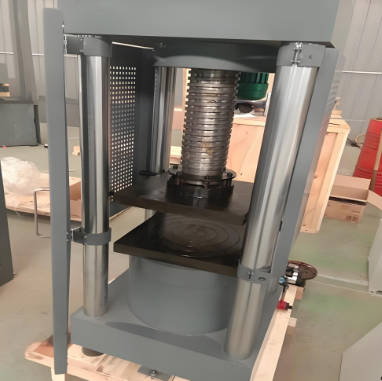
Compression Strength Testing Service – Accredited Measurement of Compressive Properties for Metals, Plastics, Composites, and Structural Materials
For Belgian manufacturers, material engineers, and quality managers in the construction, automotive, aerospace, packaging, and medical device industries, the compression strength of a material is a fundamental mechanical property that governs its ability to withstand crushing, buckling, or deformation under compressive loads. Whether you are designing load‑bearing columns, evaluating the crush resistance of packaging, or qualifying a new composite material, accurate compression testing provides the essential data for structural design, quality assurance, and regulatory compliance. Our ISO/IEC 17025 accredited laboratory offers a comprehensive compression strength testing service that precisely measures the compressive strength, modulus, yield point, and deformation behaviour of a wide range of materials – from rigid plastics and elastomers to metals, composites, foams, and building materials. With a full suite of servo‑hydraulic and electromechanical testing machines, a variety of compression platens and fixtures, and environmental conditioning capabilities, we provide reliable, repeatable data that supports your product development, production quality, and certification needs. Our BELAC‑accredited reports are recognised by the Belgian Federal Public Service (FOD Economie), notified bodies, and authorities under the Construction Products Regulation (EU 305/2011), the Machinery Directive (2006/42/EC), the Pressure Equipment Directive (2014/68/EU), and the relevant harmonised standards (ISO 604, ASTM D695, ISO 844, ASTM E9, etc.).
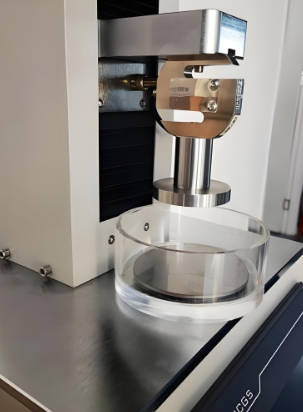
Materials and Products We Regularly Test
We accept a wide variety of materials and components that are subjected to compressive forces in service. Our test fixtures and platens are adaptable to different specimen geometries, from small cylindrical buttons to large structural sections. Common samples include:
- Plastics and polymers – thermoplastics (PE, PP, PVC, PET, PA, PC, ABS, POM), thermosets (epoxy, phenolic), and elastomers.
- Metals and alloys – carbon steels, aluminium alloys, copper, titanium, and cast irons.
- Composites and laminates – glass‑fibre and carbon‑fibre reinforced plastics (GFRP, CFRP), sandwich panels, and honeycomb cores.
- Foams and cellular materials – polyurethane, polyethylene, polystyrene, and rubber foams for cushioning, insulation, and energy absorption.
- Building materials – concrete, mortar, masonry blocks, bricks, and wood products (structural timber, plywood).
- Packaging materials – corrugated board, paper tubes, and moulded pulp.
- Additively manufactured parts – for evaluating the compressive performance of 3D‑printed polymers and metals.
- Finished components – seals, gaskets, cushioning pads, and structural inserts.
Core Test Methods – Compression Testing for Different Material Types
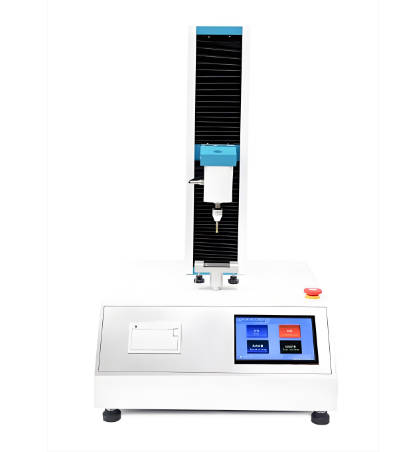
Our compression strength testing service follows the most recognised international and European standards, adapted for the specific material and the required parameters. We use constant‑rate‑of‑extension (CRE) testing machines equipped with compression platens, and we measure the deformation using displacement transducers or strain gauges. The test involves placing the specimen between two parallel compression platens and applying a compressive force at a controlled speed until the specimen deforms, yields, or fractures:
- Compression test for plastics – according to ISO 604, ASTM D695, and NBN EN ISO 604 – We test standard cylindrical or prismatic specimens (typically 12.7 mm diameter and 25.4 mm length) at a defined crosshead speed (e.g., 1.3 mm/min). We determine the compressive strength (at yield or break), the compressive modulus (slope of the linear elastic region), and the deformation at yield. For rigid plastics, we also measure the ultimate compressive strength, and for elastomeric plastics, we determine the stress at a given strain (e.g., 10%, 25%, 50%).
- Compression test for metals – according to ASTM E9, ISO 4506, and NBN EN ISO 4506 – We test cylindrical specimens (typically with a length‑to‑diameter ratio of 2:1 to 3:1) to determine the compressive yield strength (0.2% offset), the ultimate compressive strength, and the modulus of elasticity. The test is performed at a defined strain rate or crosshead speed, and we record the load‑deformation curve. For ductile metals, we also measure the reduction in height and any barrelling effect.
- Compression test for composites – according to ISO 8515 (for fibre‑reinforced plastics), ASTM D695 (for unidirectional composites), and NBN EN ISO 8515 – We test specimens with a defined fibre orientation (0°, 90°, or 45°) and with a short gauge length to prevent buckling. We measure the compressive strength and modulus, and we examine the failure mode (crushing, delamination, or fibre microbuckling).
- Compression test for foams and cellular materials – according to ISO 844, ASTM D1621, and NBN EN ISO 844 – We test cylindrical or prismatic specimens (typically 50 mm × 50 mm × 50 mm) at a defined speed (e.g., 10% of the specimen height per minute). We determine the compressive stress at a given strain (e.g., 10%, 25%, 50%), the compressive modulus, and the energy absorption (by integrating the stress‑strain curve).
- Compression test for building materials – concrete and masonry – according to EN 12390‑3 (concrete), EN 1052‑1 (masonry), and ASTM C39 (concrete cylinders) – We test cylinders, cubes, or prisms at a controlled loading rate, and we measure the compressive strength (in MPa). We also record the failure mode (crushing, splitting, or shear).
Deformation and Failure Mode Analysis
Beyond the numerical strength values, we provide a detailed analysis of the deformation behaviour and the failure mode, which is essential for understanding the material's response under compressive loading:
- Stress‑strain curve – we generate a complete stress‑strain curve from the load‑displacement data, showing the elastic region, the yield point, the plateau (if any), and the post‑yield behaviour (softening or hardening) – The shape of the curve provides insight into the material's ductility, brittleness, and energy‑absorption characteristics.
- Determination of the compressive modulus – we calculate the modulus from the initial linear portion of the stress‑strain curve, which is a measure of the material's stiffness under compression – This parameter is critical for design calculations where deflection under load is a concern.
- Failure mode classification – we visually inspect the specimen after the test and classify the failure mode as buckling, barrelling, crushing, shear fracture, or splitting – The failure mode is recorded and, if relevant, correlated with the material's microstructure and processing.
- Energy absorption – we calculate the total energy absorbed by the specimen up to a defined strain (e.g., 50% strain for foams) by integrating the stress‑strain curve – This is particularly important for impact‑absorbing and cushioning materials.
Environmental and Specialised Compression Testing
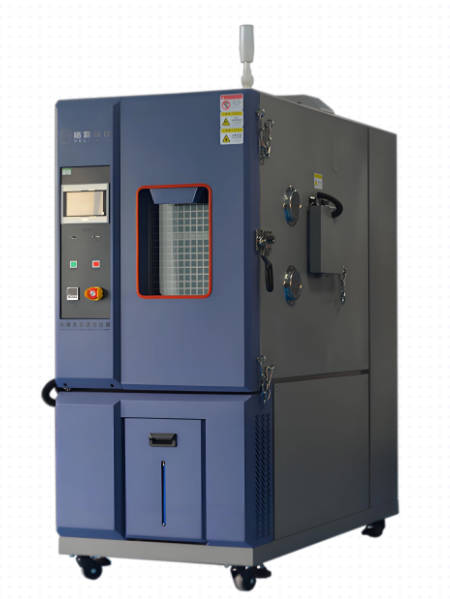
We offer compression testing under controlled environmental conditions to evaluate the effect of temperature, humidity, and other factors on the compressive properties:
- Temperature‑controlled compression test – we perform the test at elevated (up to 150°C) or low (down to -40°C) temperatures using an environmental chamber or heated/cooled platens – This is essential for materials that are used in high‑temperature or cold‑climate applications.
- Humidity‑conditioned compression test – we condition the specimens at high humidity (e.g., 95% RH) and then perform the test to assess the effect of moisture on the compressive strength – This is particularly relevant for hygroscopic polymers and cellulosic materials.
- High‑strain‑rate compression test – for materials subject to impact or rapid loading (e.g., crashworthiness, packaging drop protection) – We perform the test at higher crosshead speeds (e.g., 500 mm/min) or using a drop‑weight impact system to measure the dynamic compressive strength.
- Creep compression test – we apply a constant compressive load for a defined period (e.g., 1,000 hours) and monitor the deformation over time – This is used to assess the long‑term dimensional stability of materials under sustained load.
- Cyclic compression test – we apply a repeated compressive loading (e.g., 1,000 to 100,000 cycles) at a defined stress amplitude and frequency to evaluate the fatigue behaviour of the material under compression – This is relevant for components subject to repeated compressive stresses.
Calibration, Accuracy, and Quality Assurance
All compression tests are performed under our ISO/IEC 17025:2017 accredited quality system, with full traceability of force, displacement, and temperature measurements:
- Calibration of the testing machine – load cell, displacement transducer, and speed – according to ISO 7500‑1, ASTM E74, and EN ISO 7500‑1 – We calibrate the load cell annually using certified reference weights (class 0.5), achieving a force measurement uncertainty < 0.5% of the reading. The displacement is verified using a calibrated extensometer, and the speed is verified using a calibrated tachometer.
- Calibration of temperature and humidity sensors – according to ASTM E220, ISO 17025 – We calibrate the sensors against certified reference instruments, with an uncertainty of ±0.2°C for temperature and ±2% RH for humidity.
- Verification with reference materials – we test reference materials (e.g., standard polymer blocks or metal cylinders with known compressive properties) at regular intervals to confirm the stability and reproducibility of the test system – The results are tracked on control charts.
- Interlaboratory comparison (ILC) – we participate in proficiency testing schemes for compression testing of plastics, metals, and construction materials – Our results are regularly compared with those of other accredited laboratories.
Compliance with Belgian and European Regulations
Our compression strength testing services support your conformity assessment under the relevant European directives and Belgian regulations for construction products, machinery, and packaging:
- Construction Products Regulation (CPR, EU 305/2011) – for building materials such as concrete, masonry, and insulation – The compressive strength is a key performance parameter for the Declaration of Performance (DoP) of many construction products, and our tests are performed according to the harmonised standards (EN 12390, EN 1052, EN 826, etc.).
- Machinery Directive (2006/42/EC) – for components that are subject to compressive loads in machinery and equipment – The compressive strength data supports the design verification and the risk assessment of load‑bearing parts.
- Pressure Equipment Directive (PED 2014/68/EU) – for materials used in pressure vessels and piping that may be subject to compressive forces – Our test data is used to validate the design and material selection for pressure‑containing components.
- Packaging and Packaging Waste Directive (94/62/EC) – for packaging materials that must withstand stacking and handling – The compressive strength of corrugated board, plastic containers, and other packaging materials is an essential requirement for ensuring product protection during transport.
Reporting and Accreditation
All compression strength tests are performed under our ISO/IEC 17025:2017 accredited quality system, with full traceability of all measurement parameters. Our BELAC‑accredited reports are recognised by the FOD Economie, Belgian notified bodies, and European authorities. Each report includes:
- A complete description of the test specimen (material, dimensions, preparation, and conditioning).
- The test method and conditions (standard, test speed, temperature, humidity).
- The measured compressive strength, modulus, and deformation parameters.
- The stress‑strain curve (graphical and tabulated data).
- The failure mode description and photographic documentation.
- Calibration certificates and measurement uncertainty statements.
- A professional conclusion on the compressive behaviour of the material and its suitability for the intended application, with recommendations for design or process improvement if necessary.
Our reports provide the confidence you need to certify your materials, approve deliveries, and meet the safety and quality standards of the Belgian and European market.
Why Choose Our Compression Strength Testing Service?
We understand that compressive properties are often the governing factor in the design of structural and protective components, and that accurate, reliable testing is essential for product safety and performance. Our team offers rapid scheduling, flexible test programmes (from simple screening to comprehensive multi‑temperature and strain‑rate studies), and clear, practical interpretation of results – we do not just give you a strength value; we explain the deformation mechanisms, the implications for your design, and the potential for material improvement. We work closely with your material engineers, designers, and quality teams to select the most appropriate test method, the relevant standard, and the acceptance criteria for your specific material and application. With state‑of‑the‑art testing machines, a range of compression fixtures, environmental chambers, and a highly experienced team, our compression strength testing service delivers the accuracy, repeatability, and regulatory acceptance you need to ensure that your materials and products perform reliably under compressive loads. Contact us to discuss your materials, your compression requirements, and your performance targets – we will develop a tailored test programme that provides the definitive assessment of your product's compressive strength.