Fireproof Coating and Fire Resistance Testing Service – Accredited Evaluation of Passive Fire Protection for Structural Steel, Timber, Concrete, and Cable Systems
For Belgian architects, structural engineers, construction companies, facility managers, and fire safety consultants, the performance of fireproof coatings and passive fire protection systems is a critical safety parameter that determines the stability of buildings and infrastructure during a fire. Our ISO/IEC 17025 accredited laboratory offers a comprehensive fireproof coating and fire resistance testing service that quantifies the thermal insulation, intumescent behaviour, adhesion, and durability of fire‑protective coatings applied to structural steel, timber, concrete, cables, and other substrates. With our BELAC accreditation, our test reports are recognised by the Belgian Federal Public Service (FOD Economie), notified bodies, and all relevant authorities under the Construction Products Regulation (EU 305/2011), the Belgian fire safety regulations (NBN S 21‑208, NBN EN 13501‑2), and the ARAB workplace safety requirements.
Products and Specimens We Regularly Test
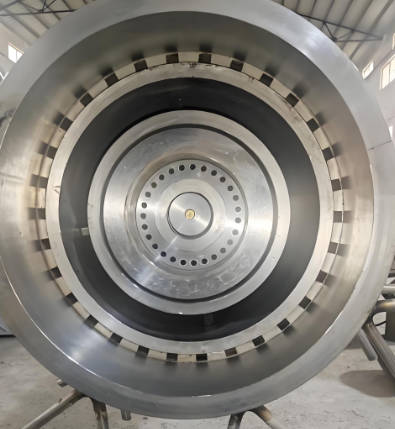
We accept a wide range of fire‑protective coatings and protected assemblies, from small‑scale laboratory specimens to full‑scale structural elements. Our test facilities include fire resistance furnaces, cone calorimeters, and environmental conditioning chambers to cover the complete evaluation cycle. Common samples include:
- Intumescent coatings – for steel, aluminium, and timber substrates.
- Non‑intumescent fireproofing sprays and plasters – cementitious, gypsum‑based, and silicate‑based systems.
- Timber and wood‑based panels – with fire‑retardant treatments or coatings.
- Concrete and masonry surfaces – with fireproof coatings for tunnel linings and structural elements.
- Cable coating systems – for fire‑resistant cabling in buildings and industrial plants.
- Multi‑layer coating systems – including primers, intermediate layers, and topcoats.
- Coated steel beams, columns, and decking – representative of actual building components.
- Repair and maintenance samples – to verify the remaining performance of aged or damaged systems.
Fire Reaction Testing – Classification of Coating Performance Under Fire Exposure
The fire reaction of a coating determines its contribution to fire development, smoke production, and flame spread. Our fireproof coating and fire resistance testing service includes the full suite of reaction‑to‑fire tests required for CE marking and Belgian market acceptance:
- Reaction to fire – single burning item (SBI) test according to EN 13823 and NBN EN 13823 – We test coated panels or substrates in a medium‑scale test configuration that simulates a developing fire. The specimen is exposed to a controlled flame and heat flux, and we measure the heat release rate (HRR), the total heat release (THR), the flame spread, and the smoke production. The results are used to determine the Euroclass (A2, B, C, D, E, or F) and the smoke class (s1, s2, s3) of the coating system.
- Ignitability test according to EN ISO 11925‑2 and NBN EN ISO 11925‑2 – We expose a vertically mounted specimen to a small flame (15 or 30 seconds) and assess the flame spread height, the time to self‑extinction, and the occurrence of flaming droplets. This test is used for the classification of products in Euroclass B to E.
- Cone calorimeter test according to ISO 5660‑1 and NBN EN ISO 5660‑1 – We measure the heat release rate (HRR), the peak heat release rate (PHRR), the total heat release (THR), the time to ignition, and the smoke extinction area (SEA) under a constant radiant heat flux (typically 50 kW/m²). This test provides fundamental data on the fire behaviour of the coating and the substrate.
- Smoke and toxicity measurement – according to EN 13823 (SBI) and ISO 5659‑2 (smoke density chamber) – We quantify the smoke density (Ds) and the specific optical density (Dₘₐₓ) in a closed chamber, and we analyse the combustion gases (CO, CO₂, HCN, NOx, SO₂) using gas chromatography to assess the toxic hazard.
- Flame spread and heat release for cables – according to EN 50399, IEC 60332‑3, and NBN EN 50399 – For cable coatings, we perform the cable tray test, measuring the flame spread distance, the heat release rate, and the smoke production.
Fire Resistance Testing – Thermal Insulation and Load‑Bearing Capacity
Fire resistance is the ability of a protected structural element to maintain its load‑bearing function and to limit temperature rise during a fire. Our fire resistance tests follow the time‑temperature curves defined in European standards and are performed in a certified fire resistance furnace:
- Fire resistance test for steel columns and beams – EN 1365‑1 (load‑bearing steel structures) and EN 1365‑2 (load‑bearing concrete structures) and NBN EN 1365‑1 – We mount the coated steel section in the furnace and apply a constant mechanical load (typical service load). The furnace is heated according to the standard temperature‑time curve (ISO 834, EN 1363‑1). We measure the temperature of the steel at several locations (e.g., the web and the flanges) until one of the critical temperatures (typically 550°C for load‑bearing steel) is reached. The time to reach that temperature is the fire resistance rating (e.g., R30, R60, R90, or R120).
- Fire resistance test for timber – EN 1365‑3 (load‑bearing timber structures) and NBN EN 1365‑3 – We test coated timber beams or columns under a mechanical load in the furnace. The time to reach the critical temperature (typically 300°C for timber) is recorded, and the residual cross‑section and the charring depth are measured after the test.
- Fire resistance test for concrete – EN 1365‑2 (concrete structures) and NBN EN 1365‑2 – We test coated concrete slabs or columns, measuring the temperature on the unexposed face and the reinforcement temperature. The fire resistance is determined by the time at which the temperature rise exceeds the specified limit (e.g., 140°C for the unexposed face).
- Fire resistance test for cable protection – EN 1366‑5 (cable systems) and NBN EN 1366‑5 – We test cable trays with coated or protected cables in the furnace, applying the standard fire curve. The test is passed if the cables maintain their circuit integrity (e.g., the electrical circuit remains uninterrupted) or if the temperature on the cable surface does not exceed a specified limit.
- Fire resistance test with mechanical impact – to simulate falling debris and thermal shock – For some applications, we combine the fire resistance test with a mechanical impact (e.g., a falling mass or a pendulum hammer) during the heating phase, to assess the resistance of the coating to fragmentation and spalling.
Intumescent Coating Characterisation – Swelling, Adhesion, and Performance
Intumescent coatings are the most common fireproofing systems for steel. Our testing programme includes dedicated methods to evaluate their swelling behaviour and their performance under fire:
- Intumescence factor measurement – we measure the dry film thickness before the fire test and the swollen (char) thickness after the fire test – The ratio of swollen to dry thickness (the expansion factor) indicates the effectiveness of the intumescent reaction. A minimum expansion factor of 5‑10 is typically required for steel protection.
- Char density and morphology – we weigh the char and measure its volume to determine the density, and we examine its structure using optical microscopy – A dense, closed‑cell char provides better thermal insulation than a porous, cracked char. The char quality is correlated with the fire resistance performance.
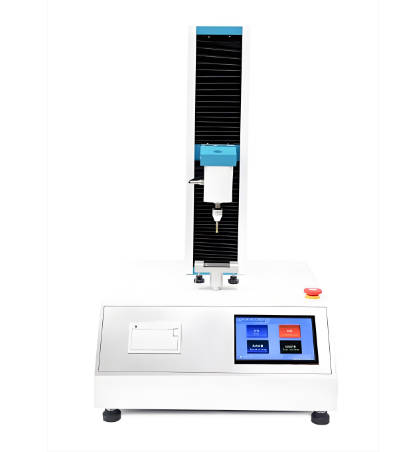
- Adhesion of the coating before and after fire exposure – using a pull‑off test (ISO 4624, ASTM D4541) – We measure the adhesion strength of the coating to the substrate before the fire test and on the residual char after the test. A significant loss of adhesion can lead to coating detachment and loss of fire protection.
- Thermal conductivity of the intumescent char – measured using a guarded hot plate or a heat flow meter (ASTM C518, ISO 8301) – The thermal conductivity of the char layer is a key parameter in predicting the thermal insulation performance. We measure the char's conductivity at ambient temperature and, on request, at elevated temperatures.
- Effect of coating thickness and application method – we test specimens with different dry film thicknesses and from different application procedures (spray, brush, roller) to determine the optimal application conditions – The fire resistance rating is directly related to the coating thickness; we provide a thickness‑versus‑fire‑resistance curve for your specific product.
Durability and Environmental Conditioning – Long‑Term Performance Assessment
Fireproof coatings must maintain their fire performance throughout the service life of the building, often for 50 years or more. Our service includes accelerated aging and conditioning tests to evaluate the durability of the coating system:
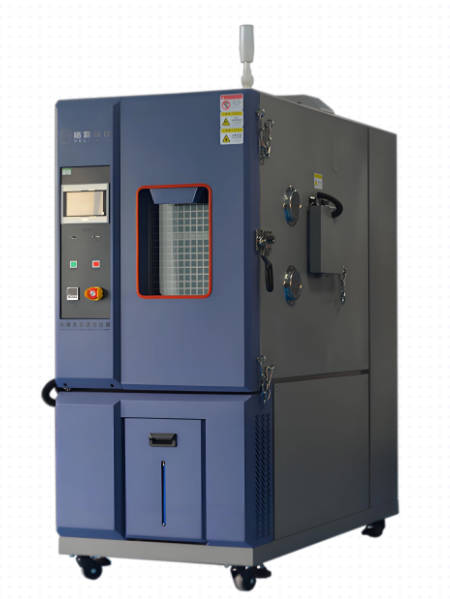
- Thermal cycling and moisture conditioning – according to EN 13381‑4 (for steel structures) and EN 13381‑8 (for timber) – We subject coated specimens to cycles of high temperature (e.g., 70°C) and humidity (e.g., 95% RH), followed by low temperature (e.g., -20°C), for up to 100 cycles. After conditioning, we perform the fire resistance test to measure the residual performance.
- UV and weathering exposure – according to ISO 4892, ASTM G154, and EN 13381‑4 – For exterior applications, we expose coated specimens to UV radiation and water spray (xenon‑arc or fluorescent UV) for 500 to 2,000 hours, then conduct the fire resistance test to assess the degradation of the fire protection properties.
- Salt spray and corrosion exposure – according to ASTM B117, ISO 9227, and EN 13381‑4 – For coastal or industrial environments, we expose coated steel specimens to salt spray (neutral or acetic acid) for up to 1,000 hours, then test the fire resistance and the adhesion of the coating.
- Mechanical abrasion and impact conditioning – to simulate construction site damage – We subject the coated surface to a standardised abrasion or impact (e.g., a 0.5 kg mass dropped from a defined height) and then perform the fire resistance test to evaluate the sensitivity of the coating to mechanical damage.
- Accelerated aging programme – combining UV, temperature, humidity, and salt spray – to simulate a full 50‑year service life – We offer a comprehensive conditioning programme based on EN 13381‑4, using a cyclic exposure sequence that reflects the actual building environment.
Calibration, Accuracy, and Quality Assurance
All fire tests are performed under our ISO/IEC 17025:2017 accredited quality system, with full traceability of temperature, pressure, load, and time measurements:
- Calibration of the fire furnace thermocouples – according to EN 1363‑1, ASTM E220, and NBN EN 1363‑1 – We regularly check the furnace thermocouples against certified reference thermocouples, ensuring temperature accuracy better than ±5°C.
- Calibration of load cells and hydraulic actuators – according to ISO 7500‑1, ASTM E74, and EN ISO 7500‑1 – For load‑bearing fire tests, we calibrate the loading system with certified load cells, achieving a measurement uncertainty < 0.5%.
- Calibration of heat flux meters and calorimeters – using a reference blackbody and a certified heat flux sensor (ISO 14934, ASTM E511) – The cone calorimeter is calibrated using a reference standard with a known heat release rate.
- Verification with reference materials – we test reference specimens (e.g., a steel column with a known coating system) to validate the furnace performance and the reproducibility of the test results – Regular validation tests are performed to ensure that the furnace and instrumentation produce consistent results over time.
- Interlaboratory comparison (ILC) – we participate in proficiency testing schemes for fire reaction and fire resistance tests – Our results are regularly compared with those of other accredited laboratories worldwide.
Compliance with Belgian and European Regulations
Our fireproof coating and fire resistance testing services support the conformity assessment and certification of passive fire protection products under the relevant European directives and Belgian regulations:
- Construction Products Regulation (CPR, EU 305/2011) – for fireproof coatings and protected structural elements – The fire reaction class (Euroclass) and the fire resistance rating (R, E, I, etc.) are essential parameters for the Declaration of Performance (DoP). Our tests are performed according to the harmonised standards (EN 13501‑1, EN 13501‑2, EN 13381, EN 1365).
- Belgian fire safety regulations – Royal Decree of 7 July 1994 (basic norms for fire prevention) and NBN S 21‑208 – The fire resistance of structural elements is a requirement for building permits and public buildings. Our reports are accepted by the fire brigade and the local authorities.
- ARAB (General Regulation on Occupational Safety) – for passive fire protection in workplaces and industrial installations – Our test results demonstrate that the fireproofing system provides adequate protection for workers and assets.
- Belgian building codes and insurance requirements – our reports are used by architects, engineers, and insurance companies to verify the adequacy of the fire protection design – The fire resistance rating is a key input for the insurance premium calculation and the building risk assessment.
- REACH Regulation (EC 1907/2006) – for the chemical substances in the coating formulations – The fire test data may be used to support the safety evaluation of the coating components under fire conditions.
Reporting and Accreditation
All fire tests are performed under our BELAC‑accredited system, recognised by the FOD Economie, Belgian notified bodies, and European authorities. Each report includes:
- A complete description of the test specimen (substrate, coating system, dry film thickness, application method).
- Detailed test conditions (furnace temperature curve, applied load, conditioning regime).
- Time‑temperature curves for the furnace, the substrate, and the unexposed face (for insulation tests).
- Load‑deflection data (for load‑bearing tests).
- The fire resistance rating in minutes (R, E, I, or W classification).
- The Euroclass classification (A2, B, C, D, E, F, and smoke class).
- Photographic documentation of the test set‑up and the post‑test condition of the specimen.
- Measurement uncertainty and calibration records.
- A professional conclusion on the suitability of the coating for the intended application, with recommendations for thickness, application, or maintenance.
Our reports provide the confidence you need to certify your products, obtain building permits, and ensure the fire safety of your structures.
Why Choose Our Fireproof Coating and Fire Resistance Testing Service?
We understand that passive fire protection is a critical life‑safety element, and that rigorous, reliable testing is essential to protect people and property. Our team offers rapid scheduling, flexible test programmes (from small‑scale screening tests to full‑scale fire resistance validation), and clear, actionable interpretation of results – we do not simply deliver a rating; we explain the thermal and mechanical behaviour of the coating, the effect of thickness and application, and the durability under real‑world conditions. We work closely with your coating suppliers, fire consultants, and project teams to design a test programme that matches your specific substrate, your service environment, and your regulatory requirements. With state‑of‑the‑art fire furnaces, cone calorimeters, conditioning chambers, and an experienced team, our fireproof coating and fire resistance testing service delivers the accuracy, repeatability, and regulatory acceptance you need to ensure that your fire protection systems perform as required. Contact us to discuss your coating system, your substrate, and your performance targets – we will develop a tailored test plan that provides the definitive evidence of your product's fire safety performance.