Humidity and Heat Aging Testing Service – Accredited Assessment of Material Durability Under Combined Temperature and Moisture Exposure
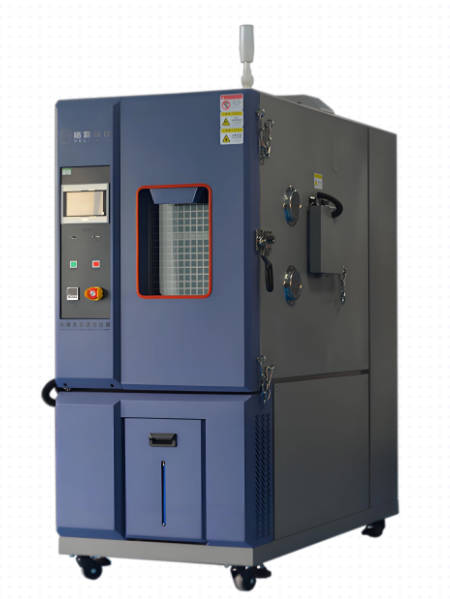
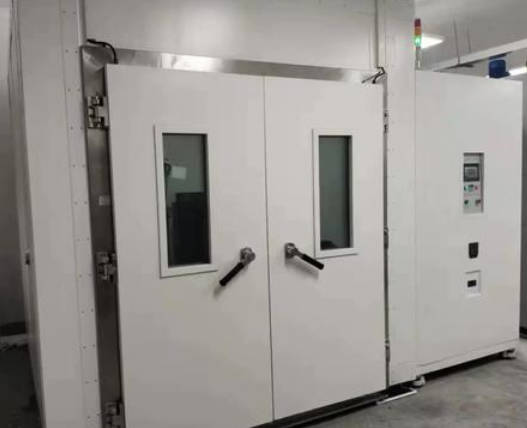
For Belgian manufacturers, material engineers, and quality managers in the automotive, electronics, construction, packaging, and renewable energy sectors, the combined effects of elevated temperature and high humidity represent one of the most aggressive environmental stressors that materials and components can encounter during service. Humidity and heat aging can cause hydrolysis, oxidation, delamination, loss of adhesion, blistering, and significant degradation of mechanical and electrical properties, leading to premature failure and costly warranty claims. Our ISO/IEC 17025 accredited laboratory offers a specialised humidity and heat aging testing service that simulates the long‑term effects of tropical, subtropical, and industrial climatic conditions on plastics, coatings, composites, elastomers, electronic assemblies, and building materials. Using programmable environmental chambers with precise temperature and humidity control, we conduct accelerated aging tests in accordance with international standards and provide comprehensive property retention data to support product development, quality assurance, and regulatory compliance. Our BELAC‑accredited reports are recognised by the Belgian Federal Public Service (FOD Economie), notified bodies, and authorities under the Low Voltage Directive (2014/35/EU), the Machinery Directive (2006/42/EC), the Construction Products Regulation (EU 305/2011), and the relevant harmonised standards (IEC 60068‑2‑78, ASTM D2247, ISO 6270‑2, etc.).
Materials and Products We Regularly Test
We accept a wide range of materials, components, and finished products that are exposed to humid and hot environments during storage, transport, or service. Our environmental chambers accommodate specimens of various sizes, from small coupons to complete assemblies. Common samples include:
- Plastics and polymers – thermoplastics (PE, PP, PVC, PET, PA, PC, ABS, POM), thermosets (epoxy, polyester), and elastomers.
- Coatings and paints – automotive, architectural, industrial, and marine coatings.
- Composites and laminates – glass‑fibre and carbon‑fibre composites, sandwich panels.
- Electronic assemblies – PCBs, connectors, cable harnesses, sensors, and complete housings.
- Seals, gaskets, and adhesives – for automotive, construction, and industrial applications.
- Textiles and nonwovens – outdoor fabrics, upholstery, and technical textiles.
- Building materials – roofing membranes, insulation, wood‑based panels, and waterproofing systems.
- Solar panels and photovoltaic modules – for outdoor durability assessment.
- Medical devices and packaging – for sterilisation and storage validation.
Core Test Methods – Constant Humidity, Cyclic Condensation, and Damp Heat
Our humidity and heat aging testing service employs a suite of standardised test protocols that cover a wide range of climatic conditions, from constant high‑humidity exposure to cyclic condensation and damp heat testing. We select the appropriate method based on your material, application, and target standard:
- Damp heat test – according to IEC 60068‑2‑78, EN 60068‑2‑78, and NBN EN 60068‑2‑78 (constant high humidity) – We expose specimens to a constant temperature of 40°C and 93% relative humidity (or other defined conditions, such as 85°C/85% RH) for durations ranging from 24 hours to 1,000 hours or more. After exposure, we evaluate changes in appearance (blistering, discolouration, cracking), mechanical properties (tensile, flexural, impact), electrical properties (insulation resistance, dielectric strength), and adhesion (cross‑cut, pull‑off). This test is widely used for electronic components, plastics, and coatings.
- Condensation test (water vapour exposure) – according to ISO 6270‑2, ASTM D2247, and NBN EN ISO 6270‑2 – We expose specimens to a humid environment at a constant temperature (typically 40°C or 50°C) with continuous condensation on the test surface. The condensation simulates the effect of dew and moisture films that form on outdoor surfaces. We monitor the specimens for blistering, rusting, and loss of coating adhesion, and we perform periodic inspections to assess the progression of degradation.
- Cyclic damp heat test – according to IEC 60068‑2‑30, EN 60068‑2‑30, and NBN EN 60068‑2‑30 – We apply a cyclic temperature and humidity profile, typically cycling between 25°C and 55°C with high humidity (95‑100% RH) and condensation phases. The test is designed to simulate tropical conditions with daily temperature and humidity variations. This test is particularly relevant for outdoor electronic equipment, automotive interior components, and building materials exposed to diurnal weather cycles.
- Humidity‑freeze test – according to IEC 61215 (for PV modules), ASTM D2247 combined with freeze cycles – For photovoltaic modules and outdoor materials, we combine damp heat exposure with freeze cycles (e.g., -40°C) to simulate the combined effect of moisture and sub‑zero temperatures. This test is essential for assessing the resistance of materials to freeze‑thaw damage and moisture ingress.
- High‑temperature humidity with thermal cycling – we alternate between high‑humidity exposure and elevated temperature (e.g., 85°C/85% RH) followed by rapid cooling, to assess the resistance to thermal shock in a humid environment – This is particularly relevant for electronic assemblies and encapsulated components that experience rapid temperature changes in humid conditions.
- Customised humidity‑heat profiles – we can design test cycles that match your specific service environment, including step changes in temperature and humidity, variations in the rate of change, and the inclusion of dry‑out phases – We work with you to develop a profile that replicates the actual climatic conditions your product will encounter.
Evaluation Criteria – Quantifying Deterioration After Aging
After humidity and heat aging, we perform a comprehensive evaluation to quantify the extent of degradation and to provide actionable engineering insights:
- Visual and optical inspection – we examine the specimens for blistering, cracking, chalking, discolouration, corrosion, and loss of gloss, using standard rating scales (ISO 4628, ASTM D714, ASTM D610) – We provide high‑resolution photographic documentation of the specimens before and after exposure.
- Mechanical property retention – we re‑test tensile, flexural, impact, and hardness properties of exposed specimens and compare the results with unexposed controls – We report the percentage retention of each property, which is a direct measure of the material's resistance to humidity‑heat degradation.
- Electrical property testing – for insulation materials and electronic components, we measure insulation resistance, dielectric strength, surface resistivity, and contact resistance after exposure – A significant decrease in these properties indicates moisture ingress and degradation.
- Adhesion testing – for coatings and paint systems, we perform cross‑cut (ISO 2409, ASTM D3359) or pull‑off (ISO 4624, ASTM D4541) tests to evaluate the loss of adhesion due to moisture penetration – We report the adhesion class or the pull‑off strength and compare with unexposed specimens.
- Chemical analysis – we use FTIR spectroscopy to detect chemical changes (oxidation, hydrolysis, chain scission) in polymers, and we perform DSC or TGA to assess changes in thermal properties (Tg, crystallinity, decomposition temperature) – These analyses provide molecular‑level evidence of degradation mechanisms.
- Mass and dimensional change – we measure the mass gain (or loss) and any dimensional changes (swelling, shrinkage) caused by moisture absorption and thermal expansion – This data is essential for understanding the physical effects of humidity on the material.
Environmental Conditioning and Accelerated Protocols
To simulate realistic service life or to accelerate degradation for product qualification, we offer a range of conditioning and accelerated testing protocols:
- High‑temperature humidity testing (85°C/85% RH) – for accelerated aging of electronic components and plastics, according to JEDEC JESD22‑A101 and IEC 60068‑2‑78 – This is one of the most common accelerated tests for evaluating the resistance of materials to moisture and heat.
- Cyclic humidity and temperature – with programmed ramps and dwell times to match the diurnal or seasonal patterns of your target market – For example, we can simulate the climatic conditions of tropical regions, the coastal environment of Belgium's North Sea coast, or the industrial atmosphere of urban areas.
- Combined UV + humidity + heat – we alternate between UV exposure (ISO 4892, ASTM G154) and humidity‑heat cycles to simulate outdoor weathering – This is particularly relevant for building materials, automotive exterior parts, and outdoor furniture.
- Salt spray + humidity cycling – for coastal and marine environments, we combine salt spray (ASTM B117, ISO 9227) with humidity‑heat exposure to simulate the combined corrosive and hydrolytic effects of the marine atmosphere – This test is essential for materials used in offshore, shipbuilding, and harbour infrastructure.
- Thermal cycling with humidity – we apply rapid temperature transitions (e.g., -40°C to +85°C) combined with high humidity to simulate thermal shock in humid environments, which is critical for electronic assemblies that may experience condensation during thermal cycling – This protocol is used to evaluate the risk of moisture‑induced failure in automotive and aerospace electronics.
Calibration, Accuracy, and Quality Assurance
All humidity and heat aging tests are performed under our ISO/IEC 17025:2017 accredited quality system, with full traceability of temperature, humidity, and time measurements:
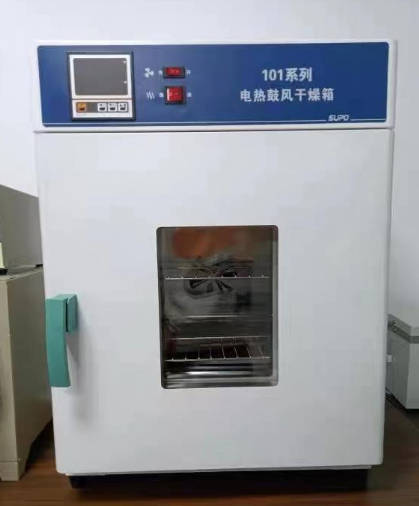
- Calibration of environmental chambers – temperature, humidity, and uniformity – according to ASTM E220, ISO 17025, and EN 60068‑3‑5 – We perform regular 3‑D temperature and humidity mapping, and we calibrate the sensors annually against certified reference instruments, achieving an uncertainty of ±0.5°C for temperature and ±2% RH for humidity.
- Calibration of measurement instruments – balances, micrometers, hardness testers, electrical testers – according to ISO 7500‑1, ASTM E74, and EN ISO 7500‑1 – All instruments are calibrated with traceable standards, and we verify their performance before each test series.
- Verification with reference materials – we test reference materials (e.g., a standard polymer or coating with known degradation behaviour) at regular intervals to confirm the stability and reproducibility of the test system – The results are tracked on control charts, and any deviation is investigated and corrected.
- Interlaboratory comparison (ILC) – we participate in proficiency testing schemes for humidity, condensation, and damp heat testing – Our results are regularly compared with those of other accredited laboratories to ensure consistency and reliability.
Compliance with Belgian and European Regulations
Our humidity and heat aging testing services support your conformity assessment under the relevant European directives and Belgian regulations for electrical equipment, construction products, and machinery:
- Low Voltage Directive (LVD 2014/35/EU) – for electrical equipment that may be exposed to humid or outdoor conditions – The damp heat test (IEC 60068‑2‑78) is often required to demonstrate that the insulation and enclosure materials can withstand moisture without reducing the electrical safety.
- Construction Products Regulation (CPR, EU 305/2011) – for building materials, roofing, and waterproofing systems – The resistance to humidity and heat is a key performance parameter for the Declaration of Performance (DoP) of many construction products, and our tests are performed according to EN 1365, EN 13707, and other harmonised standards.
- Machinery Directive (2006/42/EC) – for components used in machinery that may be exposed to humid or tropical conditions – Our test data supports the risk assessment and verifies the durability of materials in harsh environments.
- REACH Regulation (EC 1907/2006) – for the evaluation of substances that may be released or degraded under humid‑heat conditions – The leaching and degradation data from our tests support the environmental and health risk assessment.
- Belgian national regulations – including the ARAB (General Regulation on Occupational Safety) for equipment used in damp or wet workplaces – Our reports are used to verify that materials and components can withstand the required environmental conditions in Belgian workplaces.
Reporting and Accreditation
All humidity and heat aging tests are performed under our ISO/IEC 17025:2017 accredited quality system, with full traceability of all measurement parameters. Our BELAC‑accredited reports are recognised by the FOD Economie, Belgian notified bodies, and European authorities. Each report includes:
- A complete description of the test specimen (material, dimensions, surface finish, conditioning).
- The test conditions – temperature, humidity, cycle profile, duration, and standard used.
- Pre‑exposure and post‑exposure measurements (mechanical, electrical, optical, and chemical properties), with percentage retention and statistical summary.
- Visual inspection results, including photographic documentation and rating scales.
- Calibration certificates and measurement uncertainty statements.
- A professional conclusion on the resistance of the material to humidity and heat aging, with recommendations for design or material improvement if necessary.
Our reports provide the confidence you need to certify your products, approve deliveries, and ensure that your materials can withstand the humid and hot conditions of the Belgian and European environment.
Why Choose Our Humidity and Heat Aging Testing Service?
We understand that moisture and heat are among the most damaging environmental factors for polymeric materials, coatings, and electronic components, and that accelerated testing is essential for predicting service life and preventing field failures. Our team offers rapid scheduling, flexible test programmes (from simple constant‑humidity tests to complex cyclic and combined‑stress studies), and clear, practical interpretation of results – we do not just give you pass/fail data; we explain the degradation mechanisms, the implications for your product's reliability, and the potential improvements. We work closely with your R&D, quality, and production teams to design a test plan that matches your specific service environment and regulatory requirements. With state‑of‑the‑art environmental chambers, comprehensive post‑test analysis, and a highly experienced team, our humidity and heat aging testing service delivers the accuracy, repeatability, and regulatory acceptance you need to ensure that your products are built to last in the Belgian and European climate. Contact us to discuss your materials, your exposure conditions, and your performance targets – we will develop a tailored test programme that provides the definitive assessment of your product's resistance to humidity and heat.