Hydrogen Bromide Corrosion Testing Service – Accredited Evaluation of Material Resistance to HBr Gas and Aqueous Hydrobromic Acid Environments
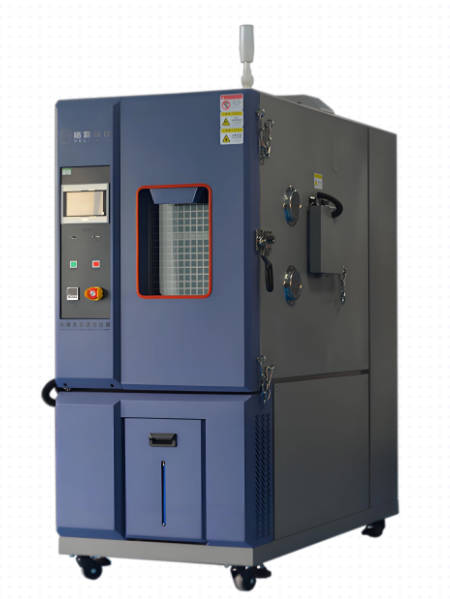
For Belgian manufacturers, engineers, and quality managers in the chemical processing, semiconductor, pharmaceutical, and petrochemical industries, the resistance of materials to hydrogen bromide (HBr) – whether in gaseous form or as hydrobromic acid – is a critical safety and performance parameter. HBr is a highly corrosive, toxic, and reactive gas that can cause rapid degradation of metals, polymers, sealants, and coatings, leading to equipment failure, leaks, and safety incidents. Our ISO/IEC 17025 accredited laboratory offers a specialised hydrogen bromide corrosion testing service that precisely quantifies the corrosion rate, material degradation, and mechanical property loss of metals, alloys, plastics, elastomers, and protective coatings under controlled HBr exposure conditions. Using dedicated corrosion test chambers, gas mixing systems, and analytical instruments, we simulate the full range of HBr service environments – from dry gas to aqueous solutions, at ambient and elevated temperatures, and under static or flowing conditions. Our BELAC‑accredited reports are recognised by the Belgian Federal Public Service (FOD Economie), notified bodies, and authorities under the Pressure Equipment Directive (2014/68/EU), the ATEX Directive (2014/34/EU), the REACH Regulation (EC 1907/2006), and the relevant harmonised standards (ASTM G1, ASTM G31, ISO 7384, NACE TM0169, etc.).
Materials, Components, and Products We Regularly Test
We accept a wide range of materials and components that are exposed to HBr in production, storage, or transportation. Our corrosion test chambers accommodate coupons, small components, and complete assemblies. Common samples include:
- Metals and alloys – carbon steel, stainless steels (304, 316, 904L, duplex, superaustenitic), nickel‑based alloys (Hastelloy, Inconel, Monel), titanium, zirconium, tantalum, copper alloys, aluminium alloys.
- Polymer materials – thermoplastics (PTFE, PFA, FEP, PVDF, PEEK, polypropylene, polyethylene), elastomers (Viton, Kalrez, EPDM, silicone), and seals/gaskets.
- Protective coatings and linings – organic coatings, epoxy, fluoropolymer linings, glass‑lined steel, and ceramic coatings.
- Welded joints and heat‑affected zones – to assess the corrosion resistance of welds and the susceptibility to stress‑corrosion cracking.
- Fasteners, fittings, and valves – for complete system compatibility assessment.
- Non‑metallic components – O‑rings, diaphragms, expansion joints, and sight glasses.
- Finished equipment – pressure vessels, heat exchangers, columns, and piping sections.
Core Test Methods – HBr Gas and Hydrobromic Acid Exposure
Our hydrogen bromide corrosion testing service includes a suite of standardised and customised test protocols, covering both gaseous HBr and aqueous hydrobromic acid environments, as well as combined conditions that simulate real‑world service:
- HBr gas corrosion test – according to ASTM G92 (for corrosive gas testing), ISO 7384 (corrosion tests in artificial atmospheres), and NACE TM0169 (for metals) – We expose test specimens to a controlled atmosphere of hydrogen bromide gas (typically 5‑100% concentration, balanced with nitrogen or air) at a selected temperature (from ambient to 150°C) and relative humidity (dry or humid) for a defined exposure time (24 to 1,000 hours or more). The test is performed in a sealed, corrosion‑resistant chamber with continuous gas monitoring and safety interlocks. After exposure, we measure the mass loss, the corrosion rate (mm/year), and the change in mechanical properties. We also examine the specimens for pitting, cracking, and intergranular attack.
- Hydrobromic acid immersion test – according to ASTM G31 (immersion corrosion), ISO 8407 (cleaning of corrosion products), and NACE TM0169 – We immerse specimens in an aqueous solution of hydrobromic acid (typically 1‑48% concentration) at a controlled temperature (ambient to 100°C) for a specified duration. The solution is either static or agitated. We measure the mass loss, calculate the corrosion rate, and evaluate the nature of the attack (uniform, pitting, crevice, intergranular, or stress‑corrosion cracking). We also monitor the solution for any changes in pH, colour, or precipitation of corrosion products.
- Cyclic corrosion test with HBr – we alternate between dry HBr gas exposure and humid/condensing HBr exposure (or between HBr gas and neutral salt spray) to simulate the wet‑dry cycles that often occur in industrial environments – This type of test is particularly relevant for offshore, coastal, or seasonal applications.
- Stress‑corrosion cracking (SCC) test – according to ASTM G36 (SCC in boiling magnesium chloride), ASTM G39 (bent‑beam), and NACE TM0177 – adapted for HBr‑containing environments – We apply a constant tensile or bending stress to a pre‑notched or smooth specimen and expose it to the HBr environment. The time to failure, the crack initiation, and the crack propagation rate are recorded. This test is essential for materials used in high‑stress components, such as pressure vessels and heat exchangers.
- Hydrogen embrittlement screening – for metals that are susceptible to hydrogen uptake from HBr (e.g., high‑strength steels) – We perform a sustained‑load or slow‑strain‑rate test (SSRT) in an HBr environment to assess the susceptibility to hydrogen‑induced cracking. The reduction in ductility and the fracture morphology are evaluated.
- Corrosion under insulation (CUI) simulation – we combine HBr exposure with thermal insulation and a wet/dry cycle to simulate the conditions under pipe insulation – This is a common failure mode in chemical and petrochemical plants.
Exposure Conditions – Controlled Temperature, Pressure, and Concentration
We offer precise control over all critical parameters to match your specific service conditions or to accelerate the test for evaluation purposes:
- Temperature control – from ambient (20°C) to elevated temperatures (up to 200°C) for gas exposure, and up to 150°C for aqueous immersion. We use oil baths, heating mantles, or environmental chambers with ±1°C accuracy.
- Pressure control – for gas exposure, we can operate at atmospheric pressure or at elevated pressure (up to 50 bar) using a pressurised autoclave or a pressure vessel, to simulate process conditions.
- Concentration control – for HBr gas, we use mass flow controllers and a gas mixing system to achieve any concentration from 0.1% to 100% (balanced with nitrogen, air, or other gases). For hydrobromic acid, we prepare solutions of known concentration (1‑48%) and monitor the concentration during the test by titration.
- Humidity control – for gas exposure, we can control the relative humidity (from 0% to 100% RH) by pre‑saturating the gas or by using a water‑bath humidifier, to simulate the effect of moisture on the corrosion process.
- Flow and agitation – for immersion tests, we can use a magnetic stirrer, a recirculating pump, or a rotating cage to simulate the effect of flowing fluid on corrosion rate and mode.
Post‑Exposure Evaluation – Quantifying Corrosion Damage and Degradation
After HBr exposure, we perform a comprehensive evaluation to quantify the extent of corrosion and any degradation of material properties:
- Mass loss and corrosion rate (mm/year) – according to ASTM G1 (cleaning of corrosion products) and ASTM G31 – We clean the specimens using a standard chemical or electrochemical method (e.g., ASTM G1 for removing corrosion products), re‑weigh them, and calculate the mass loss. The corrosion rate is calculated from the mass loss, the specimen surface area, the exposure time, and the material density.
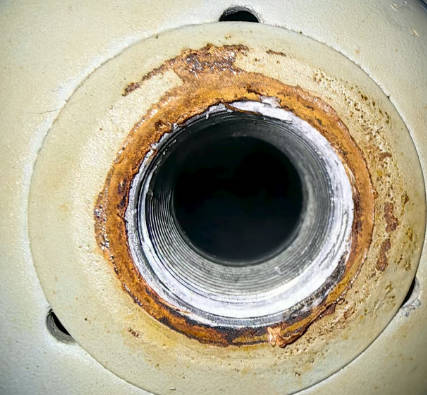
- Pitting and crevice corrosion evaluation – we examine the specimen surface under a stereomicroscope and measure the pitting depth (using a profilometer or a depth gauge) and the pitting density – We also assess any crevice attack at the specimen mounting points.
- Microstructural examination – we prepare metallographic cross‑sections of the corroded specimens and examine them under an optical microscope or SEM to assess the type of attack (e.g., uniform, intergranular, or exfoliation) and the presence of any secondary phases or precipitates – We also measure the depth of any intergranular corrosion or the thickness of any corrosion‑affected layer.
- Mechanical property testing after exposure – we perform tensile, hardness, or impact tests on exposed specimens and compare the results with unexposed controls to quantify the loss of mechanical integrity – We report the percentage retention of tensile strength, elongation, or hardness.
- Non‑destructive evaluation (NDE) – we use ultrasonic thickness gauging or eddy‑current inspection to detect any localised thinning or subsurface defects that may have developed during the exposure – This is particularly useful for evaluating components that cannot be cut into coupons.
- Scanning electron microscopy (SEM) and EDS – we examine the corrosion products and the attack morphology, and we analyse the composition of the corrosion layer (e.g., bromide salts, oxides, or sulphides) – This helps to identify the corrosion mechanism and to differentiate between general corrosion, pitting, and stress‑corrosion cracking.
Material‑Specific Test Protocols – Metals, Plastics, Elastomers, and Coatings
We apply specific procedures for different material classes to ensure that the test conditions and the evaluation methods are appropriate for the particular degradation mechanisms:
- Metals and alloys – we test the resistance to general corrosion, pitting, crevice corrosion, intergranular corrosion, SCC, and hydrogen embrittlement, following ASTM, ISO, and NACE guidelines. We also provide the corrosion rate in mm/year and the susceptibility to various forms of attack.
- Plastics and polymers – we evaluate the change in mass, hardness, tensile strength, elongation, and surface appearance after exposure. We also check for swelling, cracking, or discolouration. We report the percentage change in properties.
- Elastomers and seals – we measure the compression set, hardness change, volume swell, and change in tensile properties. We also inspect for cracking, blistering, or loss of adhesion.
- Protective coatings – we assess the adhesion (pull‑off or cross‑cut test) after exposure, the blistering, the degree of under‑film corrosion, and the colour change. We also examine the coating for any penetration of the corrosive medium.
- Welded joints – we compare the corrosion resistance of the weld metal, the heat‑affected zone, and the base metal, and we check for preferential attack or SCC in the weld.
Environmental and Accelerated Testing – Long‑Term Performance Prediction
To evaluate the long‑term resistance of materials to HBr, we offer accelerated testing protocols that combine elevated temperatures, higher concentrations, or cyclic exposure:
- Accelerated temperature testing – we perform the test at a higher temperature (e.g., 100°C, 150°C) for a shorter period to accelerate the corrosion process, and then extrapolate the results to the service temperature using the Arrhenius model – This is useful for assessing the relative performance of different materials or for screening.
- Cyclic exposure – we alternate between HBr gas, hydrobromic acid, and inert gas (or drying) to simulate the start‑up, shut‑down, or intermittent operation of a process plant – The number and length of cycles are defined to match your expected operating pattern.
- Combined stress testing – we combine HBr exposure with mechanical stress, thermal cycling, or UV radiation (for outdoor applications) to assess the synergistic effects – This is particularly relevant for composite materials and for equipment exposed to both chemical and environmental stress.
- Long‑term static immersion – we expose specimens to hydrobromic acid for up to 1 year, with periodic sampling and re‑weighing, to determine the long‑term corrosion rate (including any passivation or breakdown of the passive layer) – This is often required for critical equipment in the chemical and semiconductor industries.
Calibration, Accuracy, and Quality Assurance
All HBr corrosion tests are performed under our ISO/IEC 17025:2017 accredited quality system, with full traceability of temperature, pressure, concentration, and mass measurements:
- Calibration of mass flow controllers – using a certified reference flow meter and a digital flow calibrator, with uncertainty < 1% of the set point – The gas concentration is verified by independent gas chromatography (GC) analysis.
- Calibration of temperature sensors and controllers – according to ASTM E220, ISO 17025, with uncertainty < 0.2°C – All ovens, baths, and chambers are periodically checked with a certified reference thermometer.
- Calibration of analytical balances – using certified reference weights (class E1), with an uncertainty < 0.01 mg – We verify the balance before each weighing session.
- Calibration of pH meters and titrators – using certified buffer solutions and a primary reference standard (e.g., potassium hydrogen phthalate), with uncertainty < 0.01 pH units – We calibrate the pH meter daily.
- Verification with reference coupons – we test standard reference materials (e.g., a specified stainless steel or carbon steel) with known corrosion rates in HBr, at the start of each test series, to confirm the stability and reproducibility of the test system – The results are tracked on control charts.
- Interlaboratory comparison (ILC) – we participate in proficiency testing schemes for corrosion testing and chemical analysis – Our results are regularly compared with those of other accredited laboratories.
Compliance with Belgian and European Regulations
Our HBr corrosion testing services support your conformity assessment under the relevant European directives and Belgian regulations for pressure equipment, chemical safety, and environmental protection:
- Pressure Equipment Directive (PED 2014/68/EU) – for vessels, piping, and accessories that may come into contact with HBr – The corrosion rate and the material compatibility data are essential for the design validation and the selection of suitable materials for HBr service.
- ATEX Directive (2014/34/EU) – for equipment used in potentially explosive atmospheres where HBr may be present – The corrosion resistance of enclosures and components is part of the risk assessment.
- REACH Regulation (EC 1907/2006) – for the registration and evaluation of chemical substances – Our corrosion test data can be used to demonstrate the compatibility of materials with HBr and to support the safety assessment.
- Belgian national regulations – including the ARAB (General Regulation on Occupational Safety) for workplaces where HBr is handled – Our reports are used to verify the suitability of materials for HBr service in Belgian workplaces.
Reporting and Accreditation
All HBr corrosion tests are performed under our ISO/IEC 17025:2017 accredited quality system, with full traceability of all measurement parameters. Our BELAC‑accredited reports are recognised by the FOD Economie, Belgian notified bodies, and European authorities. Each report includes:
- A complete description of the test specimen (material, surface finish, dimensions, preparation method).
- The test conditions – HBr concentration, temperature, pressure, humidity, flow rate, exposure time, and any pre‑conditioning steps.
- The measured mass loss, corrosion rate (in mm/year and g/m²·day), and the type of attack (uniform, pitting, crevice, intergranular, or SCC).
- Mechanical property retention (tensile strength, hardness, elongation) and percentage change.
- Microscopic images and metallographic analysis (if performed).
- Calibration certificates and measurement uncertainty statements.
- A professional conclusion on the suitability of the material for the intended HBr service, with recommendations for alternative materials or protective measures if necessary.
Our reports provide the confidence you need to certify your equipment, approve material choices, and ensure the safe and reliable operation of your HBr‑handling systems.
Why Choose Our Hydrogen Bromide Corrosion Testing Service?
We understand that HBr is one of the most aggressive and hazardous chemicals in industrial processing, and that material failures in HBr service can have serious safety, environmental, and financial consequences. Our testing service provides the high‑quality, reliable data you need to select the right materials, validate your designs, and ensure the long‑term integrity of your equipment. We offer rapid scheduling, flexible test programmes (from simple coupon immersion to complex cyclic exposure with mechanical loading), and clear, practical interpretation of results – we do not just give you a corrosion rate; we explain the mechanisms behind the degradation, the implications for your service life, and the possible mitigation strategies. We work closely with your materials engineers, process designers, and quality managers to design a test plan that matches your specific HBr service conditions and regulatory requirements. With dedicated corrosion test chambers, analytical instruments, and a highly experienced team, our hydrogen bromide corrosion testing service delivers the accuracy, repeatability, and regulatory acceptance you need to ensure the safety and reliability of your HBr‑handling systems. Contact us to discuss your materials, your process conditions, and your testing objectives – we will develop a tailored test programme that provides the definitive assessment of your material's resistance to hydrogen bromide.