Hydrogen Embrittlement Testing Service – Accredited Susceptibility Assessment for High‑Strength Steels, Fasteners, and Critical Components
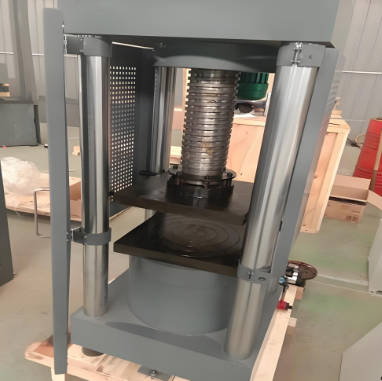
For Belgian manufacturers, quality engineers, and material specialists in the aerospace, automotive, oil & gas, construction, and fastener industries, hydrogen embrittlement represents a silent but potentially catastrophic failure mode. High‑strength steels, hardened alloys, and electroplated components are particularly susceptible to hydrogen‑induced cracking, which can occur with little warning, leading to sudden fracture under sustained or cyclic stress. Our ISO/IEC 17025 accredited laboratory offers a specialised hydrogen embrittlement testing service that quantifies the susceptibility of your materials to hydrogen‑induced failure using standardised methodologies, including constant‑load, rising‑step‑load, and slow‑strain‑rate tests. With dedicated test frames, controlled electrochemical hydrogen charging, and calibrated environmental chambers, we provide the data you need to validate your manufacturing processes, qualify suppliers, and ensure the long‑term integrity of your critical components. Our BELAC‑accredited reports are recognised by the Belgian Federal Public Service (FOD Economie), notified bodies, and authorities under the Pressure Equipment Directive (2014/68/EU), the Machinery Directive (2006/42/EC), the Construction Products Regulation (EU 305/2011), and the relevant harmonised standards (ASTM F1624, ASTM F519, ISO 15330, ISO 11114‑4, NACE TM0284, etc.).
Materials, Components, and Products We Regularly Test
We accept a wide range of materials and finished components that are susceptible to hydrogen embrittlement, particularly those with high hardness, high tensile strength, or that have been subjected to electroplating, pickling, or other hydrogen‑generating processes. Our test fixtures accommodate standard specimens, as well as custom‑machined or as‑manufactured components. Common samples include:
- High‑strength fasteners – bolts, screws, studs, and nuts, especially those with hardness above 35 HRC.
- Springs and spring‑loaded components – for automotive, industrial, and aerospace applications.
- Automotive and aerospace structural parts – transmission components, landing gear parts, and suspension elements.
- Pressure vessel and pipeline steels – where hydrogen sulphide (sour service) is present.
- Electroplated components – zinc‑plated, cadmium‑plated, or nickel‑plated parts.
- Welded assemblies and heat‑affected zones – where hydrogen may be introduced during welding.
- Wire, rod, and bar stock – for material qualification and incoming inspection.
- Additively manufactured high‑strength alloys – for qualification of new processes.
Core Test Methods – Determination of Hydrogen Embrittlement Susceptibility
Our hydrogen embrittlement testing service employs a suite of standardised and customised test protocols to evaluate the susceptibility of your materials to hydrogen‑induced failure. The selection of the test method depends on the material, the product form, and the specific application requirements. The three primary methods we offer are the constant‑load test, the rising‑step‑load test, and the slow‑strain‑rate test, often used in combination to provide a complete assessment:
- Constant‑load test – according to ASTM F519 (standard test method for mechanical hydrogen embrittlement evaluation of plating processes and service environments), ASTM F1624 (for fasteners), ISO 15330 (fasteners – hydrogen embrittlement – preload test), and NACE TM0284 (standard for sour service) – We apply a sustained tensile load to the specimen (at a defined percentage of the material's ultimate tensile strength, typically 75‑90%) while the specimen is simultaneously exposed to a hydrogen‑charging environment (electrochemical or gas‑phase). The time to failure is recorded, and specimens that survive a defined period (typically 200 hours) are considered to have passed the test. The test is performed on both notched and un‑notched specimens to assess the combined effect of stress concentration and hydrogen.
- Rising‑step‑load test (RSL) – according to ASTM F1624 (standard test method for measurement of hydrogen embrittlement threshold in steel by the incremental step loading method) – We apply a tensile load to the specimen in a series of increasing steps, with a hold time at each step (typically 1‑4 hours). The load is increased until failure occurs. The threshold stress (or the threshold stress intensity factor) is determined from the test, providing a quantitative measure of the material's resistance to hydrogen embrittlement. This method is particularly useful for characterising the susceptibility of different materials and for comparing the effectiveness of different baking or heat treatment cycles.
- Slow‑strain‑rate test (SSRT) – according to ASTM G129 (standard practice for slow strain rate testing to evaluate the susceptibility of metallic materials to environmentally assisted cracking) and ISO 7539‑7 – We subject a tensile specimen to a very slow strain rate (typically 10⁻⁶ to 10⁻⁷ s⁻¹) while it is exposed to a hydrogen‑charging environment. The reduction in ductility (compared to a test performed in air) is a measure of the hydrogen embrittlement susceptibility. We measure the elongation at fracture, the reduction of area, and the time to failure. The SSRT is often used as a screening test and to provide a rapid indication of susceptibility.
- Electrochemical hydrogen charging – we use a controlled electrolyte and a current density to introduce hydrogen into the specimen, simulating the conditions that occur during electroplating, pickling, or corrosion – The charging parameters (current density, temperature, electrolyte composition) are adjusted to match the expected service environment or to accelerate the test. We also offer gaseous hydrogen charging (under controlled pressure) for components that will be exposed to hydrogen gas.
- Baking and heat‑treatment validation – we can test specimens that have been subjected to a specific baking cycle (to remove hydrogen) to verify the effectiveness of the heat treatment in restoring the material's resistance to embrittlement – The test is performed on baked specimens and compared with unbaked specimens to determine the reduction in susceptibility.
Specimen Preparation and Conditioning
Proper specimen preparation and preconditioning are essential for reproducible and meaningful hydrogen embrittlement test results. We follow strict procedures to ensure that the test specimens are representative of the material's actual condition:
- Specimen machining – we prepare specimens to the dimensions specified in the relevant standard (e.g., ASTM F519 for various specimen geometries) – We ensure that the machined surfaces are free of notches, scratches, or tool marks that could act as stress raisers. The surface finish is typically specified to be better than Ra 0.8 µm.
- Specimen cleaning and degreasing – we clean the specimens with a suitable solvent to remove any oil or surface contaminants that could interfere with the hydrogen charging or the mechanical test – We use a standard ultrasonic cleaning process.
- Conditioning – we condition the specimens to the required hardness and microstructure (e.g., by heat treatment) to ensure that they are representative of the material's final condition – For electroplated components, we test the component with the plating applied, and if required, we test after baking.
- Notching – for ASTM F519 type tests, we prepare specimens with a specified notch geometry to create a controlled stress concentration – We use a calibrated notching tool and verify the notch geometry under a microscope.
- Measurement of initial dimensions – we accurately measure the diameter, gauge length, and cross‑sectional area of each specimen before testing, using calibrated micrometers – This is essential for the correct calculation of the applied stress.
- Hydrogen charging – we charge the specimens with hydrogen in a controlled environment (electrolytic cell or gas chamber) with defined parameters – The charging current density, temperature, and duration are set according to the standard or to the specific application requirements. We monitor the charging process to ensure reproducibility.
Evaluation Criteria and Failure Analysis
After the hydrogen embrittlement test, we perform a thorough evaluation to determine whether the material has passed or failed, and we provide a detailed analysis of the failure mechanism:
- Pass/fail determination – for constant‑load tests (e.g., ASTM F519), we consider the specimen to have passed if it survives the full hold period (e.g., 200 hours) without fracture – For rising‑step‑load tests, the threshold stress (the highest stress that can be sustained without failure) is reported. For SSRT, the reduction in ductility (compared to air) is calculated, and a significant reduction indicates susceptibility.
- Failure time and mode – we record the time to failure (if fracture occurs) and examine the fracture surface to determine the mode of failure – A hydrogen‑embrittlement failure is typically characterised by a brittle, intergranular fracture (often with a characteristic “rock candy” morphology). We use a stereomicroscope and, on request, a scanning electron microscope (SEM) to confirm the failure mechanism.
- Hardness and tensile property correlation – we correlate the hydrogen embrittlement test results with the hardness and tensile properties of the material – Materials with a hardness above 35 HRC are generally considered to be susceptible, and the test results help to quantify the degree of susceptibility for a specific material and process.
- Fractographic analysis – we use SEM/EDS to examine the fracture surface and identify the presence of hydrogen‑assisted cracking features (e.g., intergranular fracture, quasi‑cleavage, or secondary cracking) – This provides a definitive confirmation of hydrogen embrittlement as the cause of failure.
- Interpretation and recommendations – based on the test results, we provide a clear interpretation of the material's susceptibility and offer practical recommendations for process improvement – For example, if the test fails, we may recommend a longer baking cycle, a change in the electroplating process, or the use of a lower‑strength material.
Calibration, Accuracy, and Quality Assurance
All hydrogen embrittlement tests are performed under our ISO/IEC 17025:2017 accredited quality system, with full traceability of force, displacement, time, and temperature measurements:
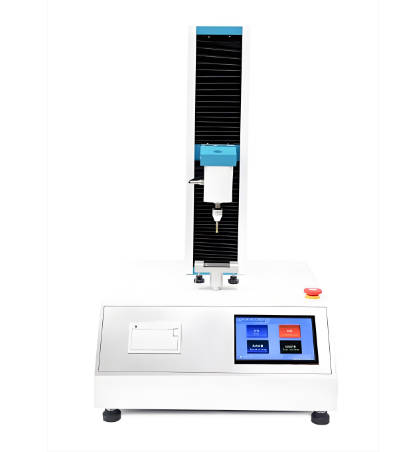
- Calibration of the testing machine – load cell, displacement transducer, and timer – according to ISO 7500‑1, ASTM E74, and EN ISO 7500‑1 – We calibrate the load cell annually using certified reference weights (class 0.5), achieving a force measurement uncertainty < 0.5% of the reading. The displacement is verified using a calibrated extensometer, and the timer is checked against a certified reference time base.
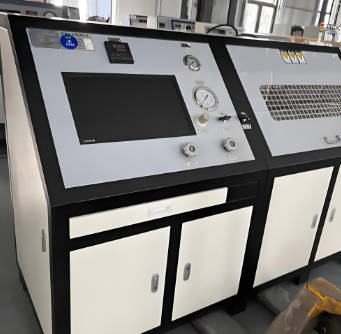
- Calibration of the electrochemical charging system – current density, temperature, and time – we calibrate the power supply, the temperature controller, and the timer annually using certified reference instruments – The current density is verified using a calibrated ammeter, and the temperature is verified using a certified thermometer.
- Verification with reference materials – we test reference materials (e.g., a standard steel with known hydrogen embrittlement susceptibility) at regular intervals to confirm the stability and reproducibility of the test system – The results are tracked on control charts, and any deviation is investigated.
- Interlaboratory comparison (ILC) – we participate in proficiency testing schemes for hydrogen embrittlement testing, conducted by organisations such as ASTM and NACE – Our results are regularly compared with those of other accredited laboratories to ensure consistency.
Compliance with Belgian and European Regulations
Our hydrogen embrittlement testing services support your conformity assessment under the relevant European directives and Belgian regulations for pressure equipment, machinery, and construction products:
- Pressure Equipment Directive (PED 2014/68/EU) – for pressure vessels, piping, and bolting – The hydrogen embrittlement resistance of high‑strength components is a critical safety parameter, and our tests are often required for the design validation of pressure systems.
- Machinery Directive (2006/42/EC) – for fasteners, springs, and other high‑stress components – The risk of hydrogen‑induced failure is a key part of the machinery risk assessment; our test data supports the safety evaluation.
- Construction Products Regulation (CPR, EU 305/2011) – for structural fasteners and high‑strength steel components – The hydrogen embrittlement resistance is an important performance characteristic for the Declaration of Performance (DoP).
- Belgian national regulations – including the ARAB (General Regulation on Occupational Safety) for lifting and handling equipment – Our reports are used to verify the safety and durability of high‑strength components in Belgian workplaces.
Reporting and Accreditation
All hydrogen embrittlement tests are performed under our ISO/IEC 17025:2017 accredited quality system, with full traceability of all measurement parameters. Our BELAC‑accredited reports are recognised by the FOD Economie, Belgian notified bodies, and European authorities. Each report includes:
- A complete description of the test specimen (material, hardness, dimensions, surface preparation, and any pre‑conditioning).
- The test method and conditions (standard, load level, charging method, charging current density, temperature, hold time).
- The test results – time to failure, threshold stress (for RSL tests), reduction in ductility (for SSRT), and pass/fail determination.
- Fracture mode and analysis (with photographic documentation, and SEM/EDS if performed).
- Calibration certificates and measurement uncertainty statements.
- A professional conclusion on the susceptibility of the material to hydrogen embrittlement and its suitability for the intended application, with recommendations for process improvement or risk mitigation if necessary.
Our reports provide the confidence you need to certify your high‑strength components, approve deliveries, and ensure the safe and reliable operation of your products.
Why Choose Our Hydrogen Embrittlement Testing Service?
We understand that hydrogen embrittlement is a hidden threat that can have catastrophic consequences. Our testing service provides the critical, reliable data you need to validate your manufacturing processes, to qualify your materials, and to demonstrate the safety and durability of your high‑strength components. We offer rapid scheduling, flexible test programmes (from simple screening to comprehensive characterisation studies), and clear, practical interpretation of results – we do not simply give you a pass/fail; we explain the susceptibility, the underlying mechanisms, and the actions you can take to reduce the risk. We work closely with your materials engineers, process specialists, and quality teams to design a test programme that matches your specific application, your material grade, and your production processes. With dedicated test frames, controlled electrochemical charging systems, and a highly experienced team, our hydrogen embrittlement testing service delivers the accuracy, repeatability, and regulatory acceptance you need to ensure the integrity of your critical components. Contact us to discuss your materials, your manufacturing processes, and your testing objectives – we will develop a tailored test programme that provides the definitive assessment of your product's resistance to hydrogen embrittlement.