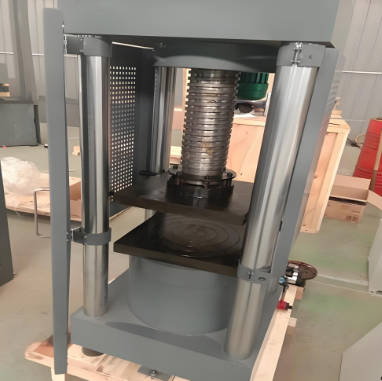
PTFE Spline Pressure Reduction Testing Service – Accredited Evaluation of Pressure Decay, Creep Relaxation, and Sealing Performance in PTFE‑Lined Spline Connections
For Belgian manufacturers, maintenance engineers, and quality managers in the hydraulic, pneumatic, aerospace, automotive, and process industries, the long‑term sealing integrity and pressure‑holding capability of PTFE‑lined spline connections are critical for system reliability, safety, and operational efficiency. PTFE (polytetrafluoroethylene) splines are widely used in fluid power systems, chemical transfer lines, and high‑purity applications due to their low friction, chemical resistance, and excellent sealing properties. However, under sustained or cyclic pressure, PTFE can creep, relax, or deform, leading to a gradual reduction in contact pressure and eventual leakage. Our ISO/IEC 17025 accredited laboratory offers a specialised PTFE spline pressure reduction testing service that precisely quantifies the pressure decay, creep relaxation, and loss of sealing force in PTFE spline assemblies under controlled pressure, temperature, and cycle conditions. Using high‑accuracy pressure transducers, displacement sensors, and thermal conditioning systems, we provide data that supports design validation, material selection, and predictive maintenance. Our BELAC‑accredited reports are recognised by the Belgian Federal Public Service (FOD Economie), notified bodies, and authorities under the Pressure Equipment Directive (2014/68/EU), the Machinery Directive (2006/42/EC), and the relevant harmonised standards (ISO 9974, ASTM D395, DIN 3771, etc.).
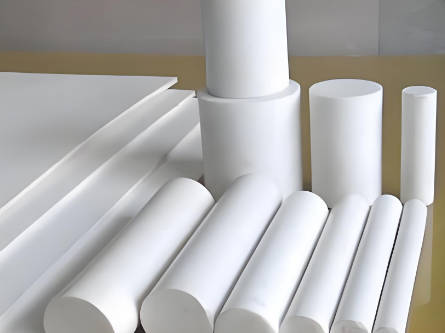
PTFE Spline Assemblies and Components We Regularly Test
We accept a wide range of PTFE spline components, including bare liners, coated shafts, complete spline joints, and sealing assemblies used in hydraulic, pneumatic, and chemical transfer applications. Our test rigs accommodate various sizes and pressure ratings. Common samples include:
- PTFE‑lined spline shafts and hubs – for power transmission and fluid sealing in pumps, motors, and actuators.
- PTFE sealing rings and gaskets – used in spline connections to prevent fluid leakage.
- Hydraulic couplings with PTFE spline seals – for high‑pressure fluid transfer.
- Chemical transfer fittings – with PTFE spline liners for corrosion‑resistant sealing.
- PTFE coated spline inserts – for low‑friction and anti‑gall applications.
- Complete spline assemblies – with multiple PTFE components, tested as a system.
- Test coupons and sample rings – cut from spline liners for material characterisation.
- Specimens after field service or accelerated aging – to assess residual sealing performance.
Core Test Methods – Pressure Decay, Creep Relaxation, and Sealing Force Measurement
Our PTFE spline pressure reduction testing service employs a combination of standardised and customised test methods to measure the loss of sealing pressure over time under static and cyclic loading conditions. We quantify the pressure reduction due to creep, thermal relaxation, and mechanical deformation:
- Static pressure decay test – according to ISO 9974 (fluid power – sealing devices), ASTM D395 (rubber – compression set, adapted for PTFE), and DIN 3771 (elastomer sealing) – We assemble a PTFE spline joint into a test fixture that simulates the actual service configuration. The system is pressurised to a defined initial pressure (e.g., 100 bar, 200 bar, or 350 bar) with a hydraulic fluid (or inert gas) and then isolated. We monitor the pressure over time (typically 24 to 1,000 hours) with a high‑accuracy pressure transducer (uncertainty < 0.1%). The pressure reduction (in bar) and the pressure decay rate (bar/hour) are calculated. We also measure the closure force (or contact pressure) on the PTFE seal using embedded load cells or strain gauges.
- Creep relaxation test – according to ASTM D2990 (creep of plastics), ISO 899‑1 (creep), and EN ISO 899‑1 – We apply a constant compressive load (or a constant interference) to the PTFE spline element and measure the reduction in the resulting contact pressure over time. The test is performed at ambient and elevated temperatures (e.g., 40°C, 80°C) to accelerate the creep process. We plot the relaxation curve (pressure vs. log time) and extract the relaxation modulus and the time to reach 50% of the initial pressure.
- Cyclic pressure reduction test – to simulate the effect of pressure fluctuations (e.g., start‑up, shut‑down, load changes) on the sealing integrity – We apply a defined number of pressure cycles (e.g., 1,000, 10,000, or 100,000 cycles) between a minimum and maximum pressure at a controlled frequency. Between cycles, we measure the residual sealing pressure and the external leakage (if any). We report the number of cycles at which the pressure reduction exceeds a defined threshold (e.g., 20% of the initial sealing pressure).
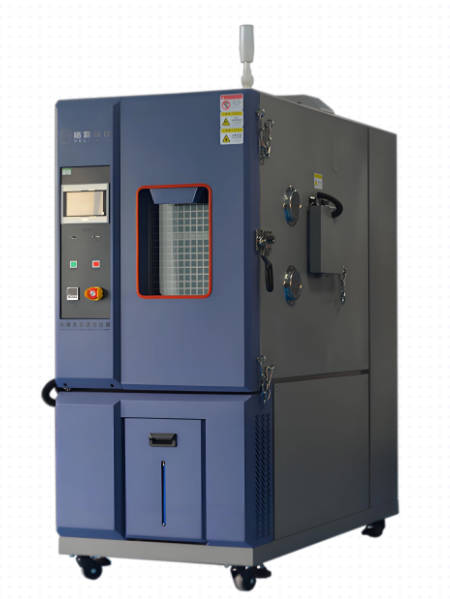
- Temperature‑conditioned pressure decay test – for spline seals used in high‑temperature or cryogenic applications – We perform the static or cyclic test inside an environmental chamber with controlled temperature (from -40°C to +150°C). We measure the pressure reduction at the target temperature and compare it with the performance at room temperature to determine the temperature sensitivity of the PTFE material.
- Leak‑rate measurement – in combination with the pressure reduction test – to correlate pressure decay with actual fluid leakage – For gas systems, we use a helium mass spectrometer or a pressure drop method to measure the leak rate (in mbar·l/s or cm³/min) at different stages of the test. For hydraulic systems, we collect and measure the volume of leaked fluid over a defined period.
Measurement and Data Acquisition – Capturing Pressure, Force, and Deformation
Accurate measurement of pressure reduction requires precise instrumentation and continuous data logging. Our test system is equipped with state‑of‑the‑art sensors and acquisition hardware:
- High‑precision pressure transducers – we use temperature‑compensated, high‑accuracy pressure transducers (0.1% FS) with a fast response time (≤ 1 ms). We place sensors at the inlet and outlet of the spline assembly, as well as at intermediate points if needed, to capture local pressure drops.
- Force and displacement measurement – we use miniature load cells (up to 50 kN) and LVDT displacement sensors to measure the axial and radial forces on the PTFE element, as well as any deformation (creep) of the seal.
- Data logging and analysis – we use a high‑speed data acquisition system (up to 1,000 Hz sampling) with triggered event recording. The system stores all pressure, force, and displacement data, and we analyse the data to calculate the pressure reduction rate, the relaxation modulus, and the cumulative pressure loss.
- Temperature monitoring – we install type‑K thermocouples on the assembly and in the test chamber to monitor the temperature, ensuring that the test conditions match the set point and that any temperature drift is corrected.
- Environmental control – we use a temperature‑conditioned oil bath (for hydraulic tests) or an air‑conditioned chamber (for gas tests) to maintain a stable thermal environment, reducing the influence of ambient temperature fluctuations.
Assessment Criteria – Determining Acceptable Pressure Reduction Limits
The acceptable pressure reduction depends on the application, the system pressure, and the safety margin. We help you establish objective criteria and provide a clear pass/fail conclusion:
- Maximum allowable pressure drop over a defined period – we set a threshold (e.g., 5% of initial pressure over 1,000 hours) based on your system's safety and performance requirements. We report whether the PTFE spline assembly meets this criterion.
- Rate of pressure reduction (bar/hour or bar/decade) – to compare different materials or designs and to extrapolate to longer service times – We calculate the rate of pressure reduction from the slope of the pressure‑time curve and use it to predict the long‑term sealing life.
- Residual sealing force – we measure the remaining contact pressure after a defined period or after cycling – We compare the residual force with the minimum force required to maintain a leak‑tight seal (determined from separate sealing threshold tests).
- Leakage and seal integrity – we perform a leakage check at the end of the pressure reduction test to confirm that the assembly still meets the specified leak‑tightness class – We use helium mass spectrometry (for gas) or pressure decay (for hydraulic) and report the final leak rate.
- Visual inspection and dimensional measurement – after the test, we disassemble the joint and measure the PTFE component for any permanent deformation, wear, cracking, or surface damage – We also compare the final dimensions with the original dimensions to quantify the total creep deformation.
Environmental and Operational Conditioning – Simulating Service Conditions
The pressure reduction behaviour of PTFE splines is strongly influenced by temperature, fluid type, and mechanical pre‑loading. We offer conditioning options to match your actual operating environment:
- Temperature conditioning – we perform the test at your service temperature, from -40°C to +150°C – PTFE is known to exhibit significant creep at elevated temperatures; we provide the pressure reduction data at your actual operating temperature.
- Fluid compatibility – we use the actual service fluid (hydraulic oil, water/glycol, chemical solvent) in the test, or a representative simulant, to account for any fluid‑induced swelling or degradation – We also analyse the fluid before and after the test for contamination from PTFE wear particles.
- Pre‑loading and installation torque – we replicate the actual assembly pre‑load (e.g., the tightening torque of the spline nut) to ensure that the initial sealing pressure matches the field conditions – We use a calibrated torque wrench and record the assembly torque.
- Cyclic thermal and pressure sequence – we combine pressure cycles with temperature cycles (e.g., alternating between 20°C and 80°C) to simulate the most severe service conditions – This test is particularly relevant for hydraulic systems that experience both pressure and temperature fluctuations.
- Accelerated aging of the PTFE material – prior to the pressure reduction test, we age the PTFE spline in hot air or hot oil (e.g., at 100°C for 1,000 hours) to simulate the long‑term degradation of the material, and then test the aged samples – This provides a more realistic prediction of the end‑of‑life sealing performance.
Calibration, Accuracy, and Quality Assurance
All tests are performed under our ISO/IEC 17025:2017 accredited quality system, with full traceability of pressure, force, displacement, and temperature measurements:
- Calibration of pressure transducers – according to ASTM E74, ISO 7500‑1, and EN ISO 7500‑1 – We calibrate transducers using a certified dead‑weight tester, achieving a measurement uncertainty < 0.1% of the reading.
- Calibration of load cells – using certified reference weights and a calibrated force standard – We calibrate load cells annually, with an uncertainty < 0.5% of the applied load.
- Calibration of displacement transducers – using a certified length standard (e.g., a gauge block) – We verify the displacement measurement with an uncertainty < 0.001 mm.
- Calibration of temperature sensors – according to ASTM E220, ISO 17025 – Thermocouples are calibrated against a certified reference thermometer, with an uncertainty < 0.2°C.
- Verification with reference assemblies – we test a reference PTFE spline assembly with known pressure reduction characteristics at regular intervals to confirm the stability of the test system – The results are tracked on control charts.
- Interlaboratory comparison (ILC) – we participate in proficiency testing schemes for sealing and pressure testing – Our results are regularly compared with those of other accredited laboratories.
Compliance with Belgian and European Regulations
Our PTFE spline pressure reduction testing services support your conformity assessment under the relevant European directives and Belgian regulations for pressure equipment, machinery, and environmental safety:
- Pressure Equipment Directive (PED 2014/68/EU) – for sealing components in pressure systems – The long‑term pressure retention of PTFE seals is a critical safety parameter; our test data validates that the seal can maintain the required pressure over the service life.
- Machinery Directive (2006/42/EC) – for hydraulic and pneumatic systems used in machinery – The pressure reduction test provides evidence that the sealing system will not fail prematurely, contributing to the risk assessment.
- ATEX Directive (2014/34/EU) – for equipment used in potentially explosive atmospheres – Leakage through a degraded PTFE seal could lead to the release of flammable fluids; our tests help demonstrate that the seal remains leak‑tight under the specified conditions.
- Belgian workplace safety (ARAB) – for the safe operation of pressurised systems – Our reports are used to verify that the selected PTFE spline seal is suitable for the intended service.
Reporting and Accreditation
All tests are performed under our ISO/IEC 17025:2017 accredited quality system, with full traceability of all measurement parameters. Our BELAC‑accredited reports are recognised by the FOD Economie, Belgian notified bodies, and European authorities. Each report includes:
- A complete description of the PTFE spline assembly, including material grade, dimensions, and pre‑load.
- The test conditions – pressure, temperature, fluid type, cycling parameters, and duration.
- The pressure‑time curve (or force‑time curve) with key data points: initial pressure, final pressure, pressure reduction (absolute and percentage), and pressure reduction rate.
- For cyclic tests, the number of cycles to reach a defined pressure reduction threshold.
- Leakage measurements (if performed) and sealing force data.
- Visual and dimensional inspection results, with photographs.
- Calibration certificates and measurement uncertainty statements.
- A professional conclusion on the pressure reduction performance and the suitability of the PTFE spline for the intended application, with recommendations for design or material improvements if necessary.
Our reports provide the confidence you need to certify your PTFE spline connections, approve deliveries, and ensure the long‑term integrity of your pressurised systems.
Why Choose Our PTFE Spline Pressure Reduction Testing Service?
We understand that pressure reduction due to PTFE creep is a silent threat that can lead to unexpected leakage, system downtime, and safety incidents. Our testing service provides the quantitative data you need to select the right PTFE material, optimise the spline design, and plan preventive maintenance intervals. We offer rapid scheduling, flexible test programmes (from simple static pressure decay to complex cyclic and temperature‑controlled studies), and clear, actionable interpretation of results – we do not just give you a pressure drop value; we explain the mechanisms behind it, the implications for your system, and the actions you can take to mitigate it. We work closely with your design, maintenance, and quality teams to design a test plan that matches your actual operating conditions, pressure ranges, and performance targets. With high‑precision instrumentation, temperature and pressure control, and a highly experienced team, our PTFE spline pressure reduction testing service delivers the accuracy, reliability, and regulatory acceptance you need to ensure that your PTFE spline connections remain leak‑tight throughout their service life in the demanding Belgian and European industrial environment. Contact us to discuss your PTFE spline assemblies, your operating conditions, and your sealing performance goals – we will design a tailored test programme that provides the definitive assessment of your seal's long‑term pressure retention capability.