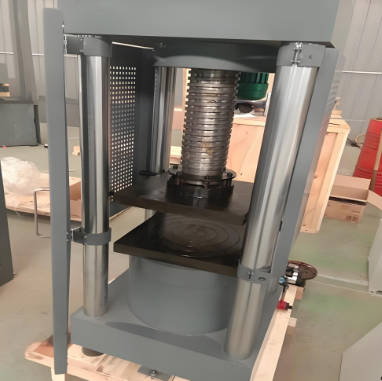
Pressure Alternating Experiment Service – Accredited Cyclic Pressure and Fatigue Testing for Pressure‑Containing Components and Systems
For Belgian manufacturers, engineers, and quality managers in the oil & gas, chemical, power generation, hydraulic, and pneumatic sectors, the ability of pressure‑containing components to withstand repeated pressure fluctuations – from start‑up and shut‑down cycles, pump pulsations, and process variations – is a critical safety and reliability parameter. Pressure alternation, or cyclic pressure loading, can lead to fatigue cracking, seal degradation, bolt relaxation, and premature failure, even when the peak pressure is well below the component's static burst rating. Our ISO/IEC 17025 accredited laboratory offers a specialised pressure alternating experiment service that precisely quantifies the fatigue life and the cumulative damage of pipes, vessels, valves, fittings, hoses, and complete assemblies under defined pressure cycles. Using high‑speed hydraulic and pneumatic test rigs, precision pressure transducers, and advanced cycle‑counting algorithms, we simulate millions of pressure cycles at controlled amplitudes, frequencies, and temperatures. Our BELAC‑accredited reports are recognised by the Belgian Federal Public Service (FOD Economie), notified bodies, and authorities under the Pressure Equipment Directive (2014/68/EU), the Machinery Directive (2006/42/EC), and the relevant harmonised standards (ISO 15360, ASTM E1229, ASME BPVC Appendix 3, etc.).
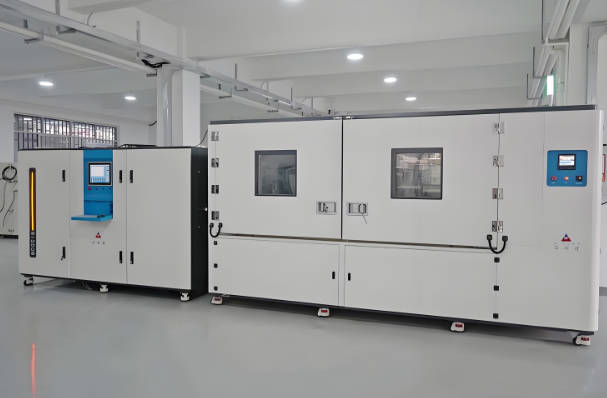
Components and Systems We Regularly Test
We accept a broad range of pressure‑containing components and complete systems that are subject to cyclic pressure loading in service. Our test rigs accommodate various sizes, pressure ratings, and connection types, from miniature hydraulic fittings to large industrial pipe sections. Common samples include:
- Pipes and tubes – seamless and welded metallic pipes, polymeric pipes, and composite pipes.
- Hoses and flexible connectors – hydraulic hoses, pneumatic hoses, and expansion joints.
- Valves and actuators – ball valves, gate valves, check valves, control valves, and safety relief valves.
- Pressure vessels and accumulators – small to medium‑sized vessels, gas cylinders, and hydraulic accumulators.
- Fittings and flanges – threaded, welded, and flanged connections.
- Seals, gaskets, and O‑rings – tested in assembled joints to evaluate their sealing performance under cyclic pressure.
- Complete sub‑systems – pump skids, valve stations, and small pipe networks.
- Heat exchangers and boiler tubes – where thermal cycling causes pressure fluctuations.
Core Test Methods – Pressure Cycling Profiles and Load Spectra
Our pressure alternating experiment service uses a range of standardised and customised pressure profiles to simulate the actual service conditions of your component. We apply cyclic pressure using a hydraulic pump (for liquid) or a pneumatic compressor (for gas), with precise control of the pressure amplitude, frequency, waveform, and number of cycles:
- Constant‑amplitude pressure cycling – according to ISO 15360 (hydraulic fluid power – cyclic pressure testing), ASTM E1229 (fatigue testing), and ASME BPVC Appendix 3 – We apply a repeating pressure waveform (sine, trapezoidal, or square) between a defined minimum and maximum pressure at a fixed frequency (typically 0.1 to 5 Hz). The test is continued for a predefined number of cycles (typically 10⁴ to 10⁷) or until failure (leakage, rupture, or excessive deformation). We monitor the pressure, the temperature, and the specimen deformation (using strain gauges or LVDTs) throughout the test. The number of cycles to failure is recorded, and the failure mode is analysed.
- Variable‑amplitude pressure cycling – to simulate real‑world pressure spectra that include a mix of high‑amplitude and low‑amplitude cycles (e.g., pump start‑up, partial‑load operation, and upset conditions) – We use a block‑program sequence that combines cycles of different amplitudes and frequencies, representative of your specific operating history. This test is more realistic than constant‑amplitude testing and is often required for the validation of critical components.
- Pressure spike and surge simulation – we superimpose short‑duration, high‑amplitude pressure spikes onto the base pressure cycle to simulate water hammer, valve closure surges, or process transients – The number and magnitude of the spikes are defined based on your system's operating data. We measure the peak pressure, the rise time, and the number of spikes to failure.
- Step‑wise increasing amplitude (staircase) test – we gradually increase the pressure amplitude at a fixed number of cycles (e.g., every 10⁵ cycles) until failure occurs, allowing the rapid determination of the fatigue endurance limit – This method is particularly useful for screening and for comparing different materials or designs.
- Combined thermal‑pressure cycling – we apply pressure cycles while also cycling the temperature of the test fluid (or the environment) between defined limits, to simulate the real‑world conditions of heat exchangers, steam lines, and chemical reactors – The temperature and pressure cycles are synchronised, and we monitor the combined effect on fatigue life and seal performance.
Test Parameters – Pressure, Frequency, Temperature, and Fluid
We offer precise control over all critical parameters to match your specific service conditions:
- Pressure range – from 1 bar up to 1,000 bar (100 MPa) for hydraulic systems, and up to 100 bar for pneumatic systems. We can also test at vacuum pressures (down to 0.01 bar) for low‑pressure applications.
- Pressure waveform – sinusoidal, trapezoidal, square, or user‑defined arbitrary waveform (programmable via our digital controller).
- Frequency range – from 0.001 Hz (slow cycling for creep‑fatigue interaction) up to 10 Hz for high‑speed cycling. The frequency is limited by the flow capacity of the pump and the compressibility of the fluid.
- Test fluid – water, oil (mineral, hydraulic, or synthetic), water‑glycol mixtures, air, nitrogen, or other gases (with appropriate safety measures). For special applications, we can use corrosive fluids or process liquids.
- Temperature range – from ambient (20°C) to 150°C for liquids (using a heated oil bath or a circulating heater), and from ambient to 120°C for gases. We can also perform tests at sub‑zero temperatures (down to -20°C) using a chiller.
- Number of cycles – up to 10⁷ cycles (or more for extremely high‑cycle applications), with automatic stop on specimen failure or on reaching the target cycle count.
Specimen Preparation and Instrumentation
Proper specimen preparation and instrumentation are essential for accurate and reliable test results. We ensure that the test specimen is representative of the actual product and that the measurements are traceable:
- Specimen inspection – we visually inspect the specimen for any surface defects, weld imperfections, or damage that could affect the test result – We also measure the critical dimensions (wall thickness, diameter, length) and record the baseline condition.
- Installation in the test rig – we mount the specimen in the test fixture with appropriate end connections (threaded, flanged, or welded), ensuring proper sealing and alignment – We use torque wrenches to tighten the connections to a specified value, and we check the alignment to avoid bending stresses.
- Strain gauge and displacement sensor installation – we apply strain gauges at critical locations (e.g., at the weld, at stress risers, or at the seal area) to monitor the local strain during the pressure cycle – We also use LVDTs or linear potentiometers to measure the axial and radial displacement of the specimen.
- Pressure and temperature monitoring – we install high‑accuracy pressure transducers (0.1% FS) and thermocouples (type K or T) at the inlet and outlet of the specimen, and we place additional sensors inside the specimen (if accessible) to measure the fluid temperature – All sensors are calibrated and connected to a data acquisition system for continuous recording.
- Leak detection – we use a pressure decay method, a mass flow meter (for gas), or a visual inspection (for liquid) to detect any leakage during the test – We set a maximum allowable leakage rate as a failure criterion.
- Cycle counting and data logging – we use a cycle counter that automatically increments after each pressure cycle, and we log the pressure, temperature, strain, and displacement data at a sampling rate that captures the peaks and valleys of each cycle – The data is stored in a secure format for post‑test analysis.
Assessment Criteria and Failure Analysis
After completing the pressure alternating test, we evaluate the specimen for any signs of fatigue damage, leakage, or failure. Our assessment includes both quantitative and qualitative analyses:
- Visual inspection – we examine the specimen surface for cracks, pitting, bulging, or leakage, and we document the condition with photographs – We also measure any permanent deformation (e.g., increase in diameter, change in length) to detect plastic ratcheting.
- Leakage test – after the cyclic test, we perform a static proof pressure test (or a helium leak test) to verify that the specimen still meets the leak‑tightness requirement – An increase in leakage rate indicates seal degradation or crack initiation.
- Strain gauge data analysis – we examine the strain data to identify any changes in the strain amplitude or mean strain during the test, which could indicate progressive damage or stress relaxation – We also use the strain data to calculate the stress range and to estimate the fatigue life using the local strain approach.
- Fractography – for specimens that have failed, we examine the fracture surface (using a stereomicroscope or SEM) to identify the crack initiation point, the crack propagation path, and the type of fracture (fatigue, ductile, brittle, or mixed) – We look for beach marks, striations, or other fatigue features.
- Metallographic examination – we prepare cross‑sections of the failed specimen to assess the microstructure, the grain size, and any evidence of intergranular corrosion or stress‑corrosion cracking that may have contributed to the failure – We also measure the wall thickness at the fracture site to detect thinning.
- Determination of the fatigue endurance limit – for constant‑amplitude tests, we plot the pressure amplitude (or the stress amplitude) against the number of cycles to failure to generate an S‑N curve – We identify the fatigue limit (the pressure amplitude below which the specimen can withstand an infinite number of cycles, typically 10⁶ or 10⁷ cycles).
- Damage accumulation analysis – for variable‑amplitude tests, we use the rainflow counting method to extract the individual cycles from the pressure history, and we apply Miner's rule (the Palmgren‑Miner linear damage hypothesis) to estimate the cumulative damage and the remaining life – We provide a calculated fatigue life and a recommended inspection interval.
Environmental and Accelerated Conditioning
To simulate the most realistic service conditions, we can combine pressure alternating testing with other environmental stressors, or we can accelerate the test by using higher frequencies or elevated temperatures:
- Temperature‑controlled pressure cycling – we perform the pressure cycles at a constant elevated temperature (e.g., 100°C, 150°C) to accelerate the fatigue process and to evaluate the combined effect of temperature and cyclic pressure – The thermal expansion of the fluid and the material can also affect the stress distribution.
- Corrosive fluid pressure cycling – we use a corrosive fluid (e.g., salt water, acid, or process chemical) as the test medium to evaluate the synergistic effect of corrosion and fatigue (corrosion fatigue) – The test is performed in a corrosion‑resistant test rig with appropriate safety measures.
- Humidity and condensation cycling – for pneumatic components, we alternate between dry and humid air to simulate the effect of moisture on the fatigue behaviour of the material – This is particularly relevant for components used in humid or outdoor environments.
- Pressure cycling with vibration – we superimpose mechanical vibration (sinusoidal or random) on the pressure cycles to simulate the combined loading in mobile machinery, aerospace, or offshore applications – The vibration frequency and amplitude are controlled, and we monitor the response of the component.
- Accelerated life testing – we increase the test frequency (within the limits of the pump and the response of the specimen) to reduce the test duration, while ensuring that the temperature does not rise excessively due to internal friction – We use a high‑frequency pump (up to 10 Hz) and a cooling system to maintain the fluid temperature.
Calibration, Accuracy, and Quality Assurance
All pressure alternating tests are performed under our ISO/IEC 17025:2017 accredited quality system, with full traceability of pressure, temperature, time, and cycle count:
- Calibration of pressure transducers – according to ASTM E74, ISO 7500‑1, and EN ISO 7500‑1 – We calibrate the transducers with a certified dead‑weight tester, achieving a measurement uncertainty < 0.1% of the reading.
- Calibration of temperature sensors – according to ASTM E220, ISO 17025 – We calibrate thermocouples and RTDs against a certified reference thermometer, with an uncertainty < 0.2°C.
- Calibration of the cycle counter – using a calibrated timer and a signal generator, we verify the accuracy of the cycle counting and the timing – The uncertainty in the cycle count is negligible.
- Verification with reference specimens – we test reference specimens (e.g., a standard pipe section with known fatigue strength) at regular intervals to confirm the stability and reproducibility of the test system – The results are tracked on control charts.
- Interlaboratory comparison (ILC) – we participate in proficiency testing schemes for pressure fatigue and cyclic testing – Our results are regularly compared with those of other accredited laboratories.
Compliance with Belgian and European Regulations
Our pressure alternating experiment services support your conformity assessment under the relevant European directives and Belgian regulations for pressure equipment, machinery, and environmental safety:
- Pressure Equipment Directive (PED 2014/68/EU) – for vessels, piping, valves, and fittings – The cyclic pressure fatigue test is often required for the design validation and the classification of pressure equipment, especially for components subject to frequent pressure fluctuations.
- Machinery Directive (2006/42/EC) – for hydraulic and pneumatic systems used in machinery – The fatigue resistance of pressure‑containing components is part of the risk assessment for the machine's safety.
- ATEX Directive (2014/34/EU) – for equipment used in potentially explosive atmospheres – The pressure alternating test verifies that the enclosure or piping can withstand cyclic pressure without leaking, which could release flammable fluids.
- Belgian national regulations – including the ARAB (General Regulation on Occupational Safety) for pressure systems and the AREI (General Regulation on Electrical Installations) for electrical enclosures with pressure compensation – Our reports are accepted by the Belgian authorities for verifying compliance with workplace safety requirements.
Reporting and Accreditation
All pressure alternating tests are performed under our ISO/IEC 17025:2017 accredited quality system, with full traceability of all measurement parameters. Our BELAC‑accredited reports are recognised by the FOD Economie, Belgian notified bodies, and European authorities. Each report includes:
- A complete description of the test specimen, the test fluid, and the test setup.
- The pressure profile (waveform, amplitude, frequency, minimum and maximum pressure) and the total number of cycles applied.
- The measured pressure, temperature, strain, and displacement data (graphical and tabulated).
- The number of cycles to failure (if failure occurred) or the maximum number of cycles achieved without failure.
- For variable‑amplitude tests, the rainflow‑counted cycles and the calculated fatigue life (based on Miner's rule).
- Post‑test inspection results (visual, leakage test, fractography, metallography).
- The S‑N curve (for constant‑amplitude tests) and the fatigue limit (if determined).
- Calibration certificates and measurement uncertainty statements.
- A professional conclusion on the fatigue resistance of the component and its suitability for the intended pressure‑cycling service, with recommendations for design or material improvement if necessary.
Our reports provide the confidence you need to certify your pressure components, approve deliveries, and ensure the safe and reliable operation of your systems under cyclic pressure conditions.
Why Choose Our Pressure Alternating Experiment Service?
We understand that pressure fluctuations are a common cause of fatigue failure in pressure systems, and that a single undetected crack can lead to catastrophic failure. Our testing service provides the essential fatigue data you need to design safe components, to select suitable materials, and to determine the optimal inspection intervals. We offer rapid scheduling, flexible test programmes (from simple constant‑amplitude cycling to complex variable‑amplitude spectra with temperature and corrosion), and clear, practical interpretation – we do not just give you a cycle count; we explain the damage mechanisms, the influence of each parameter, and the practical actions you can take to extend the service life. We work closely with your design engineers, materials specialists, and maintenance planners to design a test programme that matches your actual operating conditions and regulatory requirements. With high‑performance pressure cycling rigs, precision instrumentation, and a highly experienced team, our pressure alternating experiment service delivers the accuracy, repeatability, and regulatory acceptance you need to ensure that your pressure‑containing systems can withstand the rigours of cyclic service in the Belgian and European industrial environment. Contact us to discuss your components, your pressure profiles, and your performance targets – we will develop a tailored test programme that provides the definitive assessment of your product's fatigue resistance under pressure alternation.