Scratch Testing Service – Accredited Evaluation of Coating Hardness, Scratch Resistance, and Adhesion for Paints, Plastics, and Surface Treatments
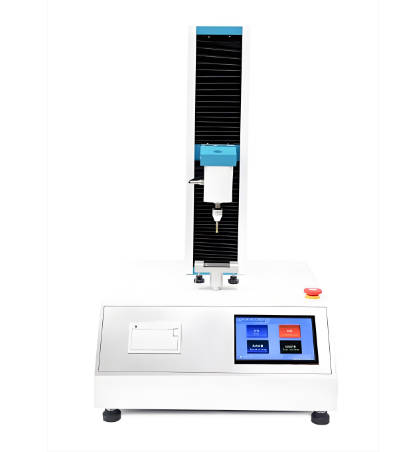
For Belgian manufacturers, coating applicators, and quality engineers in the automotive, appliance, architectural, and decorative sectors, the scratch resistance of a painted or coated surface is a critical performance attribute that affects appearance, durability, and customer perception. Scratches can result from everyday handling, cleaning, abrasive wear, or accidental contact, and a material's ability to resist scratch damage is a key indicator of its overall quality and service life. Our ISO/IEC 17025 accredited laboratory offers a specialised scratch testing service that quantifies the resistance of coatings, paints, plastics, and surface treatments to scratch penetration, with a focus on determining the critical load at which the coating fails, the depth of the scratch, and the adhesion loss at the scratch track. Using a range of scratch testers with controlled diamond or carbide tips, we perform tests under increasing load to generate a scratch profile that provides a comprehensive assessment of surface hardness and cohesive/adhesive strength. With our BELAC accreditation, our test reports are recognised by the Belgian Federal Public Service (FOD Economie), notified bodies, and authorities under the Machinery Directive (2006/42/EC), the Construction Products Regulation (EU 305/2011), and the relevant harmonised standards (ISO 1518, ASTM D7027, EN 13523‑6, etc.).
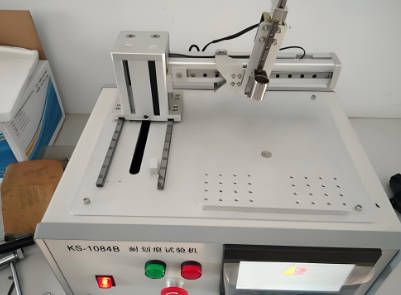
Materials and Coatings We Regularly Test
We accept a wide range of coated and uncoated materials, including metal panels, plastic components, glass, and composite surfaces. Our scratch testers are adaptable to flat, curved, and small‑scale specimens, and we can perform tests on both laboratory‑prepared panels and finished production parts. Common samples include:
- Automotive coatings – clearcoats, basecoats, primer‑surfacers, and multi‑layer paint systems.
- Industrial paints and powder coatings – for appliances, machinery, and heavy equipment.
- Architectural and decorative paints – interior wall paints, wood finishes, and metal cladding coatings.
- Plastic and polymer surfaces – for electronics housings, interior trim, and consumer goods.
- Glass and ceramic coatings – for automotive glass, cooktops, and decorative tiles.
- Protective and functional coatings – anti‑scuff, anti‑graffiti, and scratch‑resistant hard coats.
- Coated textiles and leather – for upholstery, footwear, and automotive interiors.
- Anodised and plated surfaces – on aluminium, steel, and other metallic substrates.
Core Test Methods – Scratch Test with Constant and Progressive Loading
Our scratch testing service uses well‑established international and European standards to characterise the scratch resistance of your coating or material. The test essentially involves drawing a pointed stylus across the surface under a controlled load, and then assessing the resulting scratch track. We offer both constant‑load and progressive‑load methods to provide a comprehensive understanding of the material's scratch behaviour:
- Constant‑load scratch test – according to ISO 1518‑1, EN ISO 1518‑1, and NBN EN ISO 1518‑1 – We apply a fixed load to a scratch tool (typically a hardened steel ball or a diamond stylus) and draw it across the specimen surface at a defined speed (e.g., 30‑40 mm/s). The resulting scratch is then evaluated for its width, depth, and any visible damage (cracking, peeling, or delamination). The test is performed at a range of load levels to determine the load at which the coating first shows significant damage.
- Progressive‑load scratch test – according to ISO 1518‑2, ASTM D7027, and EN ISO 1518‑2 – We apply a load that increases continuously (or stepwise) as the stylus traverses the specimen surface. The critical load at which the coating fails – indicated by a sudden change in the scratch profile, the emergence of a visible crack, or the loss of adhesion – is determined. This method is particularly useful for assessing the cohesion and adhesion of thin films and multi‑layer coatings, as it provides a clear failure point.
- Instrumented scratch test – according to ASTM D7027 (Standard test method for evaluation of scratch resistance of polymeric coatings and plastics) and ISO 20502 (for ceramic coatings) – We use a scratch tester equipped with a force sensor and a displacement sensor that record the normal force and the penetration depth continuously during the test. This provides a detailed scratch profile, including the penetration depth, the residual depth, the friction force, and the acoustic emission (if available). The critical load is determined from the change in the profile or from the acoustic signal, and we also calculate the scratch hardness (the ratio of the normal force to the projected contact area).
- Rockwell indentation and scratch hardness test – according to ISO 6508 (Rockwell) and DIN 50103 – as a supplementary method for hard coatings and metals – We use a Rockwell indenter with a defined load to make a small indentation, and we measure the diameter of the resulting impression to calculate the Rockwell hardness. This method is more suitable for hard, thick coatings or for metallic surfaces where a scratch test may be less discriminating.
- Multi‑pass and cross‑hatch scratch test – for evaluating the scratch resistance of coatings under repeated or patterned abrasion (similar to the ASTM D3359 cross‑cut adhesion test, but applied to scratch resistance) – We perform multiple scratches in a grid pattern and assess the damage at the intersections, providing a measure of the coating's cohesive strength and adhesion.
- Visual and microscopic evaluation – we use a calibrated optical microscope, a digital microscope, or a confocal microscope to measure the width and depth of the scratch, and we classify the damage according to standard scales (e.g., ISO 4628‑2 for cracking or ASTM D714 for blistering) – We provide high‑resolution images and, on request, 3D profiles of the scratch track.
Critical Load Determination and Failure Modes
The progressive‑load scratch test is particularly valuable because it identifies the critical load – the load at which the coating fails. The failure mode provides essential information about the coating's cohesive and adhesive strength:
- Identification of the critical load (Lc) – the load at which the first visible failure occurs (e.g., cracking, chipping, or delamination) – This is determined by a combination of visual inspection (using a microscope) and, in instrumented tests, by the detection of a sudden change in the penetration depth or the friction force.
- Classification of the failure mode – we categorise the failure into one or more of the following types: cohesive failure (cracking or chipping within the coating), adhesive failure (delamination of the coating from the substrate), and cracking of the substrate (when the coating is very hard and brittle) – A description of the failure mode is included in the test report.
- Measurement of the penetration depth and residual depth – we measure the maximum penetration depth during the scratch (the depth at the peak load) and the residual depth after the stylus has passed (the depth of the remaining scratch track) – The ratio of residual depth to penetration depth is an indication of the material's elastic recovery.
- Calculation of the scratch hardness (Hsc) – defined as the normal force divided by the projected contact area of the scratch track (calculated from the measured scratch width and the geometry of the stylus) – This parameter is a measure of the material's resistance to plastic deformation during scratching.
- Cohesive/adhesive strength interpretation – we interpret the critical load in the context of your coating's intended application, providing guidance on whether the coating is sufficiently hard and adherent to withstand the expected service conditions – For example, a coating with a low critical load is likely to fail under even mild abrasion, whereas a coating with a high critical load can withstand more aggressive contact.
Environmental and Surface‑Conditioned Scratch Testing
Scratch resistance is not an intrinsic material property; it is affected by temperature, humidity, and surface pre‑treatment. We offer scratch testing under various environmental conditions and on pre‑treated surfaces to provide a more realistic assessment of the coating's performance in service:
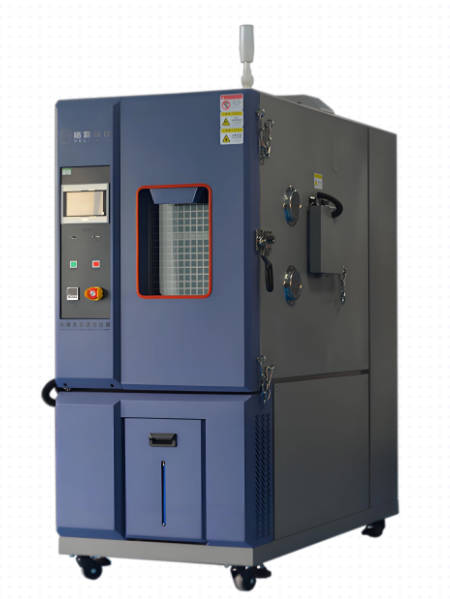
- Temperature‑conditioned scratch testing – we perform the scratch test at elevated (e.g., 40°C, 60°C, or 80°C) or low (e.g., -10°C or -20°C) temperatures, using a temperature‑controlled chamber or a hot/cold plate, to evaluate the change in scratch resistance with temperature.
- Humidity‑conditioned scratch testing – we condition the specimens at high humidity (e.g., 95% RH) and then perform the scratch test, to assess the effect of moisture on the coating's hardness and adhesion.
- Scratch testing after UV weathering or salt spray exposure – we pre‑expose the coated panels to xenon‑arc weathering (ISO 4892‑2, ASTM G155) or salt spray (ASTM B117, ISO 9227) and then perform the scratch test to evaluate the durability of the scratch resistance after environmental ageing.
- Scratch testing on different substrate materials – for coatings applied to different substrates (e.g., steel, aluminium, plastic), we test the scratch resistance on each substrate to ensure that the coating performance is consistent and that the substrate does not influence the scratch behaviour.
- Scratch testing with contaminant simulation – we can introduce abrasive particles (e.g., sand, dust) between the stylus and the coating surface to simulate real‑world scratching that is often caused by grit or other contaminants.
Calibration, Accuracy, and Quality Assurance
All scratch tests are performed under our ISO/IEC 17025:2017 accredited quality system, with full traceability of force, displacement, and speed measurements:
- Calibration of the scratch tester – normal force, displacement, and speed – according to ISO 7500‑1, ASTM E74, and EN ISO 7500‑1 – We calibrate the force sensor annually using certified reference weights and the displacement sensor using a certified gauge block. The scratch speed is verified using a calibrated tachometer. The uncertainty for force measurement is < 0.5%, for displacement < 0.1%, and for speed < 0.5%.
- Verification with reference materials – we test reference materials (e.g., a standard coating with a known critical load) at regular intervals to confirm the stability and reproducibility of the test system. The results are tracked on control charts.
- Stylus inspection – the geometry (tip radius and shape) of the scratch stylus is regularly checked under a microscope and compared with the standard specification. The stylus is replaced when wear is detected.
- Interlaboratory comparison (ILC) – we participate in proficiency testing schemes for scratch testing, ensuring that our results are consistent with those of other accredited laboratories.
Compliance with Belgian and European Regulations
Our scratch testing services support your conformity assessment under the relevant European directives and Belgian regulations for construction products, machinery, and consumer goods:
- Construction Products Regulation (CPR, EU 305/2011) – for coated building materials, the scratch resistance is often a performance parameter required for the Declaration of Performance (DoP).
- Machinery Directive (2006/42/EC) – for coatings on machine surfaces, scratch resistance contributes to the durability and long‑term protection of the machine, which is part of the risk assessment.
- Belgian national regulations – including the ARAB (General Regulation on Occupational Safety) for coatings on handling equipment and work surfaces – Our reports are used to verify that the coating can withstand the expected wear and tear.
- Product safety and quality regulations – for consumer goods, the scratch resistance of decorative coatings is often a key quality attribute – Our test data supports the assessment of product quality and durability.
Reporting and Accreditation
All scratch tests are performed under our ISO/IEC 17025:2017 accredited quality system, with full traceability of all measurement parameters. Our BELAC‑accredited reports are recognised by the FOD Economie, Belgian notified bodies, and European authorities. Each report includes:
- A complete description of the test specimen (material, coating type, thickness, surface preparation).
- The test method and conditions (type of stylus, load range, speed, temperature, humidity).
- The critical load (Lc) and the failure mode (cohesive, adhesive, substrate cracking, etc.).
- The scratch depth, width, and hardness (if measured).
- Photographic documentation of the scratch tracks (images of the scratches at different loads).
- A comparison with the specified acceptance criteria (if any) and a clear pass/fail conclusion.
- Calibration certificates and measurement uncertainty statements.
- A professional interpretation of the scratch resistance and its suitability for the intended application, with recommendations for improvement if necessary.
Our reports provide the confidence you need to certify your coatings, approve deliveries, and ensure that your products can withstand the mechanical demands of their service environment.
Why Choose Our Scratch Testing Service?
We understand that scratch resistance is often a critical aesthetic and functional quality of painted and coated surfaces, and that a single test can provide a wealth of information about the coating's hardness, elasticity, and adhesion. Our team offers rapid scheduling, flexible test programmes (from simple constant‑load screening to detailed progressive‑load characterisation with instrumented recording), and clear, practical interpretation of results – we do not just give you a critical load value; we explain the failure mechanism, the relationship to the coating's microstructure, and the implications for your product's performance. We work closely with your R&D, quality, and production teams to design a test plan that matches your specific coating, your application, and your performance targets. With state‑of‑the‑art scratch testers, precision measurement instruments, and a highly experienced team, our scratch testing service delivers the accuracy, repeatability, and regulatory acceptance you need to ensure the durability and appearance of your coated products. Contact us to discuss your coating system, your application requirements, and your performance goals – we will develop a tailored test programme that provides the definitive assessment of your product's scratch resistance.