Static Friction Coefficient Testing Service – Accredited Measurement of Static Slip Resistance and Surface Friction for Materials, Flooring, Packaging, and Components
For Belgian manufacturers, safety engineers, quality managers, and product developers in the automotive, construction, packaging, textile, and consumer goods sectors, the static coefficient of friction (COF) is a critical parameter that determines slip resistance, stability, and handling characteristics. From flooring materials and footwear soles to packaging films, conveyor belts, and automotive interiors, the static friction force governs the initial resistance to sliding – a key factor for safety, functionality, and user experience. Our ISO/IEC 17025 accredited laboratory offers a specialised static friction coefficient testing service that precisely measures the static friction force and the corresponding coefficient under controlled conditions, using standardised test methods and state‑of‑the‑art tribometers. With a focus on repeatability and real‑world relevance, we provide data that supports product development, quality control, and regulatory compliance. Our BELAC‑accredited reports are recognised by the Belgian Federal Public Service (FOD Economie), notified bodies, and authorities under the Construction Products Regulation (EU 305/2011), the Personal Protective Equipment Regulation (EU 2016/425), the Machinery Directive (2006/42/EC), and the relevant harmonised standards (EN 13036‑4, ASTM D1894, ISO 8295, etc.).
Materials and Products We Regularly Test
We accept a wide range of materials, surfaces, and complete assemblies where static friction plays a crucial role in performance and safety. Our tribometers are adaptable to different specimen sizes, surface textures, and environmental conditions. Common samples include:
- Floor coverings – ceramic tiles, vinyl, linoleum, wood, laminate, carpet, and rubber flooring.
- Footwear soles and outsoles – leather, rubber, PVC, polyurethane, and composite sole materials.
- Packaging films and sheets – polyethylene (PE), polypropylene (PP), PET, PVC, and multi‑layer laminates.
- Corrugated board and paper – for stacking, handling, and converting applications.
- Conveyor belts and industrial fabrics – rubber, PVC, and textile belts for material handling.
- Automotive interior materials – seat covers, dashboard materials, steering wheel covers, and door panels.
- Textiles and nonwovens – for apparel, upholstery, and technical applications.
- Medical and protective gloves – latex, nitrile, vinyl, and polyurethane gloves.
- Consumer goods – shoe soles, tool handles, packaging seals, and cap closures.
Core Static Friction Test Methods – Horizontal Pull, Inclined Plane, and Customised Setups
Our static friction coefficient testing service employs the most recognised international and European standards, adapted for the specific material type and application. The static COF (μ_s) is defined as the ratio of the tangential force required to initiate sliding to the normal force applied between the two surfaces. We use two principal methods:
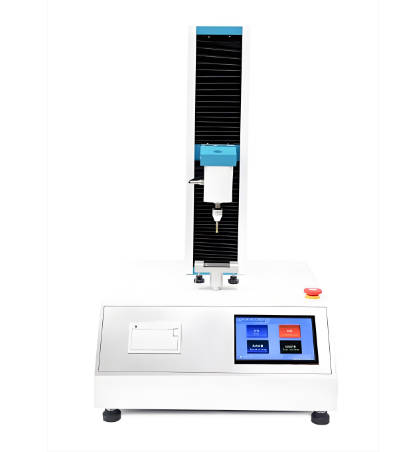
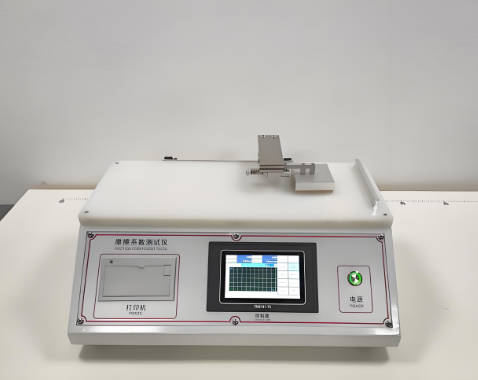
- Horizontal pull/sled method – according to ASTM D1894 (plastic films), ISO 8295 (plastic films), ASTM D4518 (flooring), and NBN EN ISO 8295 – We mount a stationary specimen on a horizontal platform and place a sled (a weighted block) with the mating material on top. The sled is pulled horizontally at a constant speed (typically 150 mm/min) using a tensile testing machine or a dedicated friction tester. The force required to initiate movement (the peak force) is recorded, and the static COF is calculated as the peak force divided by the normal force (the weight of the sled). The test is performed on both dry and, if required, wet or lubricated surfaces. For flooring, we use a standard rubber or leather slider to simulate footwear.
- Inclined plane method – according to ASTM D4521 (paper), ASTM D202 (paperboard), and EN 13036‑4 (flooring slip resistance) – We place the specimen on a tiltable plane and gradually increase the inclination angle until the specimen (or a sled placed on the surface) begins to slide. The static friction coefficient is calculated as the tangent of the angle of inclination at the moment of sliding. This method is particularly useful for bulky or heavy specimens that are difficult to mount in a horizontal pull tester, and it closely simulates real‑world slip conditions on slopes and ramps.
- Floor slip resistance tester (pendulum or ramp test) – according to EN 13036‑4 (flooring), ASTM E303 (pendulum), and NBN EN 13036‑4 – For flooring applications, we use a pendulum‑type tester (the British Pendulum Tester) to measure the slip resistance under wet and dry conditions. The test simulates the impact of a foot sliding across the floor surface. The result is expressed as a slip resistance value (SRV) or as the pendulum test value (PTV). For ramps, we use the ramp test (DIN 51130, EN 13893) to classify floor coverings into slip resistance classes (R9 to R13).
- Customised static friction tests for specific products – e.g., shoe‑to‑floor friction, glove‑to‑tool friction, or packaging film‑to‑film friction – We develop test setups that replicate the actual contact conditions, including the normal force, the contact area, the surface roughness, and the environmental conditions (temperature, humidity, contamination). For example, for footwear, we test the sole against standard floor surfaces (ceramic, steel, wood) under dry, wet, and oily conditions.
- Static friction as a function of normal force – for materials with non‑linear friction behaviour (e.g., elastomers, soft polymers) – We perform a series of tests at different normal loads (e.g., 5 N, 10 N, 20 N, 50 N) and plot the static friction force versus the normal force. The linearity of the relationship is assessed, and the static friction coefficient is derived from the slope of the linear regression (or reported as the average over the load range).
Advanced and Specialised Test Protocols – Environmental and Dynamic Effects
Static friction is highly sensitive to environmental and surface conditions. We offer a range of advanced test protocols that simulate real‑world conditions:
- Wet and contaminated surface testing – to evaluate the effect of water, oil, dust, or other contaminants on slip resistance – We condition the surfaces with a controlled amount of water, oil, or synthetic dust and immediately perform the static friction test. This is critical for flooring, footwear, and industrial floor coatings.
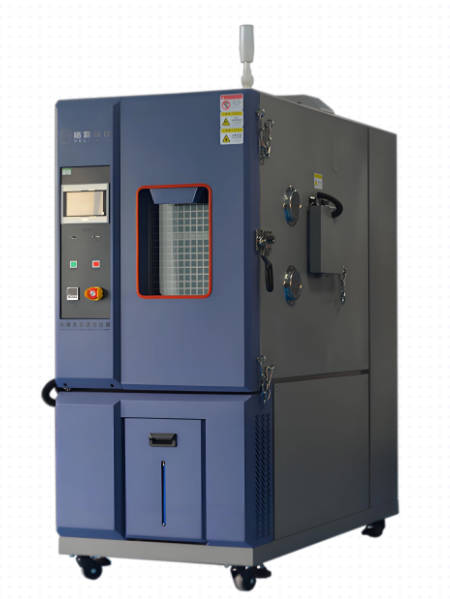
- Temperature‑controlled friction testing – from -20°C to +80°C – in an environmental chamber – We perform the static friction test with the specimen and the test environment at the target temperature, to evaluate the effect of temperature on surface characteristics, polymer modulus, and adhesion.
- Humidity conditioning – according to ISO 139, ASTM D618, and NBN EN ISO 139 – at 20°C, 65% RH (standard) and at 30°C, 90% RH (for tropical conditions) – We condition the specimens to the specified moisture content and then measure the static friction, because moisture can significantly affect the surface energy and the real contact area.
- Abrasion and wear pre‑conditioning – to simulate the effect of wear on slip resistance (ASTM D4060, Taber abrasion, followed by friction test) – We abrade the surface using a Taber abraser or a standard sandpaper, then measure the static friction on the worn surface to assess the durability of the slip‑resistant properties.
- Static friction after chemical exposure – we immerse or spray specimens with cleaning agents, oils, or foot care products, and then test the static friction to evaluate the chemical resistance of the surface texture and the friction properties – This is particularly relevant for flooring in kitchens, hospitals, and industrial environments.
Surface Characterisation and Correlation with Slip‑Resistance Standards
To fully interpret the static friction results, we also characterise the surface topography and correlate the friction values with the requirements of the relevant standards and regulations:
- Surface roughness and texture measurement – according to ISO 25178, ASTM B487 – using a stylus profilometer or an optical profiler – We measure the surface roughness parameters (Ra, Rz, Rmax, and the micro‑texture profile) to explain variations in friction and to correlate with the slip‑resistance class.
- Contact angle and surface energy measurement – for a deeper understanding of the surface chemistry's effect on friction (ASTM D7334, ISO 15989) – The surface energy (dispersive and polar components) influences the adhesion component of friction; we measure the contact angle of water and diiodomethane to calculate the surface energy and its correlation with the static friction coefficient.
- Classification according to Belgian and European standards – for flooring, we assign the slip resistance class (R9‑R13) according to DIN 51130 (ramp test) or the Pendulum test value (PTV) according to EN 13036‑4 – We compare the measured static friction values with the requirements of the standard and provide a clear classification that is recognised by Belgian authorities and insurance companies.
- Pass/fail determination – based on specified threshold values (e.g., a minimum of 0.5 for level ramps, 0.6 for ramps, or specific requirements for the packaging industry) – We assess whether the measured static friction meets the required safety or performance criteria and provide a clear pass/fail conclusion.
Calibration, Accuracy, and Quality Assurance
All static friction tests are performed under our ISO/IEC 17025:2017 accredited quality system, with full traceability of force, displacement, angle, temperature, and humidity measurements:
- Calibration of force sensors and load cells – according to ISO 7500‑1, ASTM E74, and EN ISO 7500‑1 – using certified reference weights – We calibrate the force sensors annually, achieving a measurement uncertainty < 0.5% of the reading.
- Calibration of the inclination angle – for inclined plane tests – using a precision inclinometer (accuracy ±0.1°) – The inclinometer is calibrated against a certified reference angle standard.
- Calibration of the normal force – for sled tests – we use certified weights to calibrate the sled mass, ensuring the normal force is accurate to within ±0.1% – The sled mass is verified using a calibrated analytical balance.
- Verification with reference materials – we test certified reference materials (e.g., a standard rubber compound with a known static friction coefficient) at regular intervals to confirm the stability of the test system – The results are tracked on control charts.
- Interlaboratory comparison (ILC) – we participate in proficiency testing schemes for friction and slip‑resistance measurements – Our results are regularly compared with those of other accredited laboratories to ensure consistency.
Compliance with Belgian and European Regulations
Our static friction coefficient testing services support your conformity assessment under the key European directives and Belgian regulations for product safety, workplace safety, and construction products:
- Construction Products Regulation (CPR, EU 305/2011) – for floor coverings, stairs, and ramp surfaces – The slip resistance (static friction) is an essential characteristic for the Declaration of Performance (DoP) of flooring products, and our tests are performed according to the harmonised standards (EN 13845, EN 13893, EN 13036‑4).
- Personal Protective Equipment (PPE) Regulation (EU 2016/425) – for footwear (safety, protective, and occupational footwear) – The slip resistance of the sole against a steel floor (with and without detergent) is a key requirement of EN ISO 20344 and EN ISO 20345; our tests provide the necessary data for the CE marking of safety footwear.
- Machinery Directive (2006/42/EC) – for conveyor belts, escalators, and moving walkways – The static friction between the belt and the drive pulley is a critical safety parameter; our test data supports the risk assessment.
- Belgian workplace safety (ARAB) and building regulations – for stairs, walkways, and platforms – The static friction coefficient is used to verify compliance with the minimum slip‑resistance requirements, and our reports are accepted by the FOD Werkgelegenheid and local authorities.
- Packaging and packaging waste regulations – for the stability of stacked packages and the slip resistance of packaging films – The static friction of packaging materials affects pallet stability and handling; our tests help you meet the requirements of EN 13274 and other packaging standards.
Reporting and Accreditation
All static friction tests are performed under our ISO/IEC 17025:2017 accredited quality system, with full traceability of all measurement parameters. Our BELAC‑accredited reports are recognised by the FOD Economie, Belgian notified bodies, and European authorities. Each report includes:
- A complete description of the test specimen, the mating material, and the test surfaces.
- The test method and standard used, with all relevant parameters (normal force, sliding speed, inclination angle, environmental conditions).
- The static friction coefficient (μ_s) for each test, with the mean, standard deviation, and minimum/maximum values.
- For horizontal pull tests, the force‑time curve showing the peak force and the static region.
- For inclined plane tests, the tangent of the inclination angle.
- Surface roughness and contact angle data (if requested).
- Classification according to the applicable standard (e.g., slip resistance class, PTV, SRV).
- Calibration certificates and measurement uncertainty statements.
- A professional conclusion on the slip resistance of the material and its suitability for the intended application, with recommendations for design or surface treatment if necessary.
Our reports provide the confidence you need to certify your products, approve deliveries, and ensure the safety and functionality of your surfaces and components.
Why Choose Our Static Friction Coefficient Testing Service?
We understand that static friction is often the difference between a safe product and a hazardous one – from a non‑slip floor that prevents a fall, to a well‑functioning packaging film that stays in place on a pallet. Our team offers rapid scheduling, flexible test programmes (from simple single‑point tests to comprehensive investigations with multiple surfaces, conditions, and loads), and clear, practical interpretation of results – we do not simply provide a number; we explain the meaning of the static friction coefficient in terms of slip resistance, handleability, and safety. We work closely with your product developers, safety managers, and quality teams to select the most appropriate test method, the relevant acceptance criteria, and the applicable regulations for your specific product and market. With precise tribometers, environmental chambers, surface analysers, and a highly experienced team, our static friction coefficient testing service delivers the accuracy, repeatability, and regulatory acceptance you need to ensure that your products are safe, reliable, and compliant with the high standards of the Belgian and European market. Contact us to discuss your materials, your application, and your performance targets – we will design a tailored test programme that provides the definitive assessment of your product's static friction characteristics.