Tear Strength Testing Service – Accredited Evaluation of Fabric, Film, Paper, Rubber, and Nonwoven Resistance to Tear Propagation
For Belgian manufacturers, importers, quality engineers, and product developers in the textile, packaging, automotive, medical, and industrial materials sectors, the tear strength of a material is a critical performance parameter that determines durability, safety, and product integrity during use and handling. Whether it is a protective garment, a flexible packaging film, a conveyor belt, or a medical nonwoven, resistance to tearing ensures that products can withstand the stresses of daily operation without catastrophic failure. Our ISO/IEC 17025 accredited laboratory offers a comprehensive tear strength testing service that quantifies the force required to propagate a tear through a wide range of materials, from woven and nonwoven textiles to plastics, films, paper, rubber, leather, and composites. With decades of experience in mechanical testing and material characterisation, we provide the data needed for material selection, quality control, and compliance with European and international standards. Our BELAC‑accredited reports are recognised by the Belgian Federal Public Service (FOD Economie), notified bodies, and authorities under the Construction Products Regulation (EU 305/2011), the Personal Protective Equipment Regulation (EU 2016/425), and the Machinery Directive (2006/42/EC).
Materials and Products We Regularly Test
We accept a wide range of flexible and semi‑rigid materials, from thin films and delicate textiles to heavy‑duty industrial fabrics, rubbers, and paperboards. Our test fixtures are adaptable to various specimen geometries and material thicknesses, ensuring accurate and repeatable measurements. Common samples include:
- Woven and knitted textiles – cotton, polyester, nylon, wool, silk, and blended fabrics for apparel, upholstery, and technical applications.
- Nonwoven materials – spunbond, meltblown, needlepunched, and hydroentangled fabrics for medical, filtration, and hygiene products.
- Plastic films and sheets – polyethylene (PE), polypropylene (PP), PET, PVC, polyamide, and biodegradable films for packaging and agricultural use.
- Paper and paperboard – kraft paper, corrugated board, tissue paper, and specialty papers for packaging and printing.
- Rubber and elastomers – natural rubber, synthetic rubber, silicone, EPDM, and thermoplastic elastomers for seals, gaskets, and hoses.
- Leather and synthetic leather – for upholstery, footwear, and automotive interiors.
- Composites and laminates – multi‑layer materials for medical, protective, and industrial applications.
- Coated and impregnated fabrics – with PVC, PU, silicone, or PTFE coatings.
- Geotextiles and construction membranes – for civil engineering and building applications.
Core Tear Test Methods – Pendulum, Trapezoid, and Tongue Techniques
Our tear strength testing service includes the most widely used international and European methods, each suited to specific material types and applications. We select the appropriate method based on your material, end‑use, and standard requirements, ensuring that the test results are directly applicable to your product's performance and certification:
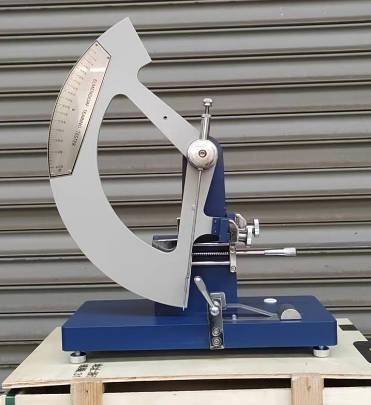
- Elmendorf tear test (pendulum method) – according to ISO 1974 (paper), ASTM D1424 (textiles), ASTM D689 (paper), EN 21974, and NBN EN 21974 – We use a pendulum‑type tearing tester to measure the average force required to propagate a tear through a specimen of defined dimensions. The specimen is pre‑cut with a slit, and the pendulum, released from a fixed height, tears the remaining material. The energy absorbed is read directly from the scale, and the result is expressed in millinewtons (mN) or newtons (N). This method is widely used for paper, tissue, and lightweight textiles.
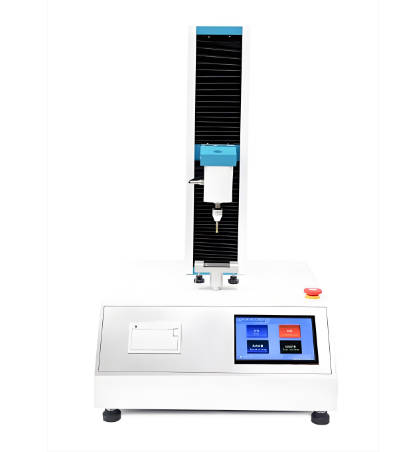
- Tongue tear test (single‑rip) – according to ASTM D2261 (textiles), ISO 4674‑1 (rubber‑coated fabrics), and EN 1875‑3 – We cut a rectangular specimen with a slit that divides it into two “tongues.” The two tongues are clamped in the tensile testing machine and pulled apart at a constant rate (typically 100 mm/min). The force required to continue the tear is recorded, and the average tearing force (in N) or the tear strength (in N/cm) is calculated. This method is suitable for woven textiles, coated fabrics, and lightweight rubber materials.
- Trapezoid tear test – according to ASTM D5587 (textiles), ISO 9073‑4 (nonwovens), DIN 53356, and NBN EN ISO 9073‑4 – We cut a trapezoidal specimen, with a small cut on the shorter side. The specimen is clamped along the non‑parallel sides and pulled at a constant rate. The tear propagates across the width of the specimen. The maximum force (in N) and the average force during the tear are recorded. This method is particularly suitable for nonwovens, woven fabrics, and industrial textiles.
- Trouser tear test – according to ASTM D1938 (plastics), ISO 6383‑1 (plastic films), and EN 12957 – For plastic films and sheets, we use the trouser‑shaped specimen, where the two legs of the “trousers” are pulled apart at a constant rate. The force required to propagate the tear is measured, and the tear resistance (in N/mm) is calculated. This method is used for flexible films, foils, and thin plastic sheets.
- Wing tear test – for rubber and elastomers – according to ASTM D624, ISO 34‑1, and NBN EN ISO 34‑1 – We use a crescent‑shaped or ring‑shaped specimen with a sharp notch. The specimen is stretched in a tensile testing machine, and the force required to propagate the tear from the notch is measured. The tear strength (in N/mm) is calculated. This method is essential for rubber seals, O‑rings, and diaphragms.
Specialised Test Variants for Specific Materials and Applications
Depending on the material type and the application, we offer additional, customised test protocols that provide deeper insight into the tearing behaviour:
- Edge and edge‑tear testing – for evaluating the resistance to tearing starting from a cut or a damaged edge – We test specimens that have been pre‑conditioned with a controlled edge damage (simulating rough handling) to assess the sensitivity of the material to tear initiation from existing defects.
- Multi‑directional tear testing – for materials with anisotropic tear resistance (e.g., woven textiles, nonwovens) – We test specimens in the machine direction (MD), cross‑direction (CD), and at 45° to the grain to assess the directional dependency of the tear strength. The tear strength ratio (MD/CD) is reported.
- Wet and conditioned tear testing – for materials that are used in humid or wet environments – We condition specimens in water or at high humidity (95% RH) and perform the tear test in the conditioned state. The wet tear strength is compared with the dry tear strength to determine the moisture sensitivity of the material.
- High‑speed tear testing – for materials subject to dynamic or impact loading (e.g., airbags, parachutes) – We perform the tear test at higher crosshead speeds (up to 500 mm/min) to simulate the rapid tear propagation that can occur during impact or sudden loading.
- Fracture toughness testing (Kic) – for advanced materials and quality control in R&D – For certain engineering plastics and composites, we can determine the fracture toughness (Kic) using the trouser tear method and fracture mechanics principles, providing a fundamental material property.
Environmental Conditioning and Aging – Simulating Real‑World Performance
The tear strength of a material can change significantly with temperature, humidity, chemical exposure, and aging. Our service includes conditioning options that simulate the actual service environment:
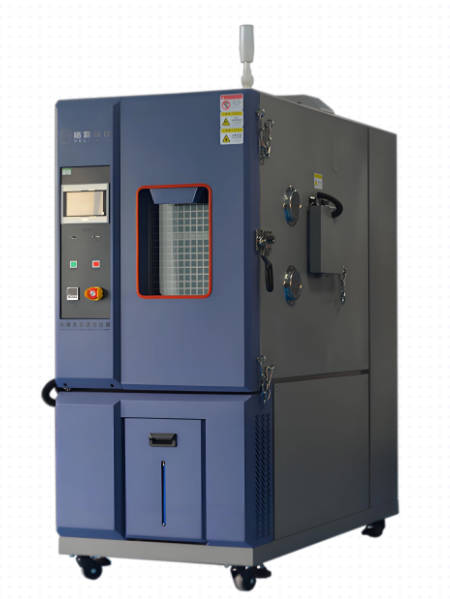
- Temperature conditioning – at elevated (up to 150°C) or low (down to -40°C) temperatures, in a thermal chamber – We condition specimens to the target temperature and perform the tear test at that temperature, to evaluate the thermal sensitivity of the tear resistance.
- Humidity conditioning – according to ISO 139, ASTM D618, and NBN EN ISO 139 – at 20°C, 65% RH (standard) and at 30°C, 90% RH (for tropical conditions) – We condition textiles, papers, and films to defined moisture contents and test them to determine the effect of moisture on tearing.
- UV and weathering exposure – according to ISO 4892, ASTM G154, and NBN EN ISO 4892 – We expose specimens to UV radiation and water spray (xenon‑arc or fluorescent UV) for 500 to 2,000 hours, then perform the tear test to assess the degradation of the tearing resistance over time.
- Chemical exposure – immersion in acids, bases, oils, solvents, or other process fluids – according to ASTM D543, ISO 2812 – We immerse specimens in the test chemical for a defined period (e.g., 24, 72, or 168 hours) and then perform the tear test to evaluate the chemical resistance of the material.
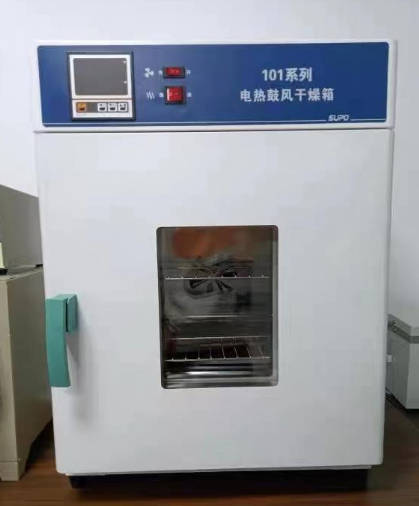
- Thermal aging – according to ASTM D3045, ISO 188, and NBN EN ISO 188 – for rubber and plastics – We age specimens in hot air ovens at 70°C, 100°C, or 125°C for up to 1,000 hours and then test the residual tear strength to predict the service life of the material.
Post‑Test Evaluation and Failure Mode Analysis
Beyond the numerical tear force, we provide a qualitative analysis of the failure pattern to help you understand the tearing mechanism and to support material development:
- Visual classification – based on the appearance of the tear path: straight tear, jagged tear, necking, or brittle fracture – We document the tear morphology with high‑resolution photographs, which are included in the test report.
- Measurement of the tear path length and width – to determine if the tear followed the intended path or deviated – A deviation may indicate anisotropy or the presence of defects.
- Microscopic examination (for woven and nonwoven materials) – we examine the tear edges under a microscope to assess the mode of failure (e.g., fibre pull‑out, yarn breakage, or inter‑yarn slippage) – This information helps identify whether the tear strength is limited by fibre strength, fabric weave, or coating adhesion.
- Correlation with other mechanical properties – we compare the tear strength with the tensile strength and elongation of the material to provide a complete mechanical profile – The tear‑to‑tensile ratio is a useful indicator of the material's toughness and ability to resist crack propagation.
- Advice for material improvement – based on the observed failure modes, we offer suggestions for material substitution, weave design, coating formulation, or processing optimisation – For example, a tear that shows extensive fibre pull‑out may indicate that a stronger fibre or a different yarn twist could improve performance.
Calibration, Accuracy, and Quality Assurance
All tear strength tests are performed under our ISO/IEC 17025:2017 accredited quality system, with full traceability of force, displacement, and temperature measurements:
- Calibration of tensile testing machines – load cells and displacement sensors – according to ISO 7500‑1, ASTM E74, and EN ISO 7500‑1 – We calibrate the load cells annually with certified reference weights (class 0.5), and we verify the displacement with a calibrated extensometer, achieving measurement uncertainties < 0.5% for force and < 0.1 mm for displacement.
- Calibration of pendulum tear testers – according to ISO 1974, ASTM D1424, and NBN EN 1974 – We use certified reference samples with known tear values to verify the pendulum's energy absorption and the scale reading.
- Calibration of specimen cutters – to ensure that the specimen dimensions and the cut geometry are within the specified tolerances – We regularly inspect the cutting dies for wear and sharpness, and we verify the cut dimensions using a calibrated measuring microscope.
- Verification with reference materials – we test reference specimens (e.g., a standard fabric or a certified polymer film) at the start of each test series to confirm the stability of the test system – The reference results are tracked on control charts to detect any drift over time.
- Interlaboratory comparison (ILC) – we participate in proficiency testing programmes for tear strength and mechanical testing – Our results are regularly compared with those of other accredited laboratories to ensure consistency and accuracy.
Compliance with Belgian and European Regulations
Our tear strength testing services support your conformity assessment under the relevant European directives and Belgian regulations for personal protective equipment, construction products, and industrial materials:
- Personal Protective Equipment Regulation (EU 2016/425) – for protective gloves, clothing, and other PPE – The tear strength of protective fabrics is a key performance parameter for many PPE standards (e.g., EN 388 for gloves, EN 469 for firefighter clothing, EN 13034 for chemical protective clothing). Our tests provide the essential data for the CE marking of PPE.
- Construction Products Regulation (CPR, EU 305/2011) – for geotextiles, membranes, and building textiles – Tear strength is a required property for geotextiles (EN 12224) and for external wall and roof membranes.
- Machinery Directive (2006/42/EC) – for conveyor belts, safety curtains, and other industrial textile components – Our test data supports the risk assessment and the verification of the mechanical integrity of these components.
- Packaging and Packaging Waste Directive (94/62/EC) – for flexible packaging films and paper – Tear strength is an important quality parameter for packaging materials, ensuring that they can withstand handling and transport without tearing.
- Belgian national regulations – including the ARAB (General Regulation on Occupational Safety) and the product‑specific regulations for textiles and nonwovens – Our reports are accepted by the Belgian authorities for product certification and workplace safety inspections.
Reporting and Accreditation
All tear strength tests are performed under our ISO/IEC 17025:2017 accredited quality system, with full traceability of all measurement parameters. Our BELAC‑accredited reports are recognised by the FOD Economie, Belgian notified bodies, and European authorities. Each report includes:
- A detailed description of the test method (including the specific standard and the test conditions).
- Specimen preparation details (number of specimens, sampling direction, conditioning).
- The measured tear force (or tear resistance) for each specimen, with the mean, standard deviation, and minimum/maximum values.
- For anisotropic materials, the tear strength in each direction (MD, CD, 45°) and the anisotropy ratio.
- Graphical presentation of the force‑extension curve (for tensile‑based tear methods).
- Photographic documentation of the tear pattern and the failure mode.
- Calibration certificates and measurement uncertainty statements.
- A professional conclusion on the tear resistance of the material and its suitability for the intended application, with recommendations for design or material improvement if necessary.
Our reports provide the confidence you need to certify your products, approve deliveries, and comply with all applicable regulations.
Why Choose Our Tear Strength Testing Service?
We understand that tear resistance is a critical quality attribute that affects product performance, safety, and durability. Our team offers rapid scheduling, flexible test programmes (from simple single‑specimen screening to extensive multi‑parameter studies), and clear, practical interpretation of results – we do not simply give you a tear force number; we explain the significance of the result, the relationship to other material properties, and the implications for your application. We work closely with your R&D, quality, and production teams to select the most appropriate test method, conditioning regime, and acceptance criteria for your specific material and product. With a full range of tearing testers, tensile machines, conditioning chambers, and a highly experienced team, our tear strength testing service delivers the accuracy, repeatability, and regulatory acceptance you need to ensure that your materials meet the high standards of the Belgian and European market. Contact us to discuss your materials, your performance targets, and your certification goals – we will design a tailored test programme that provides the definitive assessment of your product's tear resistance.