Tensile Strength Testing Service – Accredited Measurement of Ultimate Tensile Strength, Yield Strength, and Elongation for Metals, Plastics, and Composites
For Belgian manufacturers, material engineers, quality managers, and product developers in the automotive, aerospace, construction, energy, and medical device sectors, the tensile strength of a material is one of the most fundamental mechanical properties used in design, material selection, quality control, and regulatory compliance. Whether you are qualifying a new alloy, verifying the strength of a polymer compound, or checking the consistency of a composite laminate, accurate tensile testing provides the essential data for ensuring product safety, reliability, and performance. Our ISO/IEC 17025 accredited laboratory offers a comprehensive tensile strength testing service that precisely measures the ultimate tensile strength (UTS), yield strength (0.2% offset), modulus of elasticity, elongation at break, and reduction of area across a wide range of materials – from metals and alloys to plastics, rubber, composites, and textiles. With a full suite of servo‑hydraulic and electromechanical universal testing machines, contacting and non‑contacting extensometers, and temperature‑controlled chambers, we provide data that supports your design validation, production quality, and compliance with European standards. Our BELAC‑accredited reports are recognised by the Belgian Federal Public Service (FOD Economie), notified bodies, and authorities under the Machinery Directive (2006/42/EC), the Pressure Equipment Directive (2014/68/EU), the Construction Products Regulation (EU 305/2011), and the relevant harmonised standards (EN ISO 6892‑1, EN ISO 527‑1, ASTM E8, ASTM D638, etc.).
Materials and Products We Regularly Test
We accept a wide variety of materials, components, and finished products, ranging from small‑scale test coupons to full‑size structural sections. Our test fixtures, grips, and extensometers are interchangeable to accommodate different specimen geometries and material types. Common samples include:
- Metals and alloys – carbon steels, stainless steels, aluminium alloys, copper alloys, titanium, nickel‑based superalloys, cast irons, and powder metallurgy parts.
- Plastics and polymers – thermoplastics (PE, PP, PVC, PET, PA, PC, ABS, POM, PTFE), thermosets (epoxy, polyester, phenolic), elastomers, and rubber compounds.
- Composites and fibre‑reinforced materials – glass‑fibre reinforced plastics (GFRP), carbon‑fibre reinforced plastics (CFRP), laminates, and sandwich panels.
- Textiles and nonwovens – woven, knitted, and nonwoven fabrics for technical and industrial applications.
- Paper and paperboard – for packaging and construction.
- Adhesive joints and bonded assemblies – for evaluating the strength of the bonded interface.
- Welds and heat‑affected zones – for assessing the tensile properties of welded joints and the surrounding material.
- Additively manufactured components – for verifying the mechanical performance of 3D‑printed parts.
Core Tensile Test Methods – Standards and Procedures
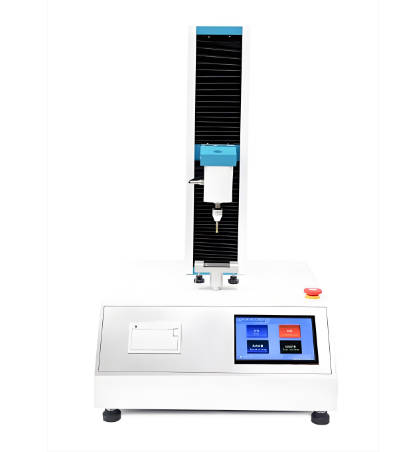
Our tensile strength testing service follows the most recognised international and European standards, adapted for the specific material type and test objective. We employ constant‑rate‑of‑extension (CRE) testing machines with precise load and displacement control, and we use extensometers to measure strain accurately:
- Tensile test for metallic materials – according to ISO 6892‑1, ASTM E8, and NBN EN ISO 6892‑1 – We test metallic specimens (round, flat, or tubular) at a controlled strain rate (or crosshead speed) until fracture. We determine the yield strength (Rp0.2, the stress at 0.2% permanent strain), the ultimate tensile strength (Rm), the percentage elongation after fracture (A), and the reduction of area (Z). The test is performed at ambient temperature, and optionally at elevated or sub‑zero temperatures using an environmental chamber. The stress‑strain curve is recorded continuously, and we calculate the modulus of elasticity (E) from the linear elastic region.
- Tensile test for plastics and polymers – according to ISO 527‑1, ASTM D638, and NBN EN ISO 527‑1 – We test dumbbell‑shaped or straight‑sided specimens at a specified speed (typically 1, 5, 10, or 50 mm/min) depending on the material and the applicable standard. We measure the tensile modulus, the yield stress, the tensile strength at break, and the elongation at yield and at break. For rigid and semi‑rigid plastics, we use an extensometer to measure strain accurately; for soft and elastomeric materials, we use a non‑contacting video extensometer.
- Tensile test for composites – according to ISO 527‑4 (for isotropic and orthotropic composites), ASTM D3039, and NBN EN ISO 527‑4 – We test flat, straight‑sided specimens with bonded tabs (to avoid grip damage). We measure the tensile modulus, the tensile strength, and the failure strain in the principal direction (0°) and, for orthotropic materials, in the transverse direction (90°).
- Tensile test for rubber and elastomers – according to ISO 37, ASTM D412, and NBN EN ISO 37 – We use dumbbell‑shaped specimens and test at a defined speed (typically 500 mm/min). We measure the tensile strength, the elongation at break, and the stress at a given elongation (e.g., 100%, 300% modulus).
- Tensile test for textile fabrics – according to ISO 13934‑1 (strip method), ASTM D5034, and NBN EN ISO 13934‑1 – We test fabric specimens in the warp and weft directions at a constant rate of extension, measuring the breaking force and the elongation at break.
- Tensile test for paper and paperboard – according to ISO 1924‑2, ASTM D828, and NBN EN ISO 1924‑2 – We measure the tensile strength, the tensile index, and the elongation of paper strips.
Specimen Preparation and Measurement
Correct specimen preparation and accurate dimensional measurement are essential for reliable tensile test results. We offer full specimen preparation services and follow strict measurement protocols:
- Specimen machining – we prepare specimens by milling, turning, punching, or water‑jet cutting, according to the standard and the material – We ensure that the gauge section is free of scratches, notches, or other stress raisers, and that the dimensions are within the specified tolerances.
- Measurement of initial dimensions – we measure the width, thickness, and diameter of the gauge section using calibrated micrometers and callipers (accuracy 0.01 mm) – For round specimens, we measure the diameter at three points along the gauge length; for flat specimens, we measure the width and thickness at three points.
- Marking of gauge length – we mark the gauge length (typically 50 mm, 80 mm, or 100 mm) on the specimen to allow the measurement of elongation after fracture – We use a fine scribe or an ink mark, and we measure the gauge length with a digital calliper before and after the test.
- Conditioning – for plastics and textiles, we condition the specimens at standard atmosphere (23°C, 50% RH) for at least 24 hours before testing, in accordance with ISO 291 and ASTM D618 – For metals, no conditioning is required, but we record the ambient temperature.
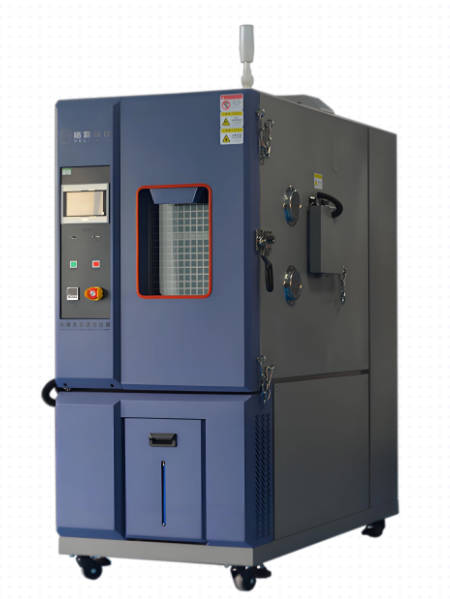
- Environmentally controlled testing – for tests at elevated or low temperature, we condition the specimen and the test fixture in the environmental chamber before starting the test, and we maintain the temperature throughout the test – We monitor the temperature with calibrated thermocouples.
Strain Measurement – Contacting and Non‑Contacting Techniques
Accurate strain measurement is crucial for determining the modulus of elasticity and the yield strength. We offer a range of strain measurement options to suit different specimen types and test conditions:
- Contacting extensometers (clip‑on) – according to ISO 9513, ASTM E83, and NBN EN ISO 9513 – We use a clip‑on extensometer with a gauge length of 25 mm, 50 mm, or 100 mm for metals and rigid plastics. The extensometer is attached directly to the specimen, and it measures the strain with high accuracy (typically Class 0.5 or better).
- Non‑contacting video extensometers – for delicate or thin specimens, for high‑temperature testing, or for materials that are sensitive to marking – We use a video extensometer that tracks two marks on the specimen surface, measuring the strain without physical contact. This is particularly suitable for plastics, films, and composites.
- Strain gauges – for high‑precision measurements or for testing very thin sections where an extensometer would be impractical – We bond strain gauges to the specimen surface and connect them to a strain indicator, providing a direct measurement of local strain.
- Laser extensometry – for accurate, non‑contact measurement of strain in large specimens or for tests at high temperatures – We use a laser extensometer that measures the distance between two reflective targets on the specimen.
- In‑situ strain mapping (digital image correlation – DIC) – for detailed analysis of strain distribution and for the detection of localised deformation (necking, shear bands) – On request, we use a high‑resolution camera and DIC software to capture the full‑field strain during the test, providing a detailed picture of the deformation behaviour.
Temperature‑Controlled Tensile Testing – Simulating Service Conditions
Many applications require materials to perform at elevated or sub‑zero temperatures. We offer tensile testing in environmental chambers that span a wide temperature range:
- Elevated temperature tensile test – according to ISO 6892‑2 (metals), ASTM E21, and NBN EN ISO 6892‑2 – We test metallic specimens at temperatures from 100°C to 1,000°C (depending on the furnace capability) to measure the reduction in yield strength and tensile strength at elevated temperatures. This is essential for power generation, automotive exhaust, and aerospace components.
- Low temperature tensile test – down to -60°C (or lower with special setups) – for cryogenic and cold‑climate applications – We test materials at sub‑zero temperatures to assess the risk of brittle fracture and to determine the change in ductility.
- Temperature cycling tensile test – for materials that experience thermal cycling during service – We pre‑condition the specimen to a thermal cycle and then perform the tensile test at a defined temperature to evaluate the cumulative effect of thermal fatigue.
Specialised Tensile Tests – High‑Speed, Plane‑Strain, and Biaxial
For advanced research and specific applications, we offer additional specialised tensile test variants:
- High‑speed tensile test – for materials subject to impact or high‑strain‑rate deformation – according to ISO 8256 (tensile impact) and ASTM D1822 – We use a high‑speed test machine (servo‑hydraulic with velocities up to 20 m/s) to measure the dynamic tensile properties, including the tensile strength and elongation at high strain rates.
- Plane‑strain tensile test – for fracture mechanics and sheet metal forming – We test a specimen with a wide, reduced‑section gauge to create a plane‑strain condition, which is used to assess the forming limit and the fracture toughness.
- Biaxial tensile test – for materials that are subjected to multi‑axial loading – We use a cruciform specimen and apply independent loads in two orthogonal directions to measure the biaxial stress‑strain response.
- Direct tensile test on full‑size components – for structural members, pipes, and large assemblies – according to EN 1993‑1‑1 and ASTM E8 (modified) – We test complete components, such as bars, tubes, and structural sections, to verify the tensile properties in the as‑manufactured condition, including the effect of welding, heat treatment, and surface treatment.
Post‑Test Evaluation and Data Analysis
After the tensile test, we perform a thorough evaluation and analysis to provide you with clear, actionable results:
- Stress‑strain curve – we generate a complete stress‑strain curve (engineering stress‑strain and, on request, true stress‑strain) from the load‑extension data – The curve shows the elastic region, the yield point, the strain‑hardening region, and the fracture point, providing a complete picture of the material's deformation behaviour.
- Calculation of key parameters – we calculate the 0.2% offset yield strength (Rp0.2), the ultimate tensile strength (Rm), the percentage elongation after fracture (A), the reduction of area (Z for metals), the modulus of elasticity (E), and the strain at maximum load – All parameters are reported with their numerical values, units, and uncertainties.
- Statistical analysis – when multiple specimens are tested, we calculate the mean, standard deviation, minimum, maximum, and coefficient of variation for each parameter – We also provide a box‑and‑whisker plot to visualise the data distribution.
- Failure mode analysis – we examine the fracture surface and classify the failure as ductile (with necking and cup‑and‑cone), brittle (flat, granular), or mixed – We provide photographic documentation of the fracture and, if required, conduct a fractographic analysis using a microscope.
- Comparison with specification – we compare the measured tensile properties with your specified requirements (or with the requirements of the applicable material standard) and give a clear pass/fail conclusion – We also highlight any deviations and offer potential explanations.
- Advice on material improvement – based on the tensile results and the failure mode, we provide recommendations for material selection, heat treatment, or process optimisation – For example, we may suggest a different alloy, a higher temper, or a change in the processing conditions to improve the tensile strength or ductility.
Calibration, Accuracy, and Quality Assurance
All tensile tests are performed under our ISO/IEC 17025:2017 accredited quality system, with full traceability of force, displacement, strain, and temperature measurements:
- Calibration of the testing machine – load cell, displacement transducer, and speed – according to ISO 7500‑1, ASTM E74, and EN ISO 7500‑1 – We calibrate the load cell annually using certified reference weights (class 0.5), achieving a force measurement uncertainty < 0.5% of the reading. The displacement is verified using a calibrated extensometer.
- Calibration of extensometers – according to ISO 9513, ASTM E83, and EN ISO 9513 – We calibrate the extensometer using a certified extensometer calibrator, with an uncertainty < 0.5% for strain measurement.
- Calibration of temperature sensors – according to ASTM E220, ISO 17025 – We calibrate thermocouples and RTDs against a certified reference thermometer, with an uncertainty < 0.2°C.
- Verification with reference specimens – we test certified reference materials (e.g., a standard steel or polymer sample with known tensile properties) at regular intervals to confirm the stability and reproducibility of the test system – The results are tracked on control charts.
- Interlaboratory comparison (ILC) – we participate in proficiency testing schemes for tensile testing, including metals, plastics, and composites – Our results are regularly compared with those of other accredited laboratories to ensure consistency.
Compliance with Belgian and European Regulations
Our tensile strength testing services support your conformity assessment under the relevant European directives and Belgian regulations for construction products, machinery, pressure equipment, and other technical applications:
- Construction Products Regulation (CPR, EU 305/2011) – for structural steels, reinforcing bars, and metal profiles – The tensile properties (yield strength, tensile strength, elongation) are essential for the Declaration of Performance (DoP) of steel and aluminium products.
- Machinery Directive (2006/42/EC) – for components subject to tensile loads in machines and lifting equipment – The tensile strength and yield strength are key inputs for the design verification and the safety assessment.
- Pressure Equipment Directive (PED 2014/68/EU) – for materials used in pressure vessels and piping – The tensile properties are required for the calculation of the allowable stress and the verification of the material's conformity to the specified grade.
- Belgian national regulations – including the ARAB (General Regulation on Occupational Safety) for lifting equipment and structural components – Our reports are used to verify the material quality and the compliance with national safety standards.
Reporting and Accreditation
All tensile tests are performed under our ISO/IEC 17025:2017 accredited quality system, with full traceability of all measurement parameters. Our BELAC‑accredited reports are recognised by the FOD Economie, Belgian notified bodies, and European authorities. Each report includes:
- A complete description of the test specimen (material, dimensions, preparation method, conditioning).
- The test method and conditions (standard, speed, temperature, gauge length).
- The measured stress‑strain curve (graphical and tabulated data).
- The numerical results: yield strength (Rp0.2, ReH, ReL), tensile strength (Rm), elongation (A, A5, A80), reduction of area (Z), modulus of elasticity (E), and strain at maximum load.
- A statistical summary (mean, standard deviation, minimum, maximum, number of specimens).
- Failure mode description and photographic documentation of the fractured specimens.
- Calibration certificates and measurement uncertainty statements.
- A professional conclusion on the tensile properties of the material and its suitability for the intended application, with recommendations for design or process improvement if necessary.
Our reports provide the confidence you need to certify your products, approve deliveries, and meet the quality and safety standards of the Belgian and European market.
Why Choose Our Tensile Strength Testing Service?
We understand that tensile properties are the foundation of material selection and structural design, and that accurate, reliable testing is essential for product safety and regulatory compliance. Our team offers rapid scheduling, flexible test programmes (from simple single‑specimen screening to comprehensive multi‑temperature and multi‑strain‑rate studies), and clear, practical interpretation of results – we do not just give you numbers; we explain the significance of each parameter, the relationship between the tensile behaviour and the material's microstructure, and the practical implications for your design and manufacturing. We work closely with your material engineers, design teams, and quality managers to select the most appropriate test method, the relevant standard, and the acceptance criteria for your specific material and application. With state‑of‑the‑art testing machines, a range of extensometry options, temperature chambers, and a highly experienced team, our tensile strength testing service delivers the accuracy, repeatability, and regulatory acceptance you need to ensure that your materials and products meet the high standards of the Belgian and European industry. Contact us to discuss your materials, your testing requirements, and your performance targets – we will develop a tailored test programme that provides the definitive assessment of your material's tensile properties.